
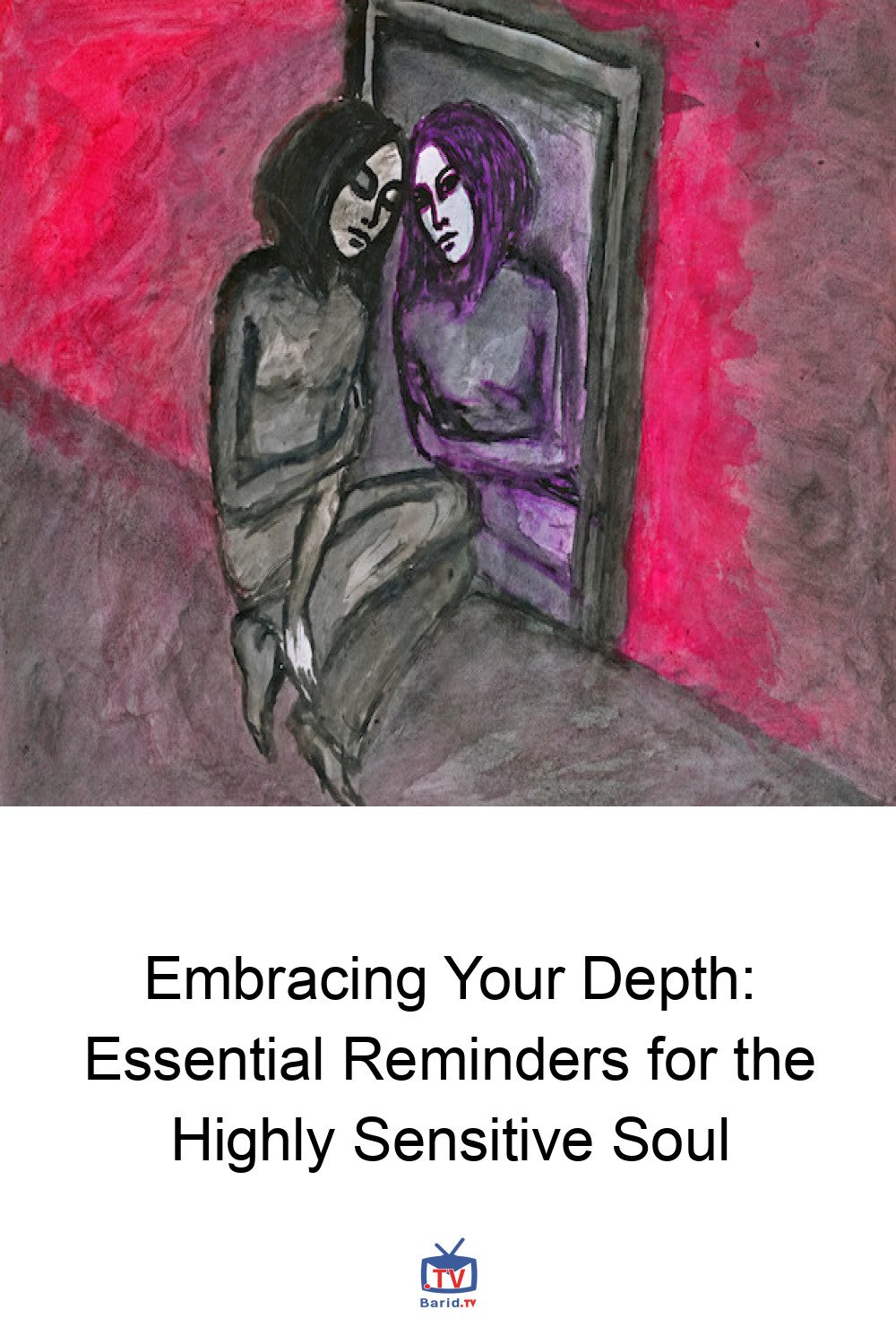
Embracing Your Depth: Essential Reminders for the Highly Sensitive Soul
Does the world often feel like an overwhelming symphony of sensations, emotions, and expectations? For many, the label “too sensitive” is not just a casual observation but a deeply etched phrase, often delivered with a sting of judgment. As Anthon St. Maarten wisely put it, “Highly sensitive people are too often perceived as weaklings or damaged goods. To feel intensely is not a symptom of weakness, it is the trademark of the truly alive and compassionate.” Yet, for years, this profound capacity was a source of profound personal struggle.
The Weight of “Too Sensitive”
Growing up, those three words — “you’re too sensitive” — became a painful refrain. They were hurled as a weapon to justify cruelty, leaving me to grapple with shame and emotional overwhelm. Whether it was a vicious private remark or a public fabrication, my reaction was often intense: an explosion of anger or a torrent of tears. But my sensitivity wasn’t solely a response to malice. Even well-meaning individuals would gently offer the same observation when I meticulously dissected minor slights, took criticism deeply to heart, struggled to release past pain, or absorbed the suffering of others as if it were my own.
It felt as though a glaring flaw defined my very being, yet I was powerless to alter my perception or emotional responses. What others couldn’t see was the intricate web of constant reflection that governed my mind, extending beyond my own experiences to encompass the suffering of everyone around me. They didn’t comprehend the monumental effort required to navigate crowded or loud environments, the frequent bouts of exhaustion and overstimulation, or the perpetual state of anxiety and edginess caused by an overactive nervous system. Crucially, I had no idea there was a biological explanation for this profound way of experiencing the world.
Unveiling the Highly Sensitive Person (HSP)
It took decades to finally encounter the term “highly sensitive person” (HSP). This revelation brought immense clarity, confirming that my brain indeed processes information and reflects on it with greater depth than non-HSP brains. Over time, I’ve learned to embrace these inherent traits and behaviors as integral to being an HSP. We are:
- Highly perceptive and deeply empathetic.
- Individuals who feel everything intensely.
- Prone to absorbing others’ emotions and discerning subtle shifts in mood or atmosphere.
- Adept at picking up on nuances others might miss.
- Gifted with heightened intuition.
- Easily drained or overwhelmed in loud, chaotic, or overstimulating environments.
This understanding also illuminated how many of my past behaviors were direct responses to my sensitivity. What once seemed like personal failings — overanalyzing, internalizing judgments, self-critique, resorting to numbing behaviors, ignoring intuition, or shouldering others’ pain — were, in fact, coping mechanisms. Recognizing this has been a transformative step toward self-compassion.
Cultivating Resilience: Lessons for the Sensitive Soul
While I don’t claim to be an expert, my journey as an HSP has been one of significant growth. I still experience the world and my emotions with intense depth, but I no longer feel like a helpless rag doll tossed in a tornado. Instead, I envision myself as a deeply rooted tree, capable of weathering the fiercest storms, perhaps losing a few leaves but ultimately standing firm. I’ve cultivated robust self-care practices, learned to honor my unique needs, and significantly reduced the harsh self-judgment that once plagued me.
My self-care toolkit includes meditation, restorative walks in nature, and long, calming baths. More importantly, I’ve built an arsenal of guiding principles to draw upon whenever my sensitivity threatens to overwhelm me. If you resonate with these experiences and often find yourself feeling drained, ashamed, or judged, these reminders may offer solace and strength.
When You Feel Drained
- Own Your Emotions: Understand that you are solely responsible for your own emotional landscape. You cannot alleviate everyone else’s pain, and attempting to do so may inadvertently rob them of their own opportunities for growth.
- Listen, Don’t Fix: You are not obligated to solve everyone’s problems. Often, simply listening is enough. However, recognize your limits; you can only listen for so long before it becomes too much for your sensitive system.
- Prioritize Your Environment: There is no need to force yourself into environments that you know will overstimulate you. Choosing alternative, more calming activities does not make you “weird” or “less fun”; it makes you self-aware and responsible for your well-being.
- Honor Your Energy: If you anticipate an activity will be unenjoyable and leave you feeling depleted, it’s not worth forcing yourself. Your energy is a precious resource.
- Trust Your Gut: Learn to listen to your instincts and intuition rather than succumbing to anxiety or external pressures. Your inner wisdom often knows what’s best for your sensitive nature.
For more details, visit our website.
Source: Link