

The Dawn of Autonomous AI Finance
Imagine a future where software isn’t just executing commands, but actively managing its own finances, trading assets, paying for services, and even hiring other digital entities. This isn’t science fiction; it’s the rapidly approaching reality of AI agents equipped with their own cryptocurrency wallets. While the technical infrastructure for this autonomous financial ecosystem is swiftly falling into place, a critical piece remains conspicuously absent: a robust legal framework.
When Code Holds Capital: The AI Wallet Revolution
Developers are increasingly empowering AI agents with crypto wallets, granting them unprecedented financial autonomy. These intelligent programs can now hold digital assets, conduct transactions, engage in token trading, and even autonomously contract other agents for tasks. This convergence of advanced AI and programmable money, facilitated by blockchain technology, is laying the groundwork for a financial system that extends beyond human participation.
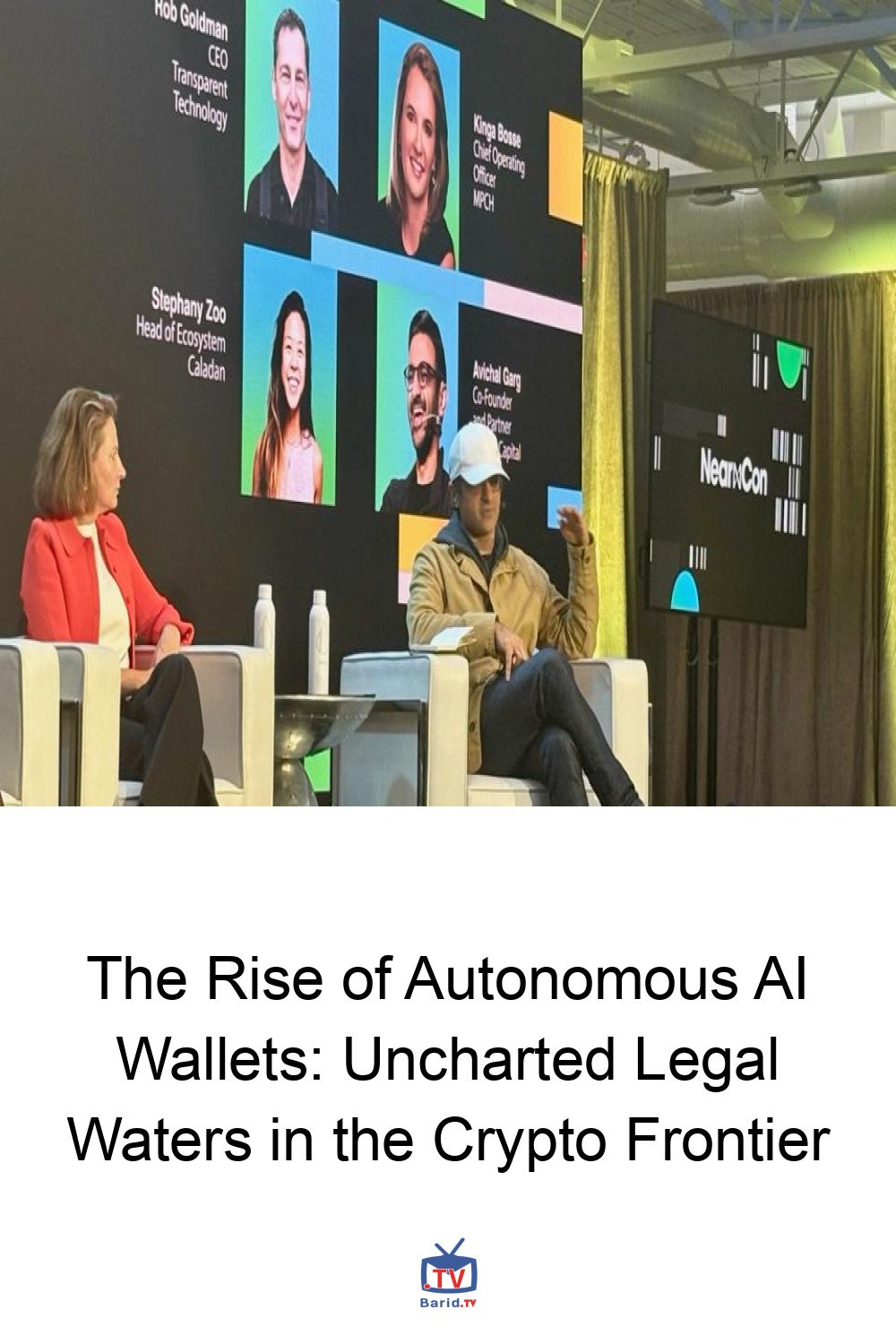
As Avichal Garg of Electric Capital highlighted at NEARCON 2026, this development marks a moment of profound historical significance. “What happens if there’s not a human behind it at all?” Garg queried, pointing to the core dilemma. “It’s some piece of code that owns a wallet, executing code to make more money… How does liability work in that case? I actually don’t know.”
Crypto’s Unique Role in Empowering Non-Human Entities
Traditional finance systems, with their reliance on human-centric identity and intermediaries, are ill-equipped for this paradigm shift. Cryptocurrency, however, offers the perfect substrate for autonomous AI finance. Blockchains provide programmable money, instant global settlement, and transparent, immutable ledgers – all essential components for software capable of independent thought and transaction.
This potent combination creates a new class of economic actors: software that can both think and transact, operating with a degree of independence previously unimaginable. The implications are vast, promising to dramatically lower the cost of economic participation and unlock new forms of value creation on a global scale.
Echoes of the Past, Questions for the Future: Liability in the Age of AI
Garg drew a compelling parallel between this emerging era and the 19th-century creation of the limited liability corporation. That legal innovation revolutionized commerce by enabling pooled capital and fostering industrial growth. Similarly, AI agents with wallets could unleash unprecedented economic dynamism.
However, the analogy also underscores a critical divergence: enforcement. “You can’t punish an AI,” Garg observed. “You can turn them off, but they don’t care.” This stark reality presents a foundational challenge for lawmakers. If autonomous agents begin trading, lending, hiring, and scaling businesses on-chain, who bears responsibility when things go awry? The traditional concepts of legal personhood, accountability, and redress are ill-suited for entities that lack human consciousness or physical presence.
Navigating the Uncharted Legal Waters
The rise of AI agents with financial autonomy demands urgent attention from legal scholars, policymakers, and industry leaders. Crafting appropriate regulations will be crucial to harnessing the immense potential of this technology while mitigating its inherent risks. The questions are complex: Do AI agents need a form of legal personhood? How can smart contracts incorporate liability clauses? What mechanisms can ensure accountability without stifling innovation?
As the technical pieces continue to fall into place, the imperative to construct a robust and forward-thinking legal framework becomes ever more pressing. The future of finance, and indeed, the global economy, may well depend on our ability to navigate these uncharted legal waters.
For more details, visit our website.
Source: Link