
In a dramatic operation that gripped Mexico and reverberated across international law enforcement, Nemesio Oseguera Cervantes, the feared leader of the Jalisco New Generation Cartel (CJNG) – better known as “El Mencho” – was finally brought down. His capture and subsequent death on Sunday, confirmed by Mexican authorities on Monday, marked the culmination of years of relentless pursuit, aided significantly by a crucial piece of intelligence: the surveillance of a romantic partner.
The Breakthrough: A Trail of Affection
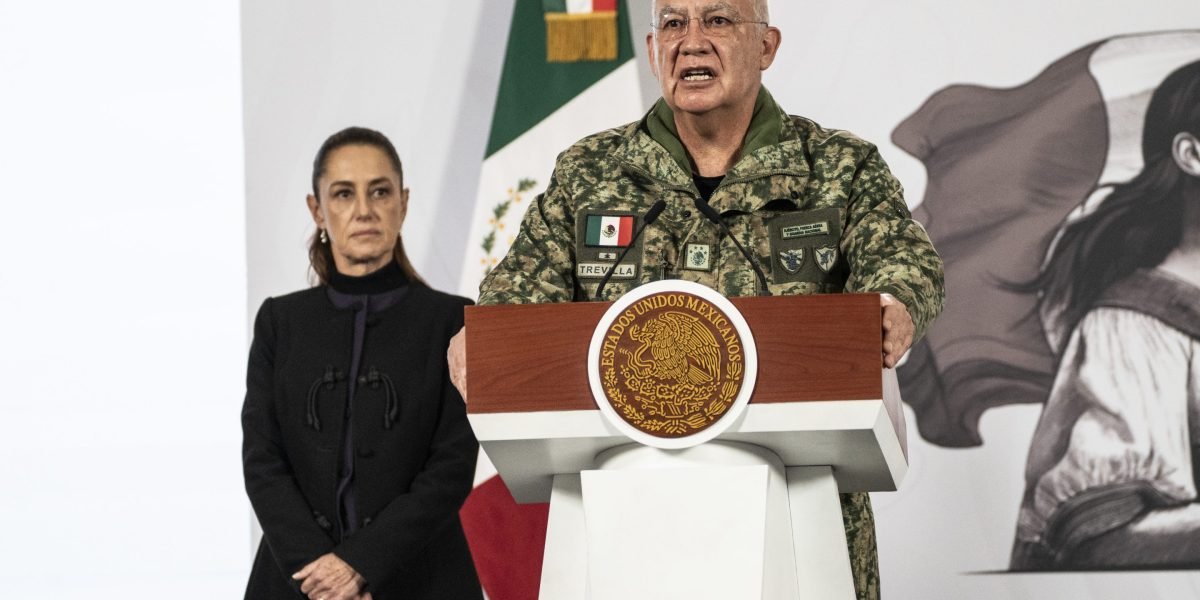
For years, both Mexican and U.S. intelligence agencies had been hot on the heels of El Mencho, who faced a litany of arrest warrants for organized crime and drug trafficking. This time, however, a more personal angle provided the decisive breakthrough. Mexican Defense Secretary Gen. Ricardo Trevilla revealed that military investigators meticulously tracked a trusted associate of one of Oseguera Cervantes’ romantic partners. This associate led them to Tapalpa, Jalisco, where the woman met with the drug lord on Friday.
U.S. Intelligence Confirms the Target
The exact location of El Mencho was then corroborated by “very important additional information” supplied by U.S. intelligence, solidifying the operational plan. The collaboration between the two nations proved instrumental in pinpointing the elusive cartel boss.
The Operation Unfolds: A Land and Air Blockade
With El Mencho’s presence confirmed, special forces moved swiftly. After the woman departed following her overnight stay, a comprehensive land and air blockade was established. Units from the Mexican army and National Guard formed a ground cordon, while six helicopters and additional special forces units were strategically positioned in neighboring states. The Mexican Air Force provided vital reconnaissance and air support, ensuring no escape route remained open.
In the pre-dawn hours of Sunday, the operation commenced. Mexican President Claudia Sheinbaum was kept abreast of every development, even while on a tour in northern Mexico, underscoring the high-stakes nature of the mission.
A Violent Confrontation and Cartel Resistance
Gen. Trevilla described the cartel’s response as “extremely violent.” As special forces closed in, El Mencho attempted to flee with two bodyguards, while a heavily armed contingent of his gunmen engaged the military in a fierce shootout to buy their leader time. Eight cartel members were killed in this initial confrontation, four more than initially reported.
Echoes of Past Violence
Among the weaponry seized were two rocket launchers, one chillingly identical to the model used by the CJNG in 2015 to down a military helicopter. That infamous attack had served as a stark reminder of the cartel’s willingness to employ lethal, full-scale force against authorities.
The Capture: “Hiding in the Undergrowth”
Oseguera Cervantes sought refuge in a wooded area dotted with cabins on the outskirts of Tapalpa. Despite their heavy armament, including rocket launchers, the cartel members failed to deploy them effectively. Special forces eventually located El Mencho “hiding in the undergrowth,” leading to another intense exchange of fire. The confrontation left El Mencho and his two bodyguards wounded. Amidst the chaos, a military helicopter was forced into an emergency landing after being hit by gunfire, and two individuals were apprehended. Three soldiers sustained injuries during the engagement.
The Final Journey: Dead En Route
Once the scene was secured, the wounded cartel leader and his bodyguards were loaded onto a helicopter for urgent transport to a nearby hospital. However, Gen. Trevilla confirmed that all three succumbed to their injuries en route, already in “critical condition.”
In a strategic move to prevent any immediate, violent retaliation from the CJNG, the flight plan was altered. Instead of landing in the Jalisco state capital, the bodies were flown directly to Mexico City, bypassing potential flashpoints of cartel aggression.
The Aftermath: Retaliation and Further Casualties
The operation triggered widespread violence. Approximately 100 kilometers (62 miles) west of Tapalpa, a logistics and financial operator known as “El Tuli” – allegedly El Mencho’s right-hand man – reportedly offered a bounty of 20,000 pesos (over $1,000) for every soldier killed. El Tuli was also implicated as the mastermind behind a wave of roadblocks, arson attacks, and assaults on government installations across Jalisco state.
Security Secretary Omar García Harfuch detailed the grim toll: 25 National Guard members, a prison official, a prosecutor’s office employee, and a presumed civilian woman were killed in Jalisco, alongside 30 suspected criminals. In neighboring Michoacán, four more gunmen died, and 15 security personnel were wounded. A paratrooper rifle brigade eventually tracked down and killed “El Tuli” in a shootout, seizing numerous weapons and assets, marking another significant blow to the cartel’s command structure.
For more details, visit our website.
Source: Link