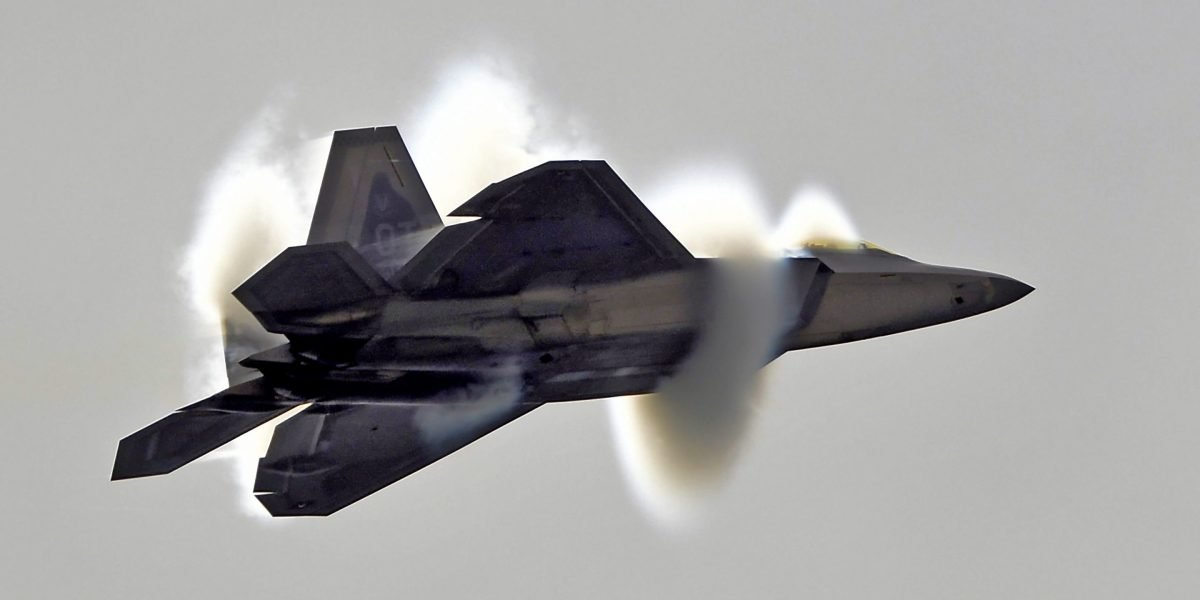

President Donald Trump’s ambitious proposal to escalate defense spending by a staggering 50% to $1.5 trillion has ignited a fierce debate within Washington, pitting national security aspirations against the grim reality of America’s burgeoning $38.5 trillion national debt. This audacious plan, aimed at fortifying the U.S. military, is encountering significant pushback, most notably from within the White House itself.
The $1.5 Trillion Question: A Fiscal Hawk’s Resistance
Sources close to the matter, as reported by The Washington Post, indicate that White House budget chief Russell Vought stands among the prominent critics of the proposed $500 billion increase for the Pentagon. A staunch fiscal conservative, Vought has reportedly voiced grave concerns over the potential exacerbation of the federal deficit, which ballooned to $1.8 trillion in the last fiscal year. While a proponent of a robust U.S. military, Vought’s long-standing advocacy for overall government spending reduction places him at odds with such a dramatic expansion of the defense budget.
Despite internal resistance, the Pentagon remains steadfast. A defense spokesman affirmed the Department’s commitment to “utilizing President Trump’s $1.5 trillion defense budget to serve our warfighters and the American people,” emphasizing a “deliberative and responsible budget process” to ensure “good stewardship of taxpayer resources” and the ability to “combat 21st century threats.”
Modernizing for a New Era of Conflict
Beyond the fiscal hurdles, the sheer scale of the proposed increase presents a strategic dilemma: where to allocate such an immense sum? Officials are grappling with the balance between investing in existing, proven weapons systems and channeling resources into cutting-edge, high-tech domains like artificial intelligence (AI).
Rebuilding and Reinventing the Arsenal
The Defense Department faces a multifaceted challenge in modernizing its forces. It must revitalize an aging fleet of ships and aircraft, transitioning to next-generation platforms such as the B-21 stealth bomber and the Columbia-class submarine. Production of the F-35 stealth fighter is already accelerating to replace a diverse range of older platforms. Adding to this, Trump has unveiled plans for an F-47 sixth-generation fighter, designed to operate alongside autonomous drones, and a concept for an entirely new class of battleship, announced in December 2025.
Furthermore, after years of significant arms transfers to Ukraine, the Pentagon is tasked with urgently replenishing its own munitions stockpiles. This rebuilding effort is crucial for preparing the nation for potential future conflicts, particularly against near-peer adversaries like China or Russia, whose military capabilities continue to evolve rapidly.
The Tech Frontier: AI and Space
The conflict in Ukraine has dramatically underscored the transformative power of modern warfare tactics, particularly the widespread deployment and mass production of drones. Concurrently, private sector innovators like Palantir and SpaceX are spearheading advancements in AI and space-based capabilities, respectively, pushing the boundaries of military technology. Trump himself articulated his vision for this enhanced military, stating in a Truth Social post, “This will allow us to build the ‘Dream Military’ that we have long been entitled to and, more importantly, that will keep us SAFE and SECURE, regardless of foe.”
The Shadow of Soaring National Debt
Achieving this “Dream Military,” however, comes at an astronomical cost, at a time when America’s financial capacity is under unprecedented strain. Projections from the Congressional Budget Office (CBO) paint a stark picture: publicly held U.S. debt is anticipated to surge from approximately 100% of GDP today to a daunting 120% by 2036.
While the primary drivers of this deteriorating fiscal outlook are the escalating costs of Social Security and Medicare, a half-trillion-dollar annual boost to defense spending would undeniably accelerate the accumulation of debt, leading to a significant increase in costly interest payments.
The Committee for a Responsible Federal Budget recently issued a sobering warning about a potential U.S. “debt spiral,” citing CBO estimates that predict government borrowing interest rates will soon outpace economic growth – a perilous scenario for any nation’s financial stability.
Ferguson’s Law: A Great Power’s Perilous Balance
The reported reluctance of the White House budget chief to further widen the deficit with a massive military bill resonates with a critical historical observation made by historian Niall Ferguson. Ferguson posits that any great power that allocates more resources to servicing its debt than to its defense risks a decline in its global standing. “This is because the debt burden draws scarce resources towards itself, reducing the amount available for national security, and leaving the power increasingly vulnerable to military challenge,” he wrote.
Alarmingly, the U.S. already crossed this critical threshold in 2024 and continues to meet the conditions of “Ferguson’s Law.” While ratcheting up defense outlays to $1.5 trillion would temporarily elevate the Pentagon’s budget above debt-servicing costs, this relief would be fleeting. Even without the proposed military spending hike, interest costs alone are projected to reach an astounding $2.1 trillion by 2036, underscoring the profound long-term fiscal challenge.
Conclusion
The debate surrounding President Trump’s ambitious defense budget proposal encapsulates a fundamental tension at the heart of American power: how to maintain a dominant military force capable of addressing 21st-century threats without succumbing to an unsustainable debt burden. The choices made today will not only define the future of the U.S. military but also its economic stability and, ultimately, its enduring status as a great power on the global stage.
For more details, visit our website.
Source: Link