
AI’s Dual Impact: Meta-AMD Deal Ignites Market Rally Amidst Evolving Tech Landscape
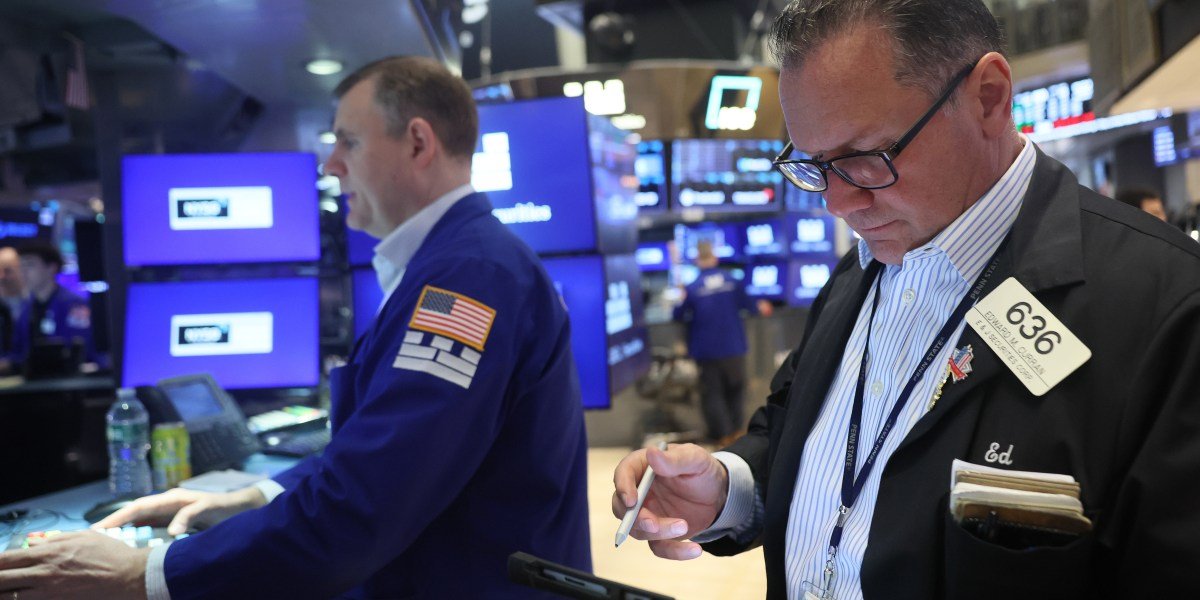
After a day of market jitters fueled by the potential disruptive downsides of artificial intelligence, U.S. stocks staged a robust comeback on Tuesday, reminded that the AI boom also carries immense upside potential. The S&P 500 climbed 0.8%, recouping nearly three-quarters of its previous day’s sharp decline, while the Dow Jones Industrial Average added 370 points (0.8%), and the Nasdaq composite gained a solid 1%.
The Meta-AMD Catalyst: A $100 Billion Vote of Confidence
Leading the charge was Advanced Micro Devices (AMD), whose shares surged 8.8% following the announcement of a landmark multiyear deal with Meta Platforms. Under this agreement, AMD will supply chips crucial for powering Meta’s ambitious AI initiatives. The deal also grants Meta the right to acquire up to 160 million shares of AMD stock at a nominal price of 1 cent each, contingent on the volume of chips purchased. This significant partnership underscored the billions flowing into AI, reaffirming its potential to reshape economies and boost productivity.
Addressing the Obsolescence Fear
Tuesday’s rally offered a stark contrast to the prior day’s sentiment, which saw Wall Street grappling with anxieties over AI’s capacity to render certain industries and companies obsolete. Sectors as diverse as software, trucking logistics, and financial services had recently faced aggressive investor punishment due to perceived threats from AI. IBM, for instance, recovered 2.7% after suffering its worst single-day drop since 2000 on Monday. The ripple effect even touched the private equity sector, with concerns mounting over the repayment prospects of loans extended to software companies reliant on recurring revenue. Blue Owl Capital, a bellwether in this space, saw its shares rise 2.8%, trimming its year-to-date losses.
AI: Enhancer, Not Destroyer?
Further bolstering market confidence was Anthropic’s unveiling of new enterprise tools for its Claude AI assistant. These innovations span a wide range of applications, from human resources to engineering and investment banking. According to Dan Ives, an analyst at Wedbush, this development suggests that fears of AI entirely supplanting existing software ecosystems might be overblown. Ives noted, “While these use cases are impressive, the reality is that these new AI tools will not rip and replace existing software ecosystems and data environments with these AI tools only as useful as the data it can reach.” A prime example of this synergy was a tool allowing users to integrate financial market data from FactSet into Claude, which saw FactSet Research Systems’ stock jump 5.9%, marking one of the S&P 500’s biggest gains, despite its year-to-date decline. Other companies previously hit hard by AI competition concerns, such as Salesforce and AppLovin, also saw their shares climb 4.1% and 3.3% respectively.
Beyond AI: Broader Market Resilience
The positive sentiment wasn’t solely confined to AI-related news. Several major U.S. companies continued to report stronger-than-expected profits for the end of 2025. Keysight Technologies soared 23.1%, leading the S&P 500, after surpassing analyst expectations for both profit and revenue in its latest quarter and projecting a robust 30% revenue increase for the current quarter. Home Depot also rose 2%, delivering solid profit and revenue figures that defied what CEO Ted Decker described as “ongoing consumer uncertainty.”
Global Markets and Economic Indicators
Globally, stock markets presented a mixed picture. European indexes saw modest movements, while Asia experienced larger swings: South Korea’s Kospi surged 2.1%, Hong Kong’s Hang Seng dipped 1.8%, and Shanghai stocks gained 0.9% following a week-long holiday. In the bond market, Treasury yields remained relatively stable, with the 10-year Treasury holding at 4.03%, as a report indicated a greater-than-expected improvement in U.S. consumer confidence.
For more details, visit our website.
Source: Link