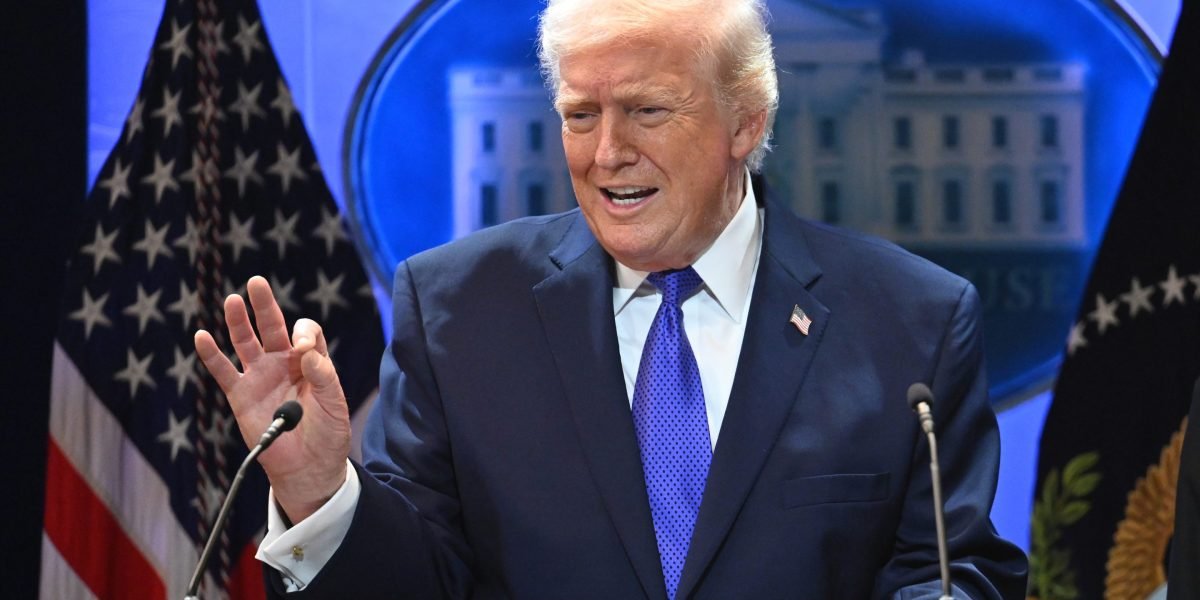

In the high-stakes arena of political campaigning, a president’s words are meticulously weighed, especially when addressing the nation’s economic health. President Trump’s recent assertions, proclaiming an economy he inherited as a “mess” and subsequently transformed into “the greatest economy actually ever in history,” represent a classic political gambit. Yet, as history and human psychology consistently demonstrate, such triumphant declarations often fall flat when confronted with the lived realities and deeply ingrained perceptions of the electorate.
The Economic Reality vs. Public Perception
With mid-term elections looming, the economy inevitably becomes the paramount issue. For an incumbent party, a disconnect between official pronouncements and public sentiment signals a significant challenge. The data, while not painting a picture of an unprecedented boom, certainly doesn’t suggest a crisis either.
By the Numbers: A Decent Economy
Statistically, the U.S. economy has shown resilience. Last year, it registered a 2.2% inflation-adjusted growth, surpassing many economists’ forecasts. Unemployment rates remain commendably low at 4.3%, and wages have seen increases, albeit not dramatically. These figures, in isolation, suggest a stable and growing economy.
The Sentiment Gap: Why Voters Feel Different
However, politics is less about raw data and more about visceral feeling. Despite the positive indicators, consumer sentiment has notably declined, sitting approximately 20% below levels observed at the start of Trump’s presidency, according to the University of Michigan’s respected survey. This gloom isn’t universal; those with substantial stock portfolios often report surging optimism. Yet, for the vast majority without such investments, sentiment remains stubbornly dismal. This stark divergence highlights a critical political blind spot: the perception of economic well-being is not uniformly distributed.
The Hardwiring of Human Psychology
Why do millions of Americans perceive the economy as struggling, even when the numbers suggest otherwise? The answer lies in the fundamental workings of the human brain, which is wired for survival, not economic analysis.
The Power of Negative Bias
Our brains are predisposed to prioritize and remember negative information far more vividly and for longer durations than positive news. This “negative bias” means that the possibility of a bad outcome looms larger in our minds, influencing our overall outlook. For instance, double-digit price increases last year on essential goods like beef, dairy, coffee, shoes, and clothing—core components of daily life—are likely to leave a lasting impression on voters, irrespective of subsequent price adjustments or GDP growth. Conversely, declines in gasoline and propane prices, while beneficial, often go unnoticed or are quickly forgotten.
Lessons from History: Inflation’s Lingering Shadow
The early 1980s offer a potent historical parallel. Even after inflation plummeted from a peak of 14.8% in 1980 to a manageable 3.8% by mid-1985, Gallup polling revealed that some 20 million adults still considered inflation the nation’s most pressing problem. This enduring trauma underscores how deeply negative economic experiences embed themselves in the collective consciousness, shaping perceptions long after the immediate crisis has passed.
The Political Ramifications
Ignoring this psychological reality can be a perilous strategy for any political campaign.
The Clinton-Bush Precedent
Consider President George H.W. Bush’s 1992 re-election bid. Despite the economy officially recovering from a mild recession 19 months prior to Election Day, Bush’s campaign message of a booming economy failed to connect. His opponent, Bill Clinton, famously tapped into the public’s underlying anxieties with the empathetic declaration, “I feel your pain.” Clinton’s victory was a masterclass in speaking directly to the emotional, hard-wired core of the human brain, rather than simply presenting facts.
A Risky Strategy for Incumbents
While the current political landscape differs—Trump is not on the ballot this year, and there was no recession last year—the fundamental lesson remains. A strategy that insists the U.S. economy is “the greatest in history” when voters’ inherent psychological biases tell them otherwise, is a difficult path to maintaining political control. The battle for public opinion is often won not by presenting irrefutable statistics, but by acknowledging and validating the public’s feelings.
As the political calendar progresses, understanding the intricate interplay between economic data and human perception will be crucial for any party hoping to sway the electorate. The “greatest economy ever” narrative, while perhaps numerically defensible, risks alienating the very voters it seeks to reassure.
For more details, visit our website.
Source: Link