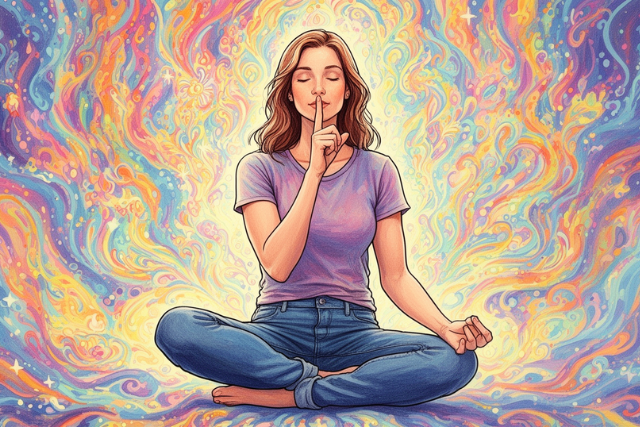

In an age where constant connectivity often feels like an inescapable tether, the notion of complete silence—a deliberate withdrawal from all external stimuli—can seem radical, even daunting. Yet, for those brave enough to embrace it, the experience promises not an escape from life, but a profound turning towards it. This is the essence of Vipassana meditation, a practice I recently completed for the third time, and one that continues to reshape my understanding of peace, presence, and the self.
The Call of Quiet: Stepping Away from the Static
The journey into Vipassana begins with a deeply symbolic act: surrendering your phone. In that moment, the outer world, with its incessant demands and digital clamour, begins to recede. It’s a gradual quietude, not an abrupt halt, but one that unmistakably reveals the sheer volume of “static” we carry—the unseen burdens of constant input, notifications, and external validation. By the end of the ten-day course, the thought of reclaiming that device, that portal to distraction, feels utterly alien. Never. Never again, in that moment of pure presence.
Ten days without a phone, without books, journaling, eye contact, or conversation. No external input whatsoever. It’s a rare form of devotion in a world obsessed with distraction. This isn’t an evasion of reality; it’s an unbuffered, un-numbed confrontation with it, stripping away the usual exits we take from discomfort. Having navigated significant personal shedding and reorientation recently, I approached this third course with genuine curiosity, wondering if it would feel familiar or unveil entirely new dimensions.
A Glimpse into the Vipassana Discipline
The Rigorous Schedule
The structure of a Vipassana course is unwavering. The wake-up bell rings at 4:00 a.m., ushering in approximately ten hours of meditation daily, from 4:30 a.m. until 9:00 p.m. Meals are simple yet nourishing: breakfast at 6:30 a.m. consists of oats and fruit, followed by a delicious vegetarian lunch at 11:00 a.m. After lunch, a fast begins until the next morning (new students receive fruit at teatime; old students do not). Remarkably, hunger is rarely an issue; an empty stomach proves surprisingly conducive to deep meditation, and a body at rest requires less sustenance.
The Enduring Wisdom of S.N. Goenka
Each evening, participants gather to watch a discourse by S.N. Goenka, the Burmese businessman who, after experiencing the profound benefits of Vipassana, dedicated his life to bringing this ancient technique to the West, establishing hundreds of centers globally. Though he passed over a decade ago, his voice, his instructions, his teachings, and his gentle humor remain the guiding force of every course, unchanged. There is a profound purity in this; the technique remains universal, timeless, and intact, untainted by personalization or dilution.
Vipassana Unveiled: The Practice of Direct Sensation
At its core, Vipassana is an embodied meditation practice, deeply rooted in the direct observation of sensation. The technique involves systematically moving one’s awareness through the physical body, meticulously observing sensations exactly as they are—be they pleasant, unpleasant, or neutral. The crucial element is non-reaction: neither craving what feels good nor resisting what feels uncomfortable. This is the path to purifying the mind at its deepest layer, not through intellectual thought, but through the raw experience of sensation. It is a practice of equanimity, of non-reaction, of finding peace amidst the ebb and flow of experience. And it is through this practice that we learn to carry this non-reactivity into our lives beyond the meditation hall.
As one sits for extended periods, a fascinating transformation occurs: the body begins to lose its perceived solidity. Modern science speaks of us being composed of trillions of subatomic particles, and Vipassana makes this an experiential reality. There were times I knew my hands were folded in my lap, yet I couldn’t feel them; at other moments, my entire body seemed to dissolve into pure sensation.
Confronting the Inner Landscape: What Silence Reveals
Vipassana doesn’t merely offer transcendence; it lays bare everything. It grants you a front-row seat to your inner world, with no escape routes. When there’s nowhere to run, what lies within inevitably surfaces, whether welcome or not.
The Unfiltered Self
My “inner shit-disturber,” for instance, was very much alive. In an environment of strict silence, stillness, and structure—where smiles and eye contact are absent—my mischievous side found ample opportunity for entertainment. I’d imagine flicking ears, pushing someone into the snow, or stealthily stealing carrot cake. Oddly, these mental antics provided a strange form of regulation, a pressure release valve. There were also long stretches of pure distraction: writing an entire book in my head, recalling every elementary school classmate, replaying past experiences, planning future conversations, and solving non-existent problems.
Facing Our Shadows
Then came the harder seeing: my ego, fully exposed. Greed, judgment, selfishness, a lack of tolerance—the uncomfortable truths we often deny ourselves. But here lies a profound truth I now trust implicitly:
we cannot change what we refuse to see. Vipassana doesn’t demand you fix these parts; it simply asks you to notice them. To cease the pretense of their absence. To meet them with awareness, not shame. And in that steady, non-reactive, honest seeing, something begins to soften.
Beyond Intellect: The Root of Suffering and the Path to Peace
Our suffering doesn’t stem from a lack of understanding; it arises from our reactions. We react in craving—an insatiable desire for what feels good, a relentless chase for pleasure, certainty, comfort, and affirmation. And we react in aversion—a fierce resistance to discomfort, an avoidance of pain, a numbing of unwanted feelings, a tightening against dis-ease. This ceaseless push and pull, this magnetic attraction to what we want and repulsion from what we don’t, keeps us perpetually restless, agitated, and far from true peace. Mindset work, while valuable, ultimately reaches its limits because our reactions are often deeper than conscious thought…
(Article truncated as per original input.)
For more details, visit our website.
Source: Link