

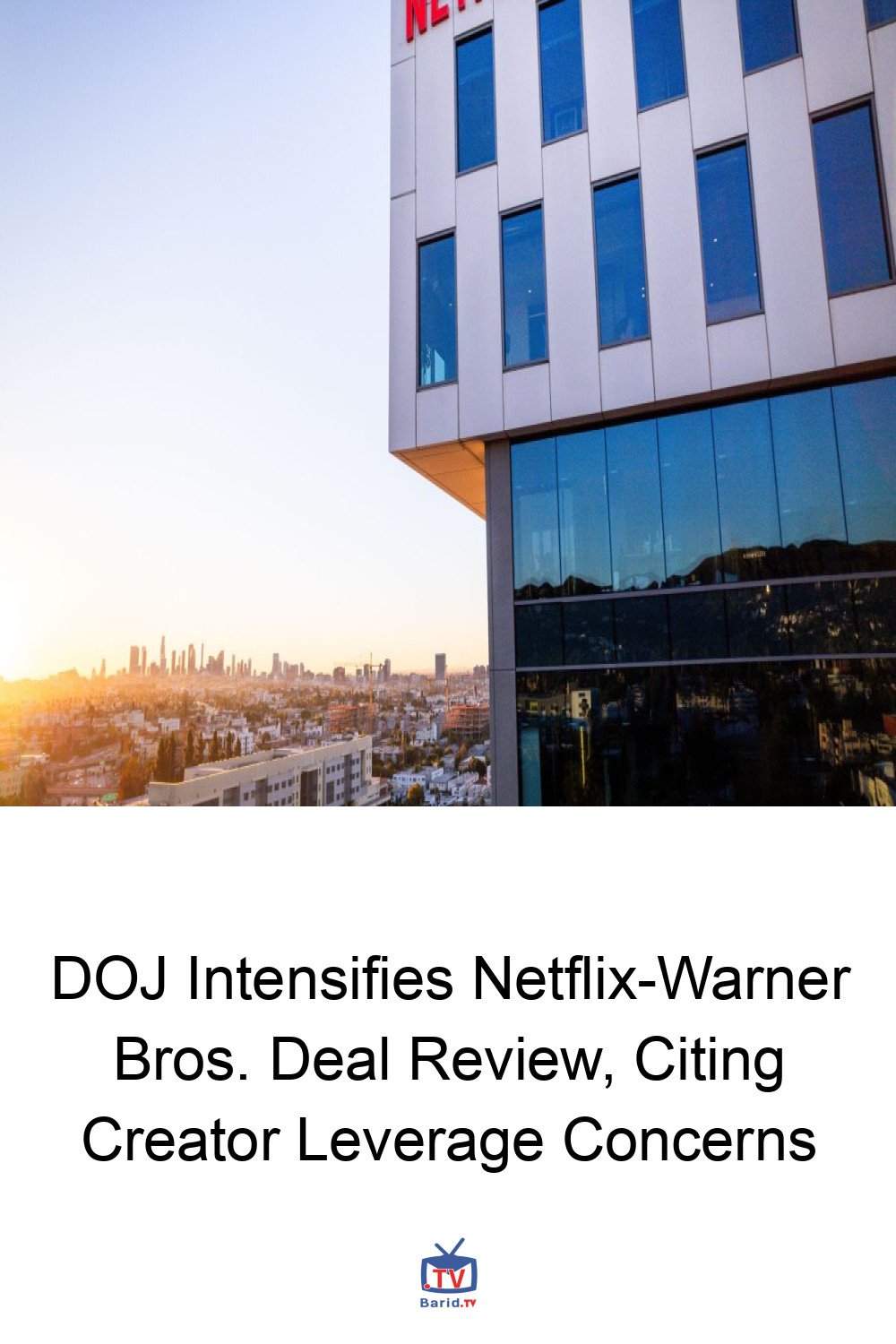
DOJ Casts Wider Net in Netflix-Warner Bros. Merger Review, Citing Creator Concerns
The proposed $72 billion acquisition of Warner Bros. Discovery Inc. by Netflix Inc. is facing an increasingly rigorous examination from the U.S. Justice Department. What began as a standard merger review has escalated into a broader probe, scrutinizing Netflix’s market behavior and its potential anti-competitive leverage over independent content creators.
Beyond the Usual: A Deeper Dive into Market Power
A civil investigative demand, an administrative subpoena recently issued to an independent movie studio and reviewed by Bloomberg News, explicitly states the department’s intent to determine if the deal “may substantially lessen competition or tend to create a monopoly in violation of Section 7 of the Clayton Act or Section 2 of the Sherman Act.” This language marks a significant departure from typical merger investigations, which predominantly rely on the Clayton Act. The inclusion of the Sherman Act, usually reserved for targeting monopolization by single entities like Google or Live Nation, signals a deeper concern about Netflix’s existing market power and its future implications.
This expanded scope refutes Netflix’s earlier assertions that the government’s review was merely routine. Instead, it suggests a prolonged process, potentially delaying a decision on the merger for many months. Such a delay could prove advantageous for rival bidder Paramount Skydance Corp., which has been actively pursuing Warner Bros.
Netflix’s Stance and Market Reality
Netflix Chief Legal Officer David Hyman has vehemently denied any monopolistic aspirations or practices. “Netflix operates in an extremely competitive market. Any claim that it is a monopolist, or seeking to monopolize, is unfounded,” Hyman stated. “We neither hold monopoly power nor engage in exclusionary conduct and we’ll gladly cooperate, as we always do, with regulators on any concerns they may have.”
Indeed, Netflix operates the world’s largest paid video streaming service and is a colossal buyer of film and TV programming, allocating approximately $20 billion this year to content, including popular originals like
Wednesday and Nobody Wants This, often produced by third-party studios. However, the DOJ’s questions center on whether this immense purchasing power translates into undue leverage during negotiations with independent filmmakers and studios.
The Stakes for the Streaming Landscape
Acquiring HBO and Warner Bros. would not only bring a major studio into Netflix’s fold but also eliminate a significant streaming competitor. While Netflix currently accounts for about 9% of U.S. TV viewing and a larger share of the streaming market, its programming spending is comparable to industry titans like Disney and Comcast. Monopoly cases typically require market concentration exceeding 50%, a threshold Netflix’s current share, even with Warner Bros., does not meet.
The Wall Street Journal was the first to report on the DOJ’s focus on Netflix’s business practices and the potential for future monopoly power. Despite this, Netflix’s legal representation, Steve Sunshine of Skadden, Arps, Slate, Meagher & Flom LLP, maintains that they have received no official notice of a monopolization investigation.
The Paramount Factor and Regulatory Hurdles
The intensified DOJ scrutiny comes amidst a heated bidding war for Warner Bros. Paramount, which launched a hostile bid last year, has consistently argued that Netflix’s offer would face insurmountable regulatory hurdles in both the U.S. and Europe. Paramount recently committed to resuming talks with Warner Bros., indicating a willingness to raise its offer. They have been given a deadline of February 23rd to submit their “best and final” proposal.
While Paramount claims its own $77.9 billion tender offer has cleared the DOJ’s second-request review, potential delays from an ongoing EU review and possible challenges from U.S. state attorneys general remain. The broader implications of this DOJ probe extend beyond just the Netflix-Warner Bros. deal, signaling a renewed focus by antitrust enforcers on the power dynamics within the rapidly evolving streaming industry.
For more details, visit our website.
Source: Link