
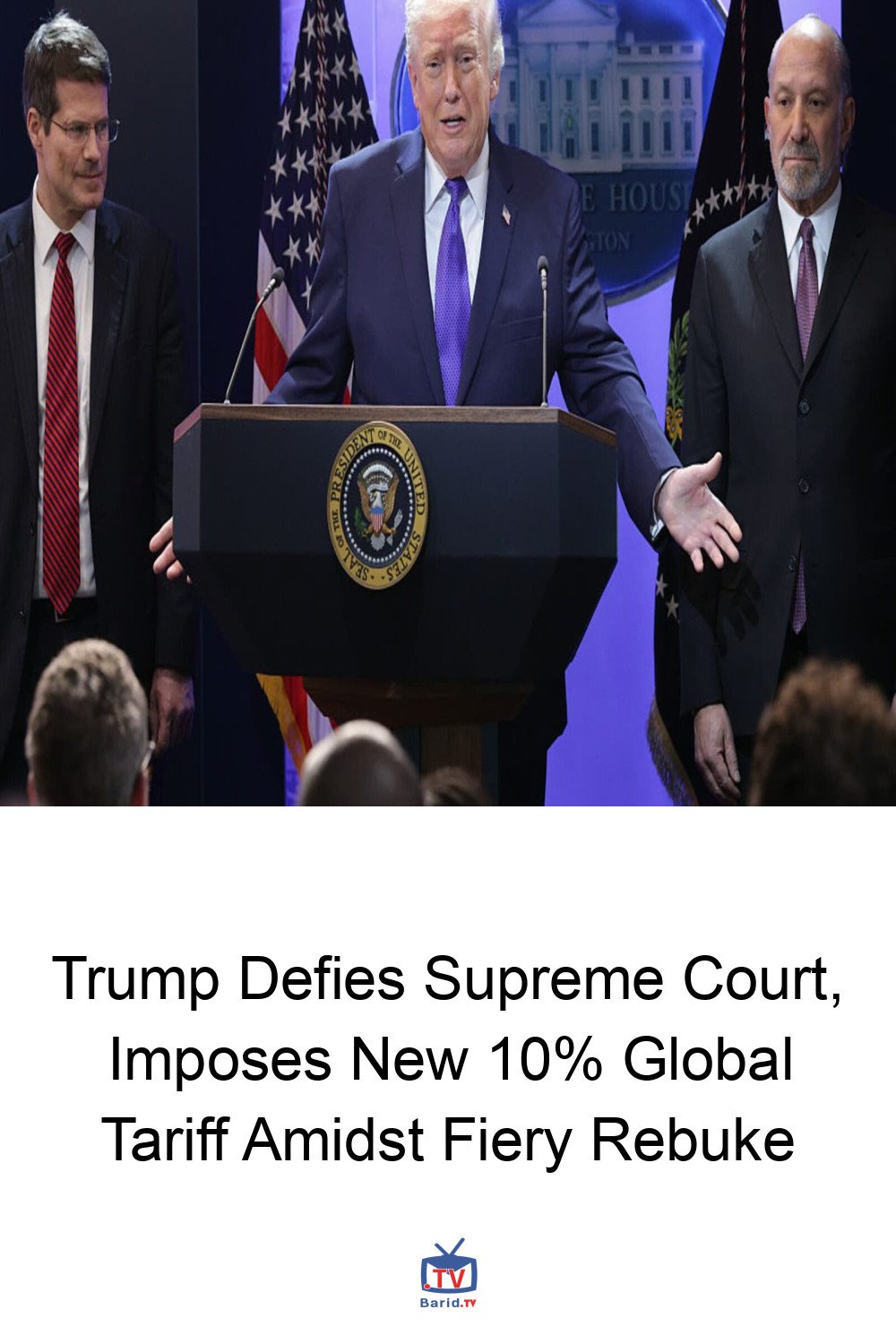
In a dramatic turn following a significant Supreme Court defeat, former President Donald Trump has announced the immediate imposition of a new 10% “global tariff.” The move, enacted via executive order under Section 122 of the Trade Act of 1974, comes just hours after the high court struck down his previous sweeping import duties, marking a major rebuke of his signature trade agenda.
Defiance in the Face of Judicial Setback
The Supreme Court’s 6-3 ruling invalidated tariffs Trump had previously imposed using the International Emergency Economic Powers Act (IEEPA), asserting that the statute “does not authorize the President to impose tariffs.” This decision dismantled the legal foundation for many of the duties Trump championed as vital for the U.S. economy and the revitalization of American manufacturing.
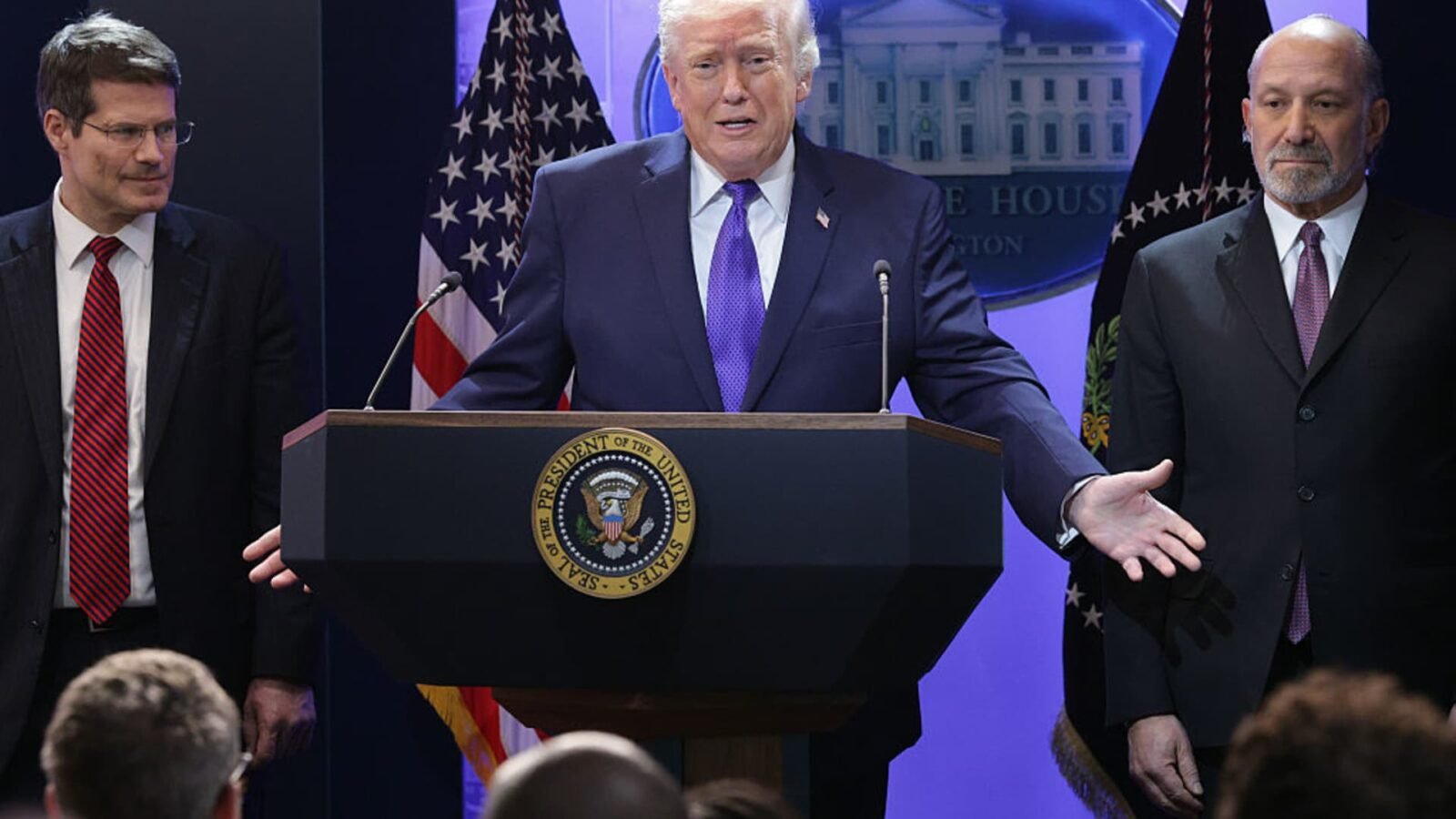
Trump’s reaction was swift and scathing. At a White House press briefing, he railed against the “deeply disappointing” ruling, expressing “absolute shame” for certain members of the court, particularly Justices Neil Gorsuch and Amy Coney Barrett—his own nominees—who sided with the majority. “I think their decision was terrible,” Trump stated, calling it “an embarrassment to their families.”
The New Tariff Landscape: Section 122 Takes Center Stage
The newly announced 10% global tariffs are designed to effectively replace the invalidated IEEPA duties. Unlike their predecessors, these tariffs, invoked under Section 122 of the Trade Act of 1974, come with a strict 150-day time limit, with any extension requiring congressional approval. Despite this limitation, Trump remained defiant regarding legislative involvement, asserting, “I don’t have to. I have the right to do tariffs.”
Implications for Global Trade Partners
This shift could lead to a complex recalculation of tariff rates for various countries. For some nations that had previously negotiated trade deals with the Trump administration or were in ongoing talks, the new 10% global tariff might actually result in lower rates than the higher IEEPA tariffs they once faced. For instance, the European Union, which had agreed to a 15% tariff under IEEPA, will now see those specific duties replaced by the new 10% rate.
China, a frequent target of Trump’s trade policies, is also significantly impacted. While a 25% duty under other statutes remains, the two sets of 10% IEEPA-based tariffs it previously faced will be replaced by the new global tariff, bringing China’s total rate to 35% on affected goods, according to a White House official. The administration has indicated that as it explores additional legal pathways for tariffs, rates on individual countries could potentially revert to higher levels.
Broader Trade Strategy and Future Outlook
Beyond the new global tariff, Trump affirmed that duties active under Section 232 and Section 301 statutes will remain “in full force and effect.” His administration also plans to leverage Section 301 for further investigations into alleged unfair trade practices, potentially leading to additional tariffs. Treasury Secretary Scott Bessent echoed this sentiment, stating the administration would find other means to replace the rejected IEEPA tariffs.
“Other alternatives will now be used to replace the ones that the court incorrectly rejected,” Trump declared, expressing confidence that the new approach would generate “more money” and bolster national strength. This latest development underscores a continued commitment to an aggressive trade policy, even as it navigates judicial challenges and congressional limitations.
For more details, visit our website.
Source: Link