

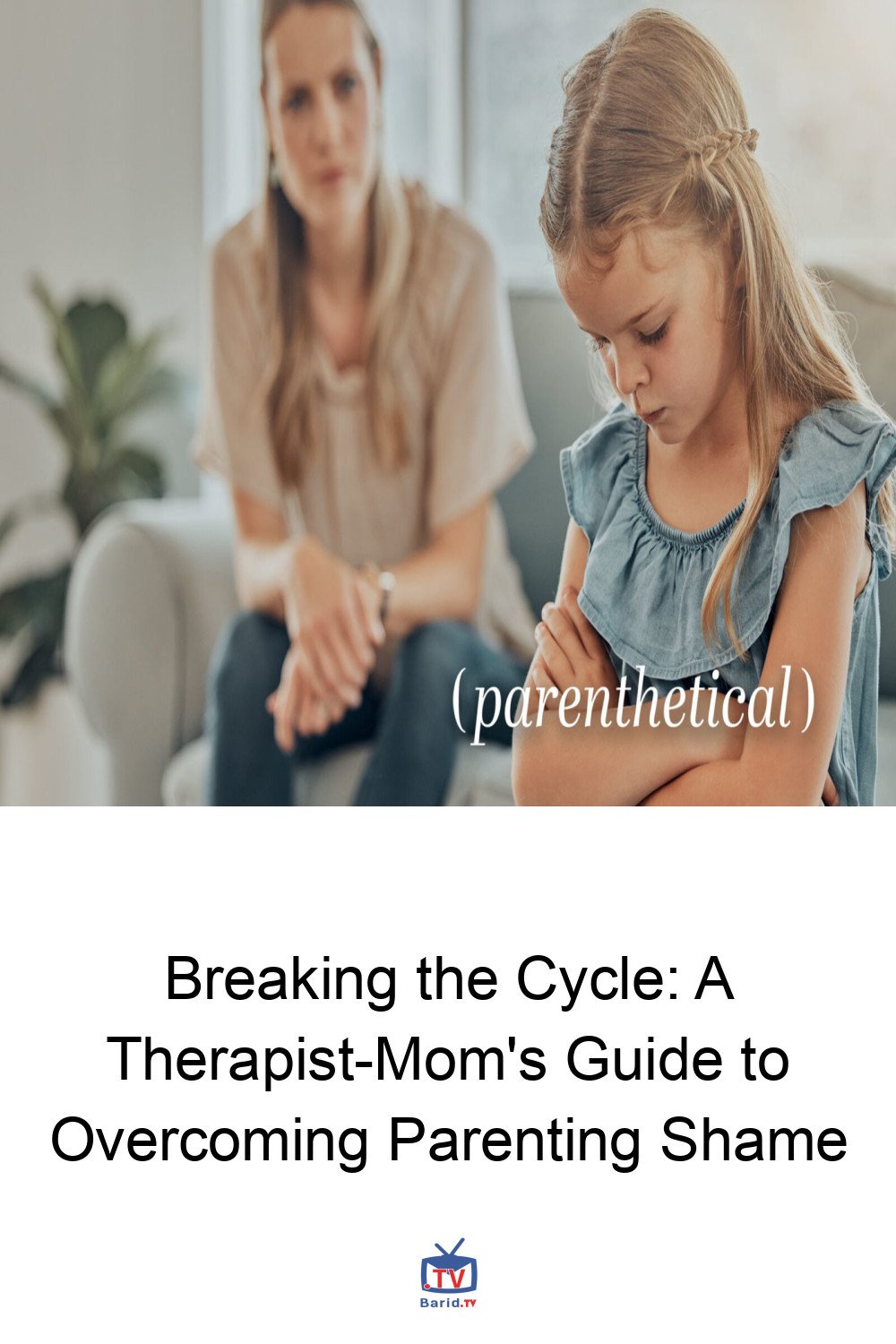
Breaking the Cycle: A Therapist-Mom’s Guide to Overcoming Parenting Shame
The journey of parenthood is often painted with strokes of joy, wonder, and unconditional love. Yet, beneath this idyllic surface, many parents grapple with a silent, insidious struggle: shame. In mindbodygreen’s insightful parenting column, Parenthetical, psychotherapist and writer Lia Avellino delves into this complex emotional landscape, offering a beacon of hope and practical guidance.
As a seasoned psychotherapist, Avellino has been privy to countless private narratives steeped in feelings of inadequacy. Parents frequently confess to not being productive enough, patient enough, physically “in shape” enough, or even competent enough in their professional lives. Parenthood, it seems, has become yet another demanding metric against which we measure our “enoughness.” This relentless self-scrutiny leads to a vicious cycle: the less worthy we feel, the more we conceal our perceived flaws, thereby preventing us from addressing the very roots of our shame and impeding healing for ourselves and our families.
Understanding the Nature of Shame
Renowned shame researcher Brené Brown defines shame as “the intensely painful feeling or experience of believing that we are flawed and therefore unworthy of love and belonging–something we’ve done or failed to do makes us unworthy of connection.” This profound fear of rejection is precisely why we often guard our shame-inducing secrets so fiercely, convinced they will jeopardize our relationships and acceptance.
It’s crucial to distinguish between acknowledging areas for personal growth and succumbing to the debilitating belief that we are inherently “bad.” The insidious trick of shame is that the more we allow this negative self-narrative to flourish, the less likely we are to initiate positive change. Shame, possessing the lowest energetic value of any emotion, renders us inert. It fosters a desire to hide, to withdraw from life, or to engage in harsh self-criticism, falsely believing that relentless self-punishment will somehow propel us towards our goals.
However, shame isn’t entirely without purpose. At times, it can signal a misalignment with our core values or community expectations, prompting us to course-correct. Yet, this corrective mechanism can easily become overactive, costing us our authentic selves. We must pause and truly understand the message shame carries. If it’s a constant companion, it may indicate that we are perpetually acting against ourselves rather than genuinely transforming what we dislike.
A 5-Step Invitation to Liberate Yourself from Parenting Shame
Lia Avellino offers a compassionate, five-step framework to understand and address your shame, enabling genuine change without self-harm or inadvertently passing on self-shaming patterns to your children. Below are the first two crucial steps:
1. Identify When You Are Starting to Shame Spiral
Shame can be so deeply ingrained that we may not even recognize its presence. Our culture often weaponizes shame to motivate behavior: we’re shamed about our bodies to buy diet programs, about aging to purchase expensive lotions, or made to feel “bad” so we seek external validation to feel “good” again. Perhaps your caregivers inadvertently used shame to control behavior, threatening beloved possessions or criticizing your body or personality to soothe their own anxieties. This suggests that your shame might not be inherently yours, but rather a legacy passed down.
Cultivating awareness is key. Observe when shame arises. Does it manifest as relentless self-criticism? Do you find yourself being overly critical of your child? Does the internal voice of shame echo someone from your past? Do you frequently regret words spoken or choices made? Pay attention to the physical sensations: shame often brings a heavy feeling, a desire to shut down or withdraw. Approach this observation with neutrality, seeking to understand rather than judge.
2. Get Critical of the Standard You’re Trying to Achieve
Our relationship with shame is often inherited or absorbed from societal belief systems. We chastise ourselves for failing to meet unrealistic standards – the expectation to “bounce back” physically after childbirth, for instance, or to embody perfectly attuned parenting. When anger is directed inward, it paralyzes us and perpetuates harm. However, anger channeled outward, towards the true sources of these unrealistic pressures, can be a powerful catalyst for change.
Instead of internalizing these impossible ideals, question them. Are these standards genuinely aligned with your values, or are they external pressures designed to make you feel inadequate? By critically evaluating the benchmarks you’re striving for, you can begin to dismantle the shame-inducing narratives and cultivate a more compassionate, realistic approach to your parenting journey. Remember, true growth comes from self-understanding and acceptance, not from the relentless pursuit of an unattainable perfection.
For more details, visit our website.
Source: Link