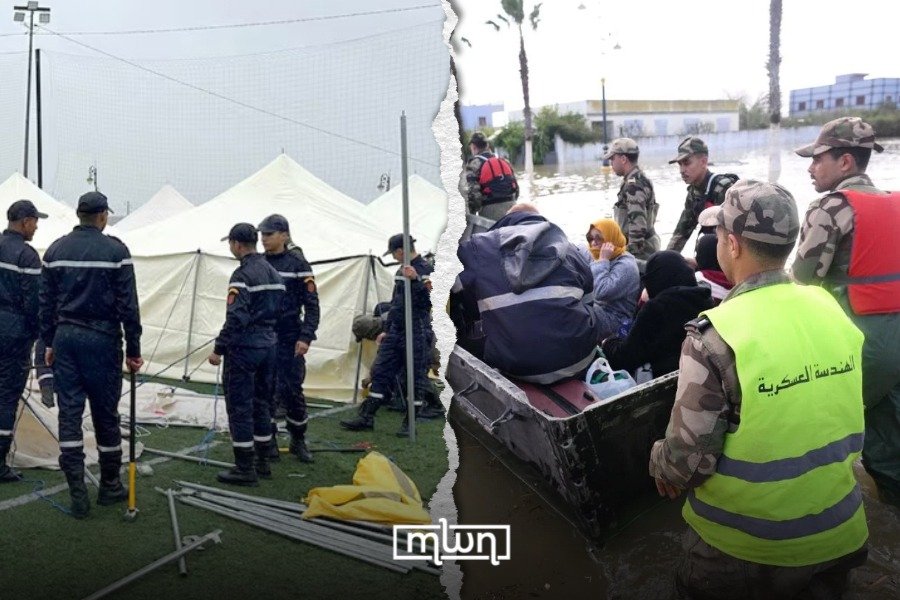

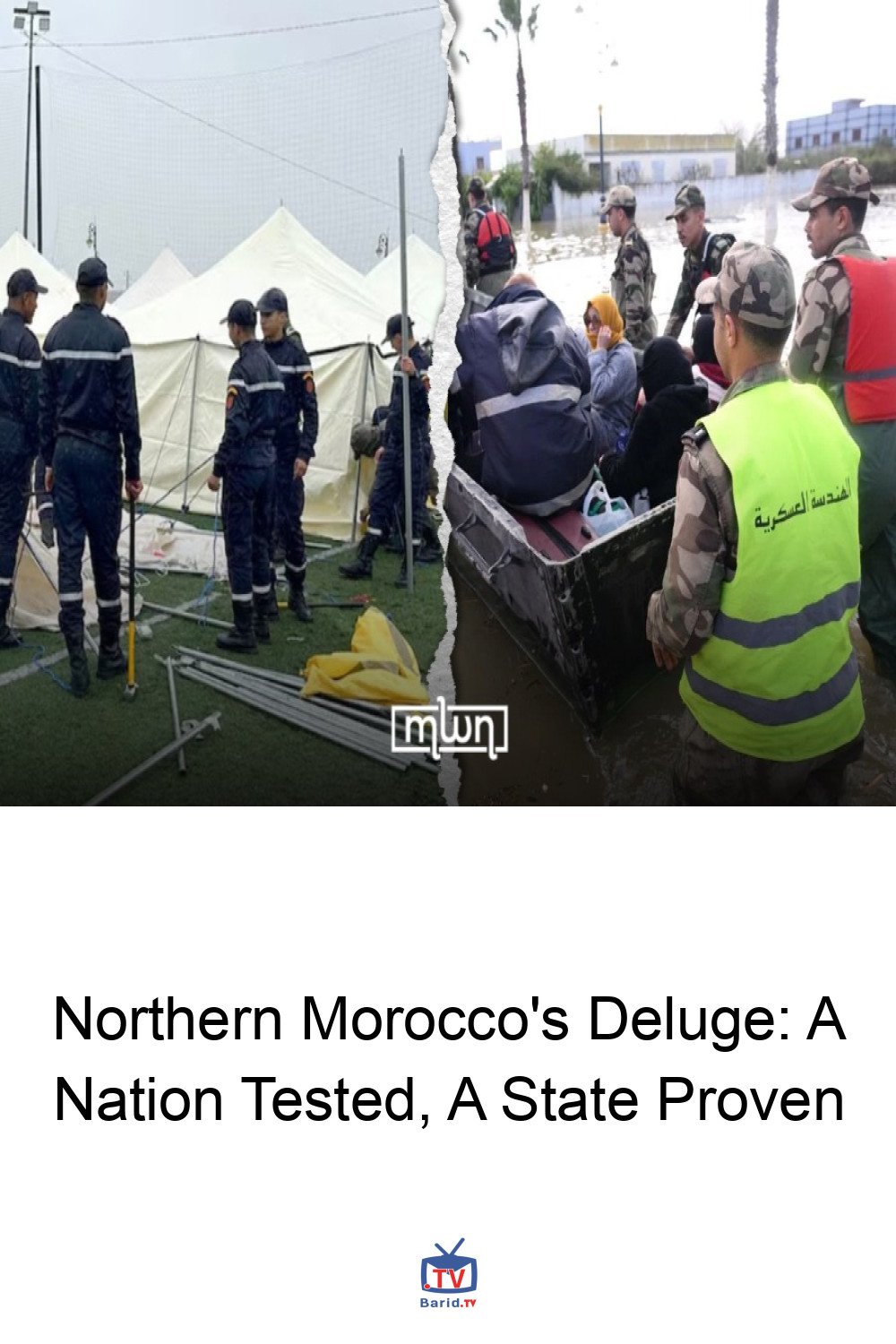
Northern Morocco recently endured an extraordinary hydrological shock, as weeks of relentless torrential rains culminated in widespread flooding across its productive territories, major river basins, and critical infrastructure. This wasn’t merely a severe weather event; it was a profound test of the state’s capacity, revealing a robust and coherent response rarely seen on such a scale.
The Deluge Unfolds: An Unprecedented Climatic Challenge
The facts paint a stark picture of an exceptional season. Since September 2025, rainfall in northern Morocco has dramatically surpassed climatic norms. Tangier alone recorded over 1,500 mm of precipitation by February 2026—a staggering three to four times its annual average. Similar abnormal volumes saturated soils and river systems in the Loukkos and Sebou basins, impacting regions like Chefchaouen, Kenitra, and Tetouan.
February proved particularly brutal, with two successive storms unleashing several months’ worth of rain onto already waterlogged lands within days. Major dams, including Oued El Makhazine and Al Wahda, reached critical thresholds, necessitating controlled releases to avert structural failures. This confluence of exceptional upstream rainfall and massive downstream discharges triggered catastrophic flooding across the Loukkos and Gharb plains, submerging cities such as Ksar El Kebir, Sidi Kacem, and Sidi Slimane. The Sebou River, overwhelmed by natural inflows and dam releases, simply could not cope, leading to a systemic disruption rather than a localized incident.
A Crisis of Human Proportions and Economic Impact
The human toll was immense. Authorities orchestrated preventive and successive evacuations, moving between 140,000 and 190,000 people to safety. Entire neighborhoods were temporarily emptied, with vulnerable families prioritized. Beyond human lives, livestock was relocated, and livelihoods protected to mitigate economic and social devastation. Over 110,000 hectares of vital agricultural land were submerged, crippling key cereal and market-gardening value chains. Roads were cut, irrigation networks destroyed, and essential services like drinking water and electricity suffered temporary disruptions, underscoring the widespread impact on daily life and economic stability.
Morocco’s Robust Response: A Unified Front
The institutional response was as comprehensive as the systemic shock. Affected areas were swiftly declared disaster zones, activating emergency legal and financial mechanisms. Crucially, under high royal instructions, the Royal Armed Forces were fully mobilized. Their unparalleled logistical deployment capabilities, civil engineering expertise, and medical support formed the operational backbone of the national effort.
Civil protection, territorial authorities, and various state services operated within a seamlessly integrated command framework. This ensured efficient evacuations, daring rescues, secure sheltering, equitable aid distribution, and the safeguarding of high-risk areas. Tens of thousands of displaced persons found refuge in structured temporary camps, equipped with essential water, sanitation, and healthcare facilities.
Beyond Emergency: A Blueprint for Resilience and Recovery
The Moroccan state’s foresight extended beyond immediate crisis management. A multi-billion dirham national emergency, recovery, and reconstruction plan was swiftly launched. This ambitious initiative aims to rehabilitate damaged infrastructure, rebuild homes, support affected farmers, and provide direct financial assistance to households. Targeted compensation schemes were established, with local commissions meticulously assessing damages to ensure fair and transparent implementation.
Crucially, the state meticulously planned the phased return of populations, contingent upon strict safety criteria and the full restoration of essential services. This proactive approach, combining immediate relief with long-term strategic planning, highlights a profound commitment to resilience.
The State’s True Test: Coherence, Sovereignty, and Logistics as Public Power
While each of these actions individually represents a significant crisis response, their collective execution reveals something far more profound: a powerful demonstration of state capacity and effective governance. What truly set this response apart was not just the sheer scale of resources mobilized, but the remarkable coherence of the deployed governance architecture.
Evacuations were preventive, initiated well before the most destructive hydrological peaks. Command structures were clear, vertical, and consistently legible from the central government down to local territorial levels. The response was unequivocally endogenous, assumed, and sovereign, without reliance on external international actors. Security forces, particularly the Royal Armed Forces, acted as infrastructures of protection rather than instruments of coercion, embodying public action at its most protective.
Above all, logistics emerged as a formidable instrument of public power. The intricate task of moving civilian populations—simultaneously evacuating, sheltering, feeding, providing medical care, protecting property, preserving livelihoods, and restoring essential services—is inherently more complex than military deployment. Morocco’s coordinated effort successfully managed four critical fronts concurrently: human security, territorial continuity (roads, water, electricity), economic stability, and long-term recovery, cementing its standing as a state capable of meeting its people’s needs in their greatest hour of challenge.
For more details, visit our website.
Source: Link