

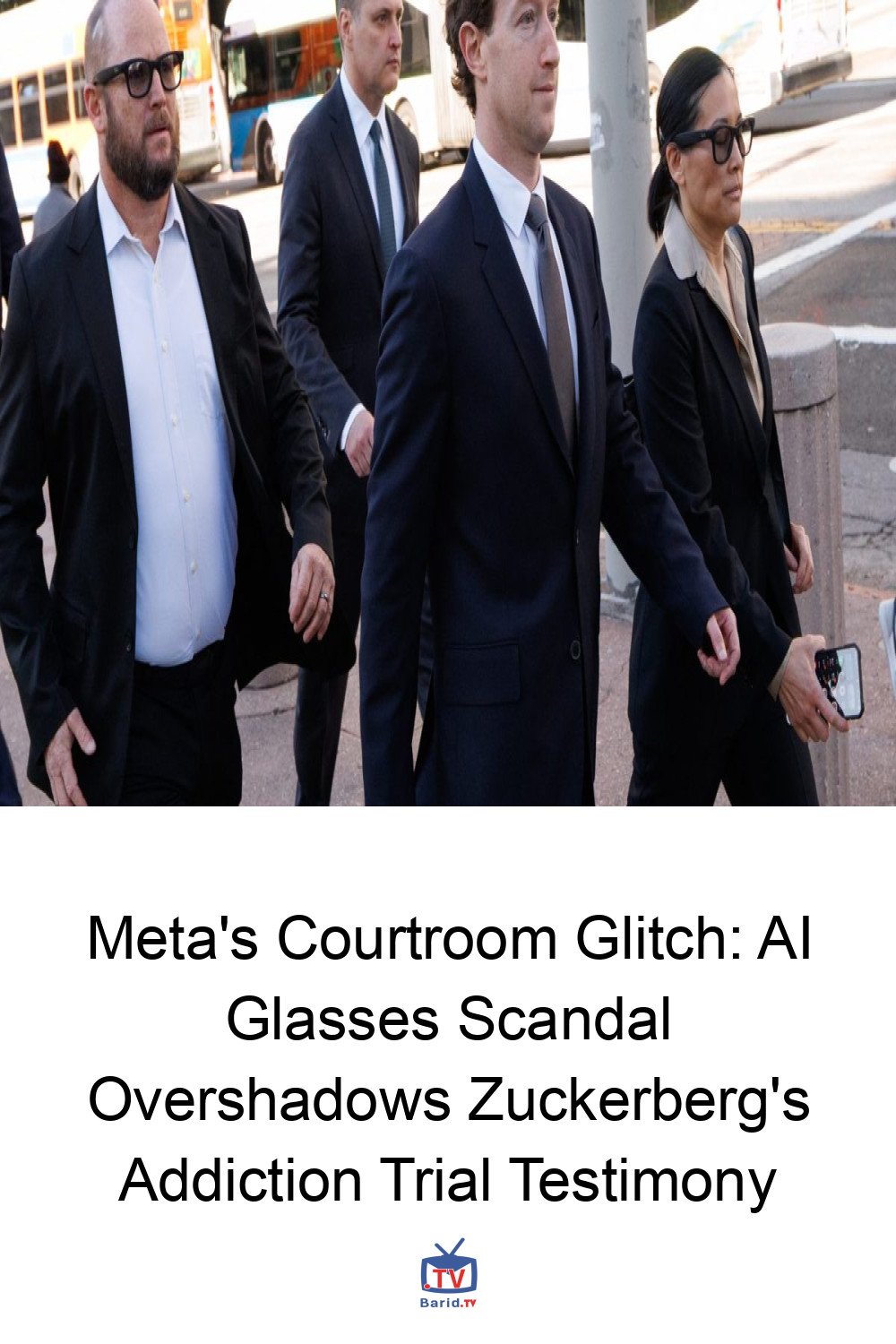
The high-stakes social media addiction trial against tech giants Meta and YouTube took an unexpected turn this Wednesday, as Mark Zuckerberg’s highly anticipated testimony was briefly overshadowed by a startling courtroom incident involving Meta AI glasses. The episode served as a stark reminder of the pervasive nature of technology, even in the most restricted environments.
A Glitch in the Matrix: Meta AI Glasses Spark Courtroom Controversy
Judge Carolyn B. Kuhl did not mince words, threatening to hold members of Zuckerberg’s entourage in contempt of court for wearing Meta AI glasses. These devices, capable of recording, are strictly prohibited in the courtroom. “If you have done that, you must delete that, or you will be held in contempt of the court,” Judge Kuhl sternly declared, emphasizing the gravity of the situation. “This is very serious.” The incident saw Zuckerberg’s executive assistant, Andrea Besmehn, and another individual sporting the glasses upon entering the Los Angeles courthouse, raising immediate concerns about potential unauthorized recording.
The Heart of the Matter: Social Media Addiction on Trial
Beyond the technological faux pas, the trial itself represents a pivotal moment, probing whether social media companies deliberately engineer their platforms to foster addiction, particularly among young people. The outcome could set a precedent for thousands of similar lawsuits nationwide. The plaintiff, a 20-year-old identified as “KGM” or “Kaley,” alleges severe mental health issues stemming from social media addiction. Notably, TikTok and Snap had already settled with the plaintiff prior to the commencement of this landmark trial.
Zuckerberg’s Public Persona Under Scrutiny
During his testimony, Zuckerberg faced pointed questions regarding his media training. Plaintiff’s counsel presented internal Meta documents that revealed efforts by communications staff to mold Zuckerberg’s public image, urging him to appear “authentic, direct, human, insightful, and real,” rather than “hard, fake, robotic, corporate, or cheesy.” While Zuckerberg dismissed these as mere “feedback” and denied being coached, he conceded, “I think I’m actually well known to be very bad at this,” drawing some laughter. His often-criticized stiff public demeanor has long been a subject of public commentary.
The Addiction Debate: Engagement vs. Utility
The core accusation of designing addictive platforms was met with Zuckerberg’s cautious denial. When asked if people use something more if it’s addictive, he responded, “I’m not sure what to say to that. I don’t think that applies here.” This stance was challenged by lawyer Mark Lanier, who referenced Zuckerberg’s past congressional testimony where he claimed Instagram employees weren’t given goals to increase user time on the platform.
Lanier countered with internal documents from Instagram head Adam Mosseri’s previous testimony, which seemingly contradicted Zuckerberg’s assertion. These documents outlined company goals to actively increase daily user engagement time on Instagram to 40 minutes in 2023 and 46 minutes in 2026. Zuckerberg clarified that while Instagram previously had such engagement targets, the company had since shifted its focus to “utility,” operating under the “basic assumption” that “if something is valuable, people will use it more because it’s useful to them.”
Protecting the Young: Age Verification Challenges
A significant portion of the questioning centered on Instagram’s measures to prevent users under 13 from accessing the platform. Zuckerberg acknowledged that some users falsify their age during sign-up, stating that Meta includes age limits in its terms and removes identified underage users. He also repeatedly suggested that age verification is better handled by operating system and app store providers like Apple and Google.
This drew a sharp retort from the plaintiff’s lawyer, who questioned the efficacy of relying on fine print for young children: “You expect a 9-year-old to read all of the fine print? That’s your basis for swearing under oath that children under 13 are not allowed?”
Meta, through a spokesperson, has reiterated its strong disagreement with the lawsuit’s allegations, expressing confidence that “the evidence will show our long-standing commitment to supporting young people.” The company is simultaneously facing another consumer protection trial in New Mexico, where the state’s attorney general alleges failures in preventing child sexual exploitation on its platforms. The legal challenges underscore the intense scrutiny facing social media giants over their societal impact.
For more details, visit our website.
Source: Link