

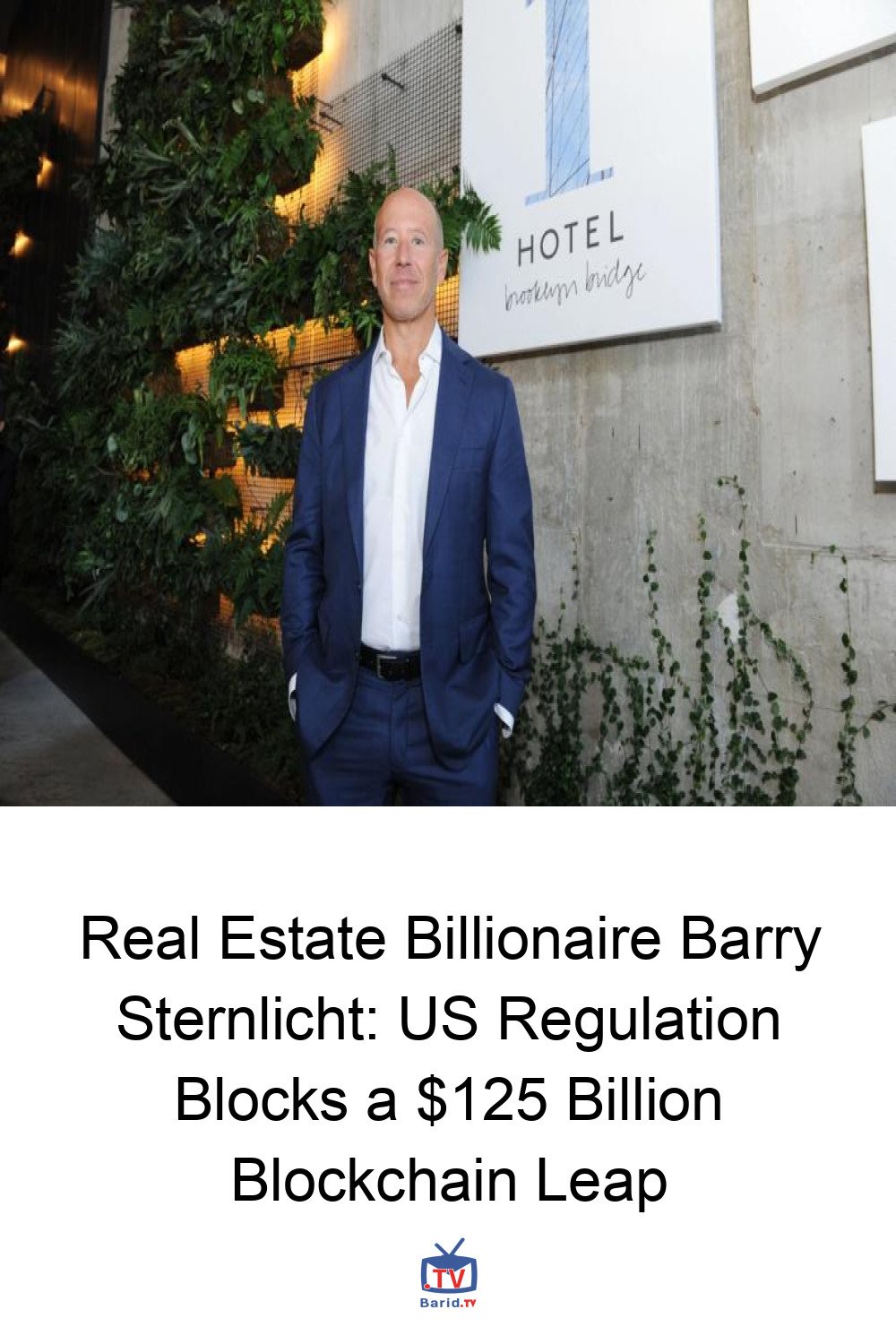
Real Estate Billionaire Barry Sternlicht: US Regulation Blocks a $125 Billion Blockchain Leap
In a bold declaration, real estate titan Barry Sternlicht, founder of Starwood Capital Group, has voiced his frustration over the United States’ regulatory landscape, asserting that it is actively hindering his firm’s readiness to tokenize real-world assets. With Starwood Capital managing a staggering $125 billion in assets, Sternlicht’s candid remarks underscore a growing tension between innovative financial technology and the existing legal framework.
The Blockchain Vision: Unlocking Illiquid Assets
Speaking at the World Liberty Forum in Palm Beach, Sternlicht made it clear: “We want to do it right now and we’re ready.” He lamented the inability of his clients to engage in token-based transactions for real estate, highlighting the immense potential of asset tokenization. This revolutionary process involves converting ownership of physical assets, such as properties or fine art, into blockchain-based tokens that can be seamlessly traded.
For a powerhouse like Starwood, tokenization isn’t merely a technological novelty; it represents a transformative pathway to new capital formation and democratized access to historically illiquid markets. By fractionalizing ownership and streamlining transactions, blockchain technology promises to inject unprecedented efficiency into the often-cumbersome real estate sector.
Tokenization: The Next Frontier, Lagging Behind AI
Sternlicht, a staunch advocate for the technology, hailed tokenization as “the future,” drawing a compelling parallel to the early stages of artificial intelligence. He argued that the world is yet to fully grasp its implications, stating, “This is even earlier in the physical world than AI is.” Despite the nascent stage, his enthusiasm is palpable: “It’s exciting as can be. It’s a fantastic thing for the world, the world just has to catch up with it.” This sentiment reflects a broader industry belief that tokenization is poised to revolutionize how assets are owned, managed, and traded globally.
A Trillion-Dollar Market on the Horizon
The concept of placing real estate on the blockchain is far from new, with pioneering firms already making strides. Propy, for instance, unveiled ambitious plans last year to expand its operations by acquiring mid-size property title firms across the U.S., aiming to digitize and streamline industry processes. These early movers are laying the groundwork for what consulting giant Deloitte predicts will be a monumental shift.
According to a Deloitte report, the value of tokenized real estate is projected to skyrocket from less than US$0.3 trillion in 2024 to an astonishing $4 trillion by 2035. This represents a compound annual growth rate (CAGR) of 27%, signaling a profound transformation. Deloitte emphasizes that tokenized real estate will not only foster new markets and products but also empower real estate organizations to overcome critical challenges, including operational inefficiencies, high administrative costs, and limited retail investor participation.
The Imperative for Regulatory Evolution
Barry Sternlicht’s impassioned plea serves as a stark reminder of the chasm between technological innovation and regulatory inertia. While the potential for tokenization to unlock capital, enhance liquidity, and streamline processes is clear, its widespread adoption hinges on the development of clear, supportive regulatory frameworks. As the global financial landscape continues to evolve at an unprecedented pace, the call for regulators to “catch up” with the future of finance grows louder, promising a more efficient and accessible real estate market for all.
For more details, visit our website.
Source: Link