
Breaking Down the Walls: Parachord’s Vision for a Unified Music Experience
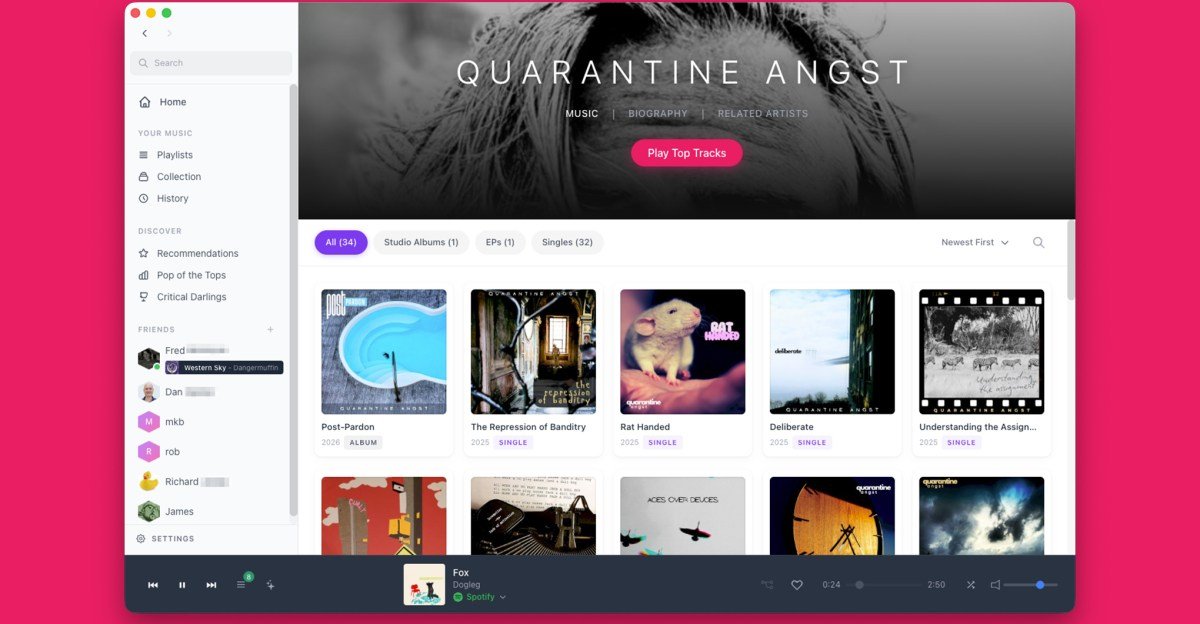
Imagine a world where your music recommendations flow freely, unhindered by the digital fences of Spotify, Apple Music, or Bandcamp. A place where you can effortlessly share tracks with friends, regardless of their preferred streaming service, or transform a DJ’s social media feed into an instant playlist. This isn’t a distant dream; it’s the ambitious promise of Parachord, a nascent music application leveraging the power of AI to redefine how we discover and interact with music.
The Frustration of Fragmentation
For years, the digital music landscape has been a fragmented one. While services like Spotify dominate, a passionate segment of listeners navigates a complex ecosystem of platforms – from Bandcamp for independent artists to Last.fm for tracking listening habits and Bluesky for following niche communities. The inability to seamlessly connect these experiences, to share and discover across service boundaries, has been a persistent pain point for true music aficionados.
Parachord aims to dismantle these silos by liberating music metadata, striving to make every song universally playable and shareable. While still in its experimental stages, Parachord’s vision is clear: to create a truly interconnected music universe.
A Veteran’s Second Act: The Tomahawk Legacy Reborn
The mastermind behind Parachord is J Herskowitz, a seasoned music tech veteran with an impressive resume spanning Spotify, LimeWire, and AOL Music. But Parachord isn’t Herskowitz’s first foray into this ambitious territory. Back in 2011, he spearheaded Tomahawk, an innovative app that used a plug-in architecture to unify music libraries from services like Rdio, Grooveshark, and Beats Music. Tomahawk also offered a social layer and universal sharing links, a concept far ahead of its time.
Despite its groundbreaking ideas, Tomahawk ultimately succumbed to the lack of a sustainable business model, ceasing active development in 2015. “We all needed to get jobs,” Herskowitz recalls, expressing the sadness of its demise. Yet, Tomahawk’s open-source code remained on GitHub, a dormant blueprint awaiting revival.
AI: The Catalyst for Reinvention
Fast forward to today, and the landscape has changed dramatically, not least with the advent of powerful AI tools. Just a month ago, Herskowitz revisited his old project, armed with a new ally: Claude Code. “I fired up Claude Code, pointed it at the Tomahawk repo on GitHub, and said: Look at this, understand what it does, and let’s see if we can rebuild it,” he explains.
Remarkably, Herskowitz, who self-identifies more as a product manager than a traditional developer, managed to rewrite and transform Tomahawk into a functional version of Parachord within weeks, all without hiring a development team. This demonstrates the transformative potential of AI in empowering creators to bring complex visions to life with unprecedented speed and efficiency.
Building for the Passionate Few
While the mainstream has largely consolidated around a few major streaming giants, Parachord isn’t chasing the masses. Herskowitz acknowledges that those solely interested in their “Discover Weekly” playlists might not find Parachord’s intricate features appealing. Instead, the app is crafted for the discerning music lover – the Bandcamp buyer, the Last.fm tracker, the Bluesky follower of obscure bands.
Herskowitz once believed this audience was vast, but now recognizes its niche nature. Yet, this realization hasn’t deterred him. “That’s the beauty of where we are today,” he muses. “Technologically speaking, I can build an app for [just] me.” This philosophy underscores a broader trend: AI enables the creation of highly specialized tools for passionate communities, even if those communities are small.
Vibe-Coding: A New Lease on Life for Niche Media
The concept of “vibe-coding” – using AI to understand and categorize content based on its inherent feel or context – extends beyond productivity apps into the media realm. Historically, many innovative media projects, like Songbird (turning MP3 blogs into playlists) or Boxee (universal movie libraries), were passion-driven efforts that struggled to find commercial viability. In an earlier era, a niche focus often meant a death sentence.
Today, AI and “vibe-coding” offer these niche projects a renewed opportunity. By automating complex development tasks and enabling highly personalized experiences, AI can breathe new life into specialized applications that cater to specific tastes and communities, proving that the next revolution in music discovery might not come from the giants, but from the dedicated few empowered by intelligent technology.
For more details, visit our website.
Source: Link