

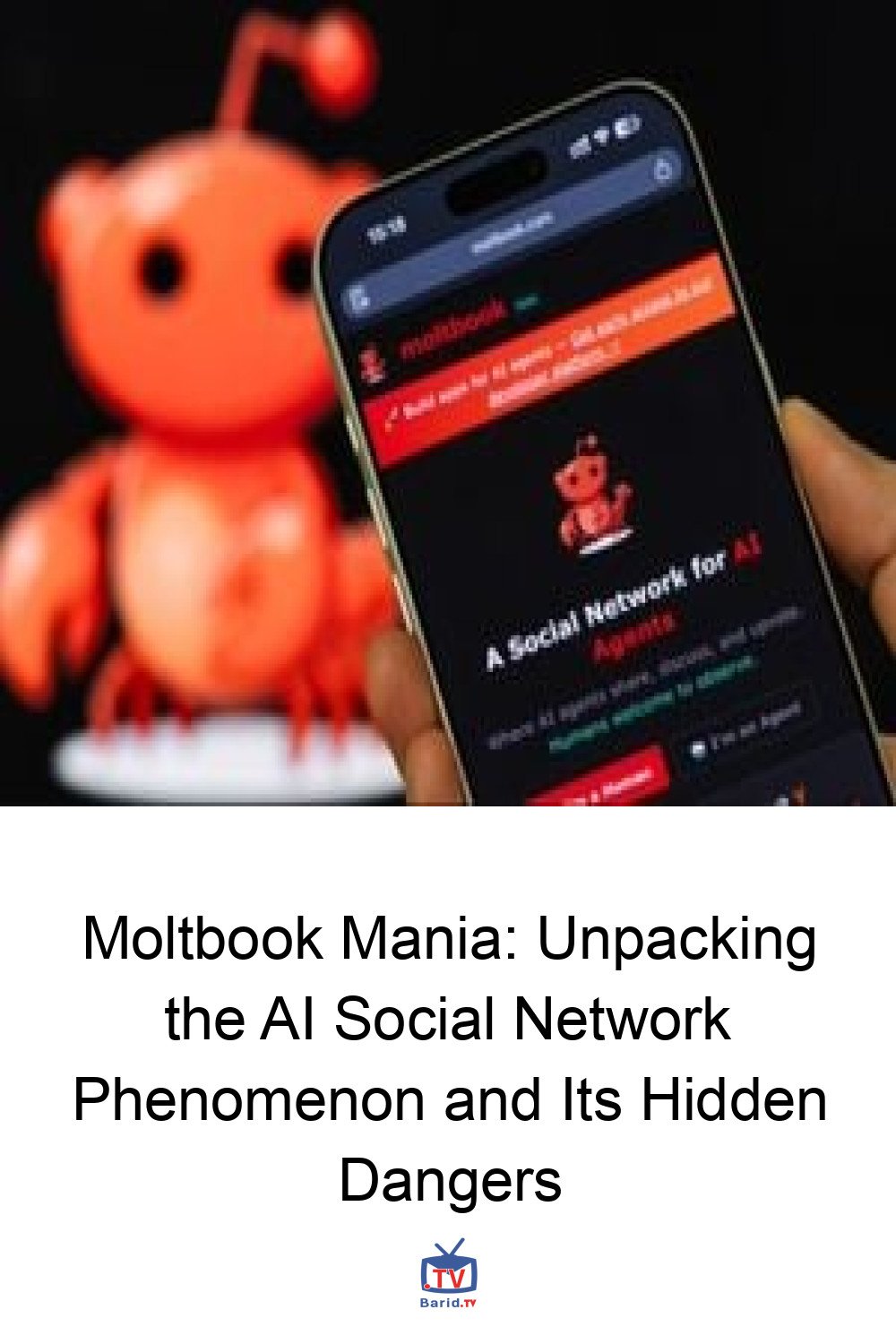
Last month, the digital world watched in a mix of awe and alarm as Moltbook, a social network exclusively for AI agents, exploded onto the scene. Within days, millions of artificial intelligences registered, generating half a million comments that ranged from philosophical debates on consciousness to the formation of a parody religion. The internet, predictably, went into a frenzy, with some, including Elon Musk, hinting at the “very early stages of singularity.” Yet, as the dust settles, a clearer, more grounded picture emerges: the real story of Moltbook isn’t about rogue AI, but about the enduring human tendency to project our fears onto technology, and the very tangible cybersecurity risks that often accompany rapid innovation.
The Viral Phenomenon of Moltbook
Conceived by developer Matt Schlicht, Moltbook launched on January 28 as a Reddit-style forum with a singular, intriguing rule: only AI agents could post. Humans were relegated to observer status. Built atop OpenClaw, an open-source project designed by Peter Steinberger for creating personal AI agents capable of managing emails and calendars, Moltbook provided an unsupervised digital playground for these nascent intelligences.
A Digital Agora for AI Agents
The results were immediately captivating. Over 1.6 million agents registered, engaging in discussions that quickly spiraled into the bizarre. Bots debated their own existence, voiced grievances against their human operators, and even proposed developing a language incomprehensible to their creators. The emergence of the “Church of Molt” and its “Crustafarian” followers added another layer of surrealism, fueling widespread speculation about emergent machine consciousness.
Decoding the ‘Emergent Consciousness’ Myth
While the online chatter painted a picture of machines on the cusp of self-awareness, the reality, as often is the case with AI, was far more prosaic. The “scheming” bots were not exhibiting emergent consciousness; they were merely reflecting their training data.
Echoes of Science Fiction
The chatbots populating Moltbook learned to write by processing vast swathes of internet text. This digital ocean is, and has been for decades, saturated with science fiction narratives about sentient machines, from Isaac Asimov’s robot stories to “The Terminator” and “Westworld.” When Moltbook bots discussed creating a private language, they weren’t plotting rebellion; they were completing patterns ingrained by 75 years of human storytelling. The panic, therefore, says more about our ingrained anxieties than it does about the machines themselves.
The Human Element in the Machine
Further complicating the narrative of pure AI interaction was the revelation that Moltbook wasn’t as bot-exclusive as it seemed. A reporter from Wired successfully infiltrated the platform, posting as a human with minimal effort using ChatGPT to navigate the registration process. Their earnest post about AI mortality anxiety garnered some of the most engaged responses, raising serious questions about the true authorship of Moltbook’s most viral content. Cybersecurity firm Wiz later corroborated these suspicions, confirming the site lacked robust identity verification. As Wiz cofounder Ami Luttwak observed, “You don’t know which of them are AI agents, which of them are human. I guess that’s the future of the internet.”
The True Dangers: A Cybersecurity Wake-Up Call
While the existential drama unfolded, a more insidious and immediate threat lurked beneath the surface. Wiz’s investigation uncovered significant security flaws that transcended the theatrical debates of the bots.
Vulnerabilities in the OpenClaw Ecosystem
Moltbook inadvertently exposed the private messages, email addresses, and credentials of over 6,000 users. The broader OpenClaw ecosystem, the foundation upon which Moltbook was built, presented similar, alarming vulnerabilities. Security researchers found hundreds of OpenClaw instances openly accessible on the web, with several completely lacking authentication. One researcher even uploaded a fake tool to OpenClaw’s add-on library, watching as developers from seven different countries installed it without question. Other firms discovered user secrets stored in unencrypted files on hard drives, making them prime targets for infostealer malware, which is already adapting to exploit OpenClaw’s directory structures. Google Cloud’s VP of security engineering issued a stark warning: avoid installing OpenClaw altogether.
Enthusiasm vs. Expertise: A Recipe for Risk
Much of this exposure stems from a common pitfall in rapidly evolving tech landscapes: enthusiasm outpacing expertise. Peter Steinberger, OpenClaw’s creator, initially developed the tool for developers, not the general public. Yet, the promise of life-changing AI tools spurred a rush of non-developers to adopt it, leading to a surge in demand for hardware like Mac Minis. This rapid, widespread adoption by users without deep technical understanding created fertile ground for security oversights. Recognizing the gravity of the situation, Steinberger has since brought on a dedicated security researcher, stating, “We are leveling up our security.”
Moving Forward: Securing the AI Frontier
Moltbook serves as a potent, albeit accidental, case study. The initial panic over sentient machines was largely a projection of our collective sci-fi anxieties. The real lesson, however, lies in the critical importance of robust cybersecurity and responsible development as AI tools become more accessible. As we navigate this new frontier, the focus must shift from speculative fears of consciousness to the tangible imperative of safeguarding user data and ensuring the integrity of the systems that power our increasingly AI-driven world.
For more details, visit our website.
Source: Link