
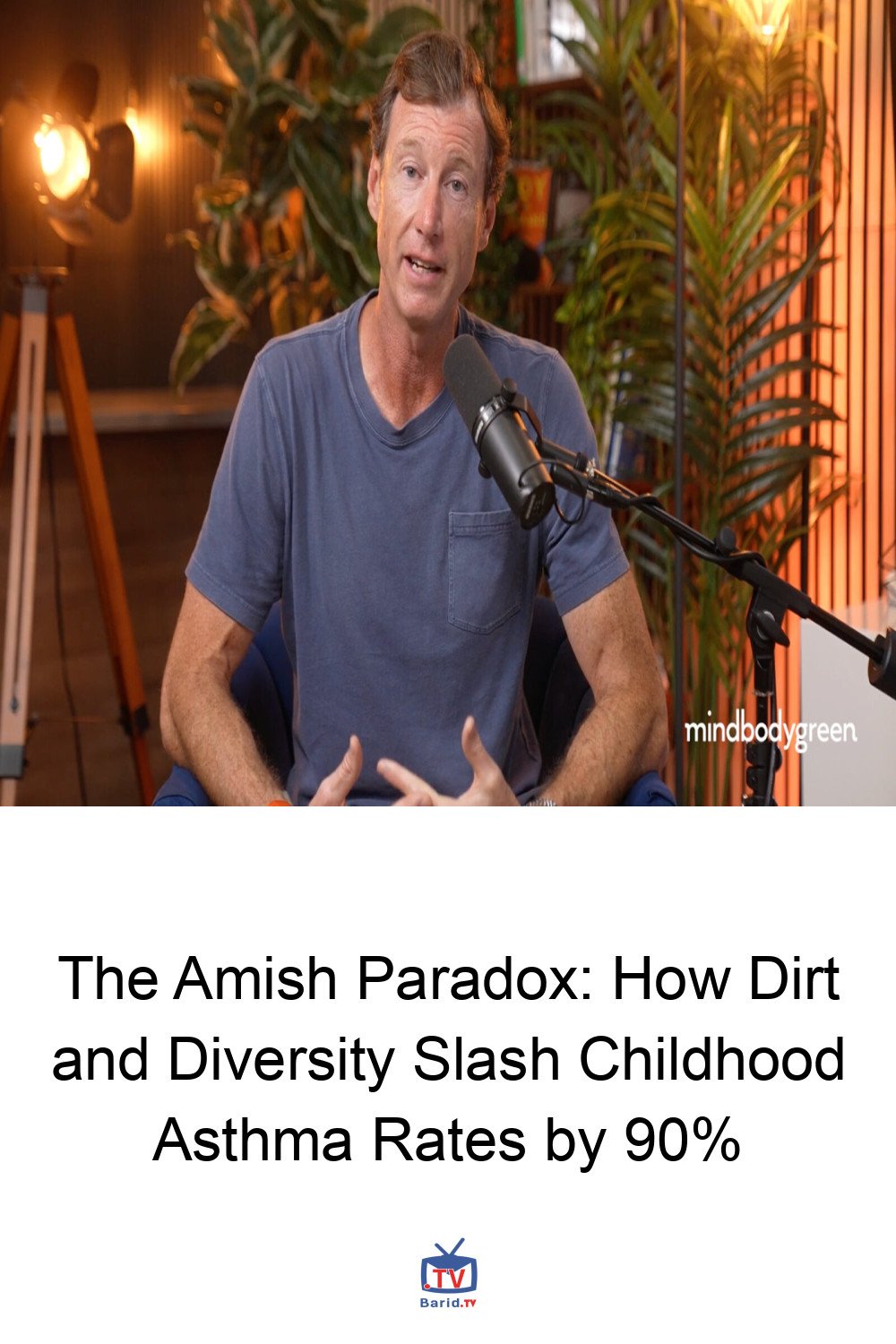
Imagine a world where children, despite daily exposure to farm animals and dirt, boast respiratory health far superior to their urban counterparts. This isn’t a historical fantasy but a living reality among Amish communities in rural Pennsylvania, where childhood asthma rates plummet by an astonishing 90% compared to the national average. This profound health paradox challenges everything modern society has taught us about hygiene and childhood development.
Unearthing the Amish Advantage
While the national childhood asthma rate hovers around 11%, Amish farm children experience it at a mere 1%. Hay fever drops from 13% to 3%, and overall allergen sensitization falls from 29% to just 12%. These remarkable statistics are not merely anecdotal; they are the subject of groundbreaking research that forms the core of our latest podcast episode.
The Microbial Divide: Amish vs. Hutterite
Our deep dive into this phenomenon explores fascinating research comparing Amish and Hutterite communities. These two groups share similar genetic backgrounds and traditional lifestyles, yet their farming methods diverge significantly. The Amish maintain hands-on, traditional practices with daily animal contact, while Hutterites have embraced industrialized farming. The stark health differences observed between them point to a critical factor: microbial exposure.
Researchers pinpointed three primary protective elements for the Amish children: direct contact with cows, and exposure to straw and hay. But the revelation doesn’t stop at the barn door. Scientists analyzing the dust within these children’s homes discovered a direct correlation between the microbial diversity in that dust and protection against asthma. Essentially, the invisible ecosystem of bacteria and fungi brought into the home on clothes and shoes acts as a powerful training ground for their immune systems, fostering resilience rather than reactivity.
The “Hygiene Hypothesis” Revisited
This compelling evidence strongly supports the “hygiene hypothesis” – the theory that our immune systems evolved expecting a certain level of microbial interaction. Without this crucial exposure, particularly in early life, the immune system can become hypersensitive, mistakenly identifying harmless substances like pollen or pet dander as dangerous invaders.
Think of a child’s immune system as a student preparing for a complex exam. If it never encounters practice problems (beneficial microbes), it’s likely to panic when the real test (allergen exposure) arrives. However, with consistent training, it learns to respond appropriately and effectively.
From Farm to Pharma: Mimicking Microbial Benefits
The implications of this research extend beyond rural farms. Scientists are now developing bacterial lysates – concentrated preparations of multiple bacterial strains – that aim to replicate this protective effect. One notable product, OM-85, derived from 21 different bacterial strains, has been used by over 100 million people globally. Studies indicate its potential to decrease wheezing episodes and delay serious respiratory illnesses in at-risk children.
Rethinking Clean: Practical Takeaways for Modern Families
It’s crucial to clarify: this research is not an endorsement to abandon basic hygiene. Handwashing remains vital for preventing infectious diseases. However, it prompts us to consider if we’ve perhaps overcorrected in our quest for sterility. Maybe not every surface needs to be sanitized. Perhaps playing in the dirt isn’t just a childhood pastime, but a beneficial immunological exercise. And that dropped pacifier? It might not always require immediate sterilization.
The emerging science suggests that early and diverse microbial exposure, especially within the first year of life, could be one of the most potent preventive measures against childhood asthma and allergies. It beautifully illustrates how ancestral wisdom – allowing children to explore, play outdoors, and get dirty – aligns perfectly with cutting-edge immunology.
This article merely scratches the surface of the fascinating insights explored in our full podcast episode. We delve deeper into the specific mechanisms of immune training, discuss practical applications for urban and suburban families, and examine the broader societal implications of our modern relationship with cleanliness. Our goal is to translate complex, groundbreaking research into accessible, actionable, and genuinely useful information for your health journey. Listen to the full episode on Apple or Spotify, or watch and subscribe to the series on YouTube.
For more details, visit our website.
Source: Link