
Deep within the hallowed, secretive halls of Lego’s Creative Play Lab in Billund, Denmark, a revolution has been quietly brewing for eight years. This clandestine division, a global network of 237 brilliant minds, is tasked with nothing less than charting the future of the world’s most beloved toy brand. And now, the fruits of their labor are ready to emerge: the Lego Smart Brick.
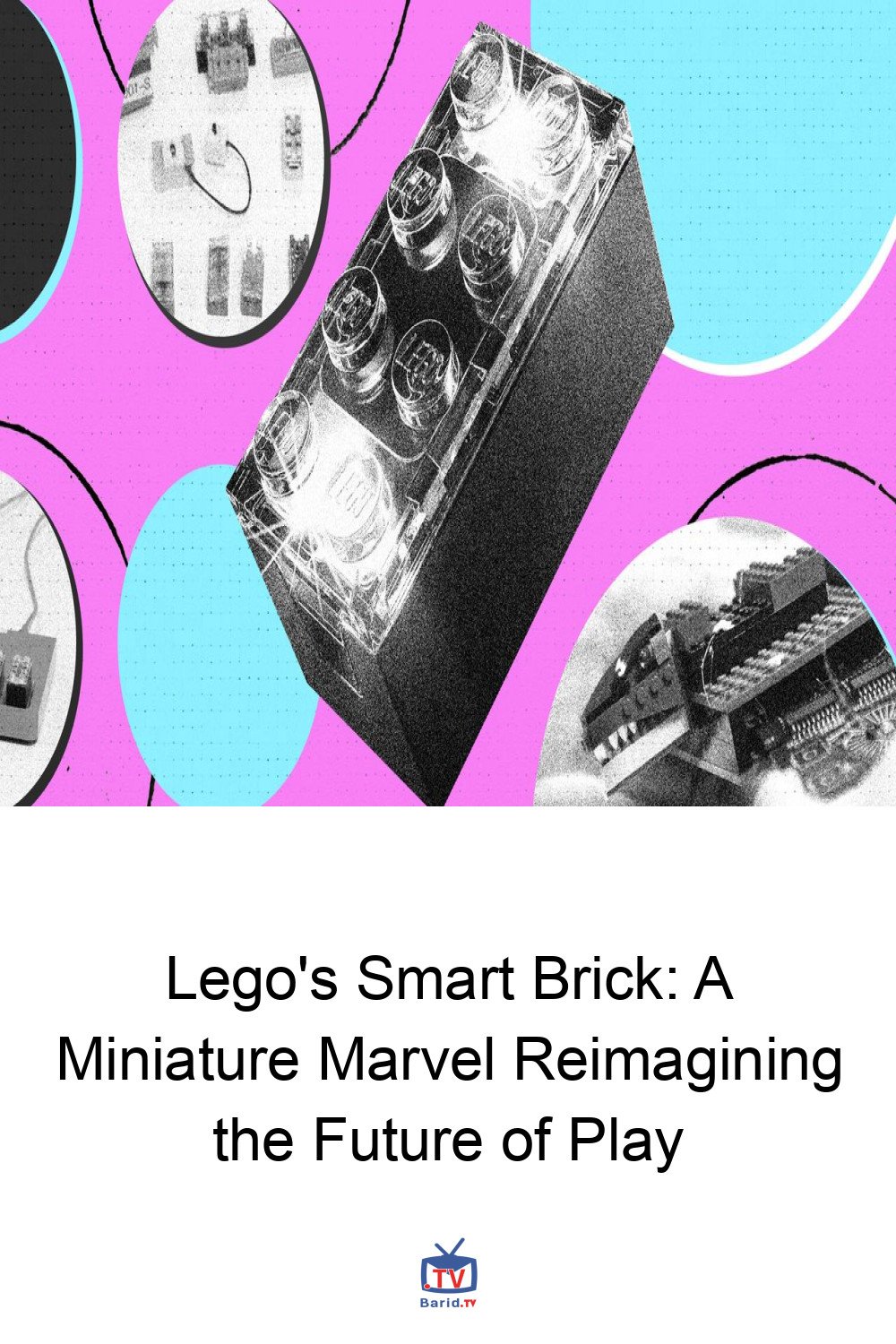
What appears to be a humble 2×4 black brick is, in fact, a marvel of miniaturized engineering – a sensor-laden powerhouse poised to redefine interactive play. For the first time, outsiders are getting a glimpse into the journey of prototypes that led to this groundbreaking innovation, set to hit stores on March 1st.
The Miniature Marvel: Inside the Smart Brick
Don’t let its diminutive size fool you; the Smart Brick is exceedingly clever. Encased within its familiar plastic shell is a custom-designed chip running bespoke software. This tiny brain communicates with an array of onboard sensors, allowing the brick to monitor and react to motion, orientation, and even magnetic fields. It’s a technological leap so significant that many are calling it Lego’s most radical product since the minifigure itself, nearly half a century ago.
The visionary behind this ambitious project is Tom Donaldson, Senior Vice President and head of the Creative Play Lab. Working alongside external experts from Cambridge Consultants, Donaldson’s team navigated years of iterative improvements, missteps, and breakthroughs. The challenge was immense: cramming an LED array, accelerometer, light sensors, sound sensor, miniature speaker, wireless charging capabilities, a battery, an analog synthesizer, and a custom 4.1-millimeter chip into a standard eight-stud brick. This feat of engineering took far longer than initially anticipated, a testament to the complexity involved.
Bringing Iconic Worlds to Life
While the prototypes on display—a fascinating jumble of circuit boards, exposed wires, and experimental brick assemblies—were a far cry from a finished toy, the launch product promises a seamless, magical experience. The new Smart Play System will debut with a spectacular tranche of Star Wars sets, each bursting with light and sound.
Experience the Galaxy
- Darth Vader’s TIE Fighter: Prepare for screaming engine sounds that dynamically shift pitch as you bank and climb through imaginary dogfights.
- Throne Room Duel: Engage in epic battles with motion-activated, thrumming lightsaber sounds, complete with a surprisingly authentic rendition of “The Imperial March.”
- Millennium Falcon: This iconic ship leverages the Smart Brick’s accelerometer, allowing builders to manually throttle up the hyperdrive. Hidden features await discovery, adding layers of surprise to every play session.
- Luke’s X-34 Landspeeder: Emits a classic sci-fi whine, but its intelligence goes further. It can detect crashes or refueling attempts, adjusting its sonic output to match the unfolding narrative.
From Mundane Inspiration to Playful Revolution
The genesis of the Smart Brick is as unconventional as the technology itself. Tom Donaldson first conceived the idea during the 2017 Christmas holidays, not while brainstorming in a lab, but while performing the decidedly unglamorous task of stripping damp plaster from a wall in his own home. “It was one of those times when, if you get really bored, you get creative moments,” he recounts.
Donaldson’s key insights emerged from this mundane activity: instead of a single, large piece of technology, interactive play demanded numerous small, integrated components. “Kids don’t play with one big thing,” he explains. “It becomes boring, because kids play with lots of stuff. So we needed something that kids could have lots of.” His second crucial realization was the need for a unified system – a Smart Brick that functioned identically across all Lego sets, ensuring universal compatibility and endless creative possibilities.
Overcoming Engineering Hurdles
Integrating advanced technology into Lego bricks presented a unique set of challenges. Donaldson and his team grappled with fundamental issues like power and connectivity. “We needed to think about wireless charging, because if you put batteries in those things, it’s a nightmare for parents,” he notes. Furthermore, the complexities of device pairing, often a frustration for adults, had to be eliminated for a child-friendly experience. “It’s obvious that pairing is a problem, because kids aren’t going to sit there and pair three different things.” These technical hurdles, while eventually overcome, extended the development timeline significantly.
A New Chapter in Interactive Play
Lego is no stranger to interactive toys. Over the years, the company has experimented with various approaches, from the gaming console crossover of Lego Dimensions (2015) and the augmented reality of Lego Hidden Side (2019) to the Bluetooth-enabled Lego Super Mario (2020) and the programmable robots of Mindstorms (first launched in 1998, discontinued in 2022).
However, none of these previous ventures have aimed to integrate technology so fundamentally into the core “System in Play” – the very essence of Lego’s interlocking brick system. The Smart Brick isn’t just an add-on; it’s a foundational element designed to infuse every creation with dynamic life, sound, and interaction. As the Smart Play System prepares for its March 1st launch, it marks a bold new chapter for Lego, promising to captivate a new generation of builders and rekindle the magic for long-time fans, proving that even the simplest brick can hold a universe of possibilities.
For more details, visit our website.
Source: Link