

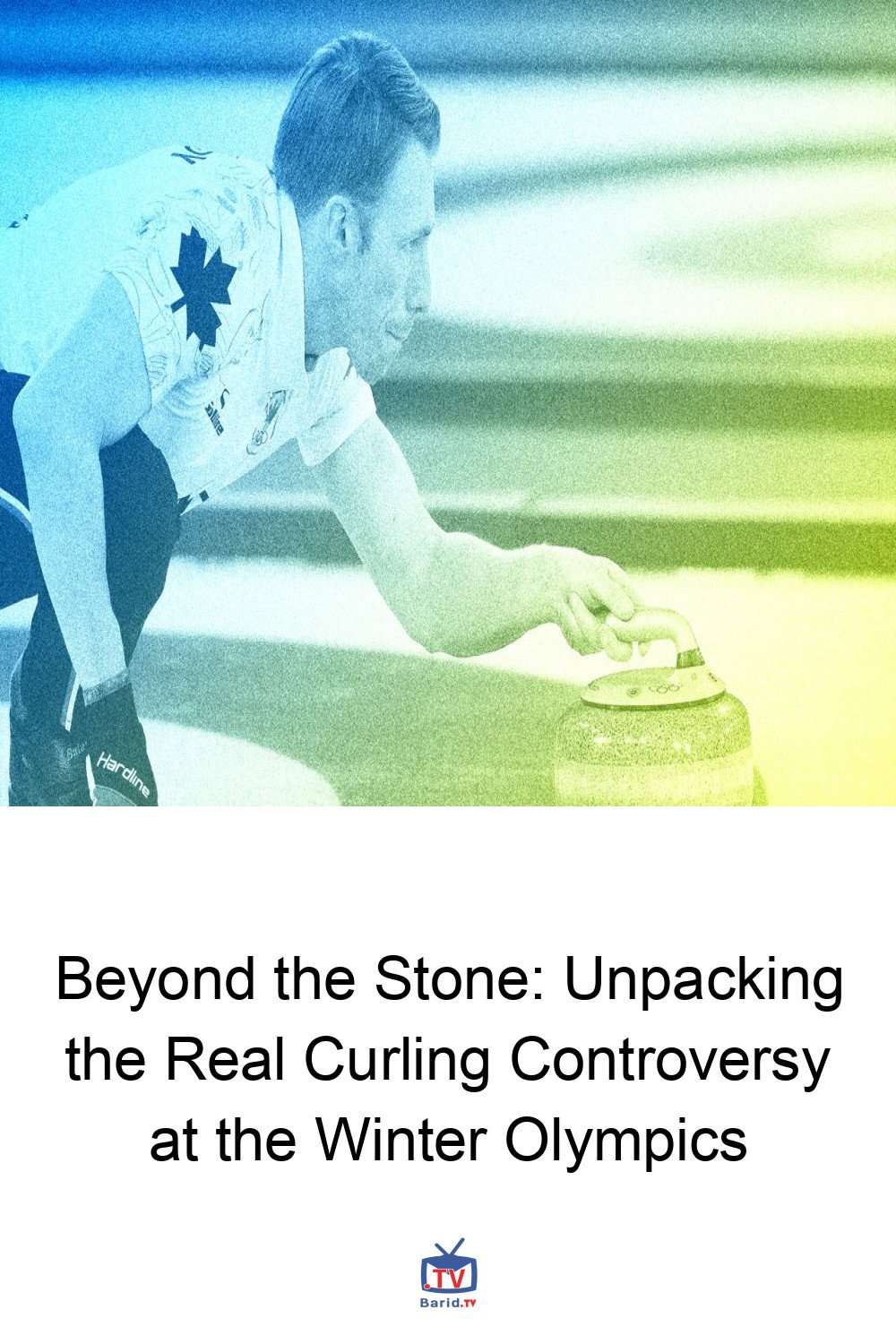
The serene, strategic world of Olympic curling typically offers a captivating, if somewhat understated, spectacle. Yet, at the recent Winter Games, the ice became a stage for an unexpected drama, shattering the sport’s genteel facade and sparking a global debate that, for most, missed the mark entirely. What began as a seemingly minor on-ice dispute between Canada and Sweden quickly escalated into a viral sensation, but the real infraction wasn’t what the internet thought.
The Viral Outburst: What Really Happened?
The Alleged Foul and the Online Frenzy
Last Friday, during a tense match ultimately won 8-6 by Canada, a verbal firestorm erupted between the third throwers – the vice-skips – of both teams. As a minor rules debate reached boiling point, Sweden’s Oskar Eriksson subtly accused Canadian vice-skip Marc Kennedy of cheating. Kennedy’s response was swift and unvarnished: a defiant “I didn’t give a shit,” followed by a blunt “fuck off,” twice.
Within hours, the incident exploded across news outlets and social media. Suddenly, legions of armchair experts emerged, offering impassioned, fully-formed opinions on whether Kennedy had touched the curling stone after release, a technical violation. Memes proliferated, yet the vast majority of these instant pundits were, as it turns out, barking up the wrong ice sheet.
A Curler’s Reality Check
As a seasoned club curler myself – a four-year veteran of a Thursday-night beer league and a multiple-time D-bracket champion of local bonspiels – I possess a solid grasp of curling’s culture and mechanics, though I’m no expert on the high-stakes, sensor-equipped Olympic level. However, reviewing footage and expert analysis, it appears Kennedy likely did violate the rules by touching the back of the rock after its nose crossed the hog line.
Crucially, this infraction was almost certainly inconsequential. We’re talking fractions of an inch, and the hog line is a staggering 93 feet from the target. Furthermore, a light double-tap before the hog line seems to be a common, if technically illegal, occurrence, with video evidence now surfacing to show other teams, including Sweden, engaging in similar actions. So, while the internet’s outrage over Kennedy’s on-ice behaviour had a kernel of truth regarding a technicality, their focus was misplaced.
The Unwritten Rule: The Spirit of Curling
Honour on the Ice: A Gentleman’s Game
Curling is a sport steeped in tradition, governed by thousands of rules and an even greater number of customs. Club curlers frequently engage in good-natured debates over obscure regulations, often lubricated by pints exchanged over bets. Yet, one rule stands paramount and is never up for discussion: the “spirit of curling.” This foundational principle dictates that a true curler never seeks to distract opponents, nor to impede their best play, and would always prefer to lose fairly than win unjustly. This, precisely, is where the Canada-Sweden match veered dramatically off course.
This ancient sport embodies a classical sense of personal honour. It is always preferable to suffer defeat than to have an opponent genuinely believe you won unfairly. Unlike many modern sports, curling’s code of conduct is rooted in a ruffled-silk sense of gentlemanly behaviour, a legacy from the Tudor period.
A Tale of Two Matches: Integrity vs. Acrimony
Consider a contrasting incident from earlier in these same Olympic Games. In a doubles match between the US and Italy, a stone was accidentally kicked. The opposing team, trusting the kicker, allowed them to reposition the stone without intervention from judges, accusations, or profanity. This exemplifies the spirit of curling in action.
The Sweden-Canada match, however, was a stark departure. For those wishing to delve deeper, NBC’s excellent long-cut YouTube video of the showdown reveals the escalating tension from the sixth end, peaking dramatically in the ninth. The Canadians initiated the acrimony with petty complaints to the judges about the Swedes touching their equipment. The Swedes, in turn, complained about the alleged double-touch, only to be rebuffed.
From my perspective, the Swedish team first breached the spirit of curling by “chirping” at the Canadians over a minor, ignored double-tap. The Canadians then unequivocally violated this spirit with Kennedy’s dismissive “didn’t give a shit” and “fuck off” remarks. While Kennedy later admitted he “probably could’ve handled it better,” he refused to apologize for “defending my teammates and standing up for myself,” a stance that further underscores the breakdown of traditional curling decorum.
The Vice-Skips’ Blunder: A Breach of Trust
A critical detail often overlooked, which compounds the gravity of the situation, is the involvement of the vice-skips – the third throwers for each team. In curling, much like golf, players are expected to self-regulate and call their own fouls. The vice-skips are specifically entrusted with the administration of the game: agreeing on scores, mediating rules debates, and even deciding when to concede. For the very individuals charged with upholding fairness and positivity to engage in such a public, acrimonious squabble is not just unfortunate; it’s a profound embarrassment to curlers worldwide.
Like other semi-obscure Olympic sports, curling relies heavily on its unique culture of honour and respect. This incident, therefore, is not merely about a technical foul or a heated exchange; it’s about a fundamental betrayal of the sport’s core ethos, reminding us that some rules are written in the heart of the game, not just the rulebook.
For more details, visit our website.
Source: Link