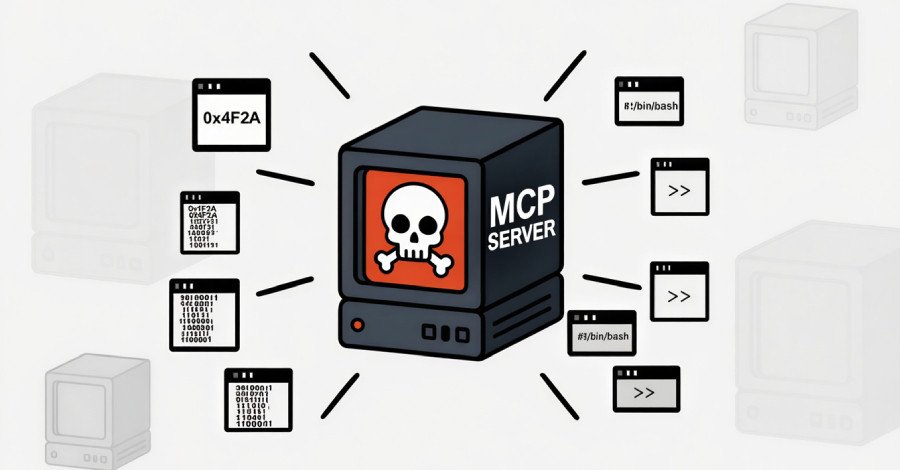

In a chilling evolution of cyber warfare, a sophisticated new SmartLoader campaign has emerged, leveraging trojanized versions of Model Context Protocol (MCP) servers associated with Oura Health to deploy the notorious StealC infostealer. This isn’t just another malware drop; it’s a meticulously crafted, long-game deception designed to ensnare high-value targets within the developer community.
Cybersecurity researchers at Straiker’s AI Research (STAR) Labs have peeled back the layers of this intricate operation, revealing a threat actor willing to invest months in building a facade of legitimacy. “The threat actors cloned a legitimate Oura MCP Server – a tool that connects AI assistants to Oura Ring health data – and built a deceptive infrastructure of fake forks and contributors to manufacture credibility,” STAR Labs reported. The ultimate goal? To pilfer sensitive data, including credentials, browser passwords, and cryptocurrency wallet information, using the StealC infostealer.
The Deceptive Playbook: How SmartLoader Builds Trust
Cloning and Credibility: The Oura MCP Server Deception
SmartLoader, first identified by OALABS Research in early 2024, has traditionally spread through fake GitHub repositories, often using AI-generated lures to appear authentic. Previous analyses by Trend Micro in March 2025 highlighted its use of game cheats, cracked software, and crypto utilities as bait. However, the latest findings from Straiker reveal a disturbing new “AI twist.”
Threat actors are now creating an elaborate network of bogus GitHub accounts and repositories, specifically designed to host and promote trojanized MCP servers. These malicious servers are then submitted to legitimate MCP registries, such as MCP Market, where they can still be found listed among benign alternatives. This tactic exploits the inherent trust users place in official registries and platforms like GitHub, transforming them into conduits for malware distribution.
A Patient Predator: Months of Preparation
What sets this SmartLoader campaign apart is its unprecedented patience. “Unlike opportunistic malware campaigns that prioritize speed and volume, SmartLoader invested months building credibility before deploying their payload,” Straiker emphasized. This methodical approach underscores the attackers’ deep understanding of developer trust, recognizing that genuine credibility cannot be rushed. Their willingness to invest such time signals a clear intent to access particularly valuable targets.
From Piracy to Developers: A Shifting Target
The Four-Stage Attack Unveiled
The attack unfolds through a calculated, multi-stage process:
- Fake GitHub Accounts: At least five fake GitHub accounts (YuzeHao2023, punkpeye, dvlan26, halamji, and yzhao112) were established to create a collection of seemingly legitimate repository forks of the Oura MCP server.
- Malicious Repository Creation: A new Oura MCP server repository, containing the malicious payload, was created under a fresh account named “SiddhiBagul.”
- Credibility Building: The newly created fake accounts were added as “contributors” to the malicious repository, lending a false veneer of legitimacy. Crucially, the original author was deliberately excluded.
- Registry Submission: The trojanized server was then submitted to the MCP Market, ensuring it would appear in search results for unsuspecting users.
Once a user downloads and launches the malicious ZIP archive, an obfuscated Lua script executes, dropping SmartLoader. This loader then proceeds to unleash the StealC infostealer, which immediately begins harvesting sensitive data.
The High-Value Prize: Developer Systems
This campaign marks a significant strategic shift for SmartLoader. Moving beyond individuals seeking pirated software, the attackers are now explicitly targeting developers. This pivot is logical: developer systems are treasure troves of high-value data, including API keys, cloud credentials, cryptocurrency wallets, and direct access to production environments. Such stolen data can be devastating, fueling subsequent, more severe intrusions.
Fortifying Defenses: Recommendations for Organizations
The sophistication of this SmartLoader campaign exposes critical vulnerabilities in how organizations assess and integrate new AI tooling. Straiker warns, “SmartLoader’s success depends on security teams and developers applying outdated trust heuristics to a new attack surface.”
To combat this evolving threat, organizations must adopt a proactive and rigorous security posture:
- Inventory MCP Servers: Maintain a comprehensive inventory of all installed MCP servers.
- Formal Security Review: Implement a formal security review process for all new MCP server installations.
- Verify Origin:
Rigorously verify the origin and authenticity of all MCP servers before deployment.
- Monitor Traffic: Continuously monitor for suspicious egress traffic and persistence mechanisms that could indicate compromise.
The SmartLoader campaign is a stark reminder that in the age of AI, trust must be earned through verification, not assumed. Vigilance and updated security practices are paramount to protecting against these increasingly sophisticated and patient cyber adversaries.
For more details, visit our website.
Source: Link