
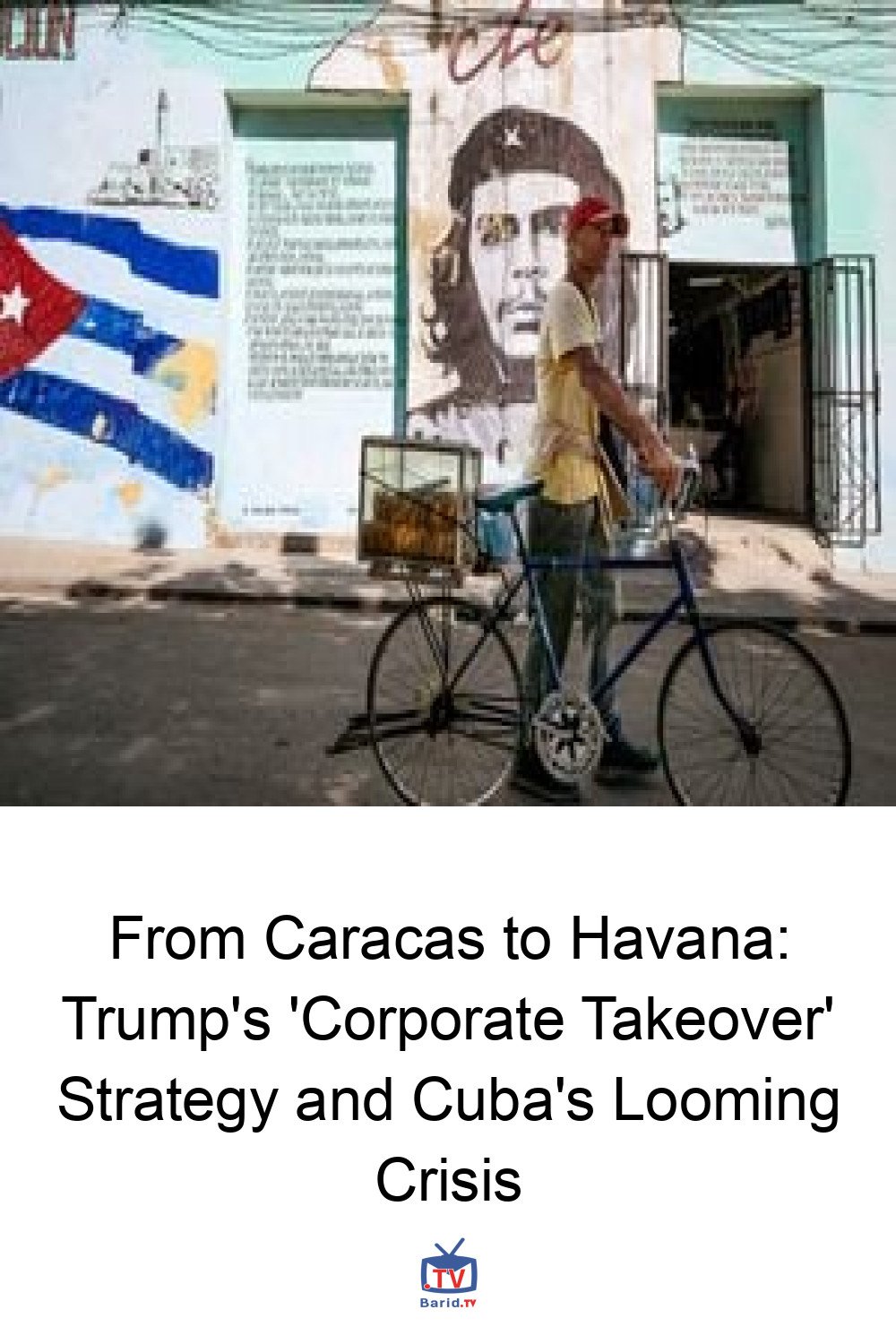
The echoes of a dramatic military operation in Caracas reverberated across the Caribbean, sending a chilling message to Havana. Just two days after Venezuelan leader Nicolás Maduro’s capture, a somber gathering at the Cuban Embassy in Washington D.C. saw retired Cuban colonel Oscar Larralde commemorate fallen soldiers and issue a stark warning: after Venezuela, Cuba might be next. “Hawks are lurking,” cautioned the veteran, a witness to the Cuban Missile Crisis, hinting at a potential confrontation with uncertain consequences between the United States and Cuba.
Cuba’s Enduring Revolution Under Renewed Siege
For over six decades, the Cuban Revolution, initiated by Fidel Castro in 1959, has defied the shifting tides of twelve U.S. presidencies. Yet, its resilience is now being tested like never before. President Donald Trump, seemingly intent on claiming credit for toppling Cuba’s authoritarian regime, has intensified a pressure campaign that mirrors his strategy against Venezuela. This approach, characterized by choking off oil supplies, leveraging tariff threats against allies, and imposing severe financial penalties, aims to isolate the island nation.
“[The Trump administration] is interested in regime change in Cuba,” notes Javier Corrales, a political science professor at Amherst College. “They are essentially redoubling on the same policy that they applied before, which is more economic strangulation.”
A Dire Economic Outlook
This hardening U.S. rhetoric spells profound trouble for an island already grappling with chronic economic mismanagement and a protracted six-decade trade embargo. The Trump administration’s oil blockade threatens to exacerbate existing fuel shortages, pushing an already dire economy to the brink. Mike Hammer, the U.S.’s top envoy in Cuba, reportedly declared in Havana that there would now be “a real blockade,” sparking fears of a humanitarian emergency. The United Nations has since condemned these latest oil sanctions as a human rights violation.
While the ultimate goal beyond regime change remains somewhat opaque, Trump’s early January assertion that the Cuban government is “going down for the count” underscores the administration’s aggressive stance. A White House official reiterated the longstanding U.S. policy, stating, “The United States supports the Cuban people’s pursuit of democracy, prosperity, and fundamental freedoms.” This sentiment was echoed by Secretary of State Marco Rubio, who, on the sidelines of the Munich Security Conference, suggested that Havana must offer greater economic and political freedoms in exchange for any easing of the oil blockade.
The Venezuelan Precedent: A ‘Corporate Takeover’ Playbook
The capture of Nicolás Maduro deprived Cuba of its primary source of discounted oil, plunging the island into a new chapter of immense peril. Prolonged electricity blackouts have become commonplace, hotels are shuttering their doors and furloughing staff, and international airlines are adjusting or suspending routes due to the inability to refuel. Andrés Pertierra, a Cuba historian at the University of Wisconsin-Madison, asserts that this crisis is unparalleled since the early 1960s, remarking, “I cannot think of a moment of crisis this profound for Cuba since the Bay of Pigs.”
The ‘Donroe Doctrine’ in Action
The Trump administration’s assertive promotion of U.S. interests in the Western Hemisphere, encapsulated in the “Donroe doctrine”—a national security strategy focused on combating drug trafficking, restraining immigration, and countering foreign rivals—first manifested forcefully in Venezuela. This marked the first instance of U.S. military force in Latin America since the mid-1990s in Haiti.
Javier Corrales likens the U.S. actions in Venezuela to a “corporate takeover.” In such hostile takeovers, the acquiring firm doesn’t seek to destroy the rival but rather to replace its leadership to maintain core operations, with an eye for future strategic control. This analogy offers crucial insights into the Trump administration’s potential approach to Cuba, suggesting a calculated strategy aimed at systemic change rather than outright destruction, but with equally devastating immediate consequences for the populace.
For more details, visit our website.
Source: Link