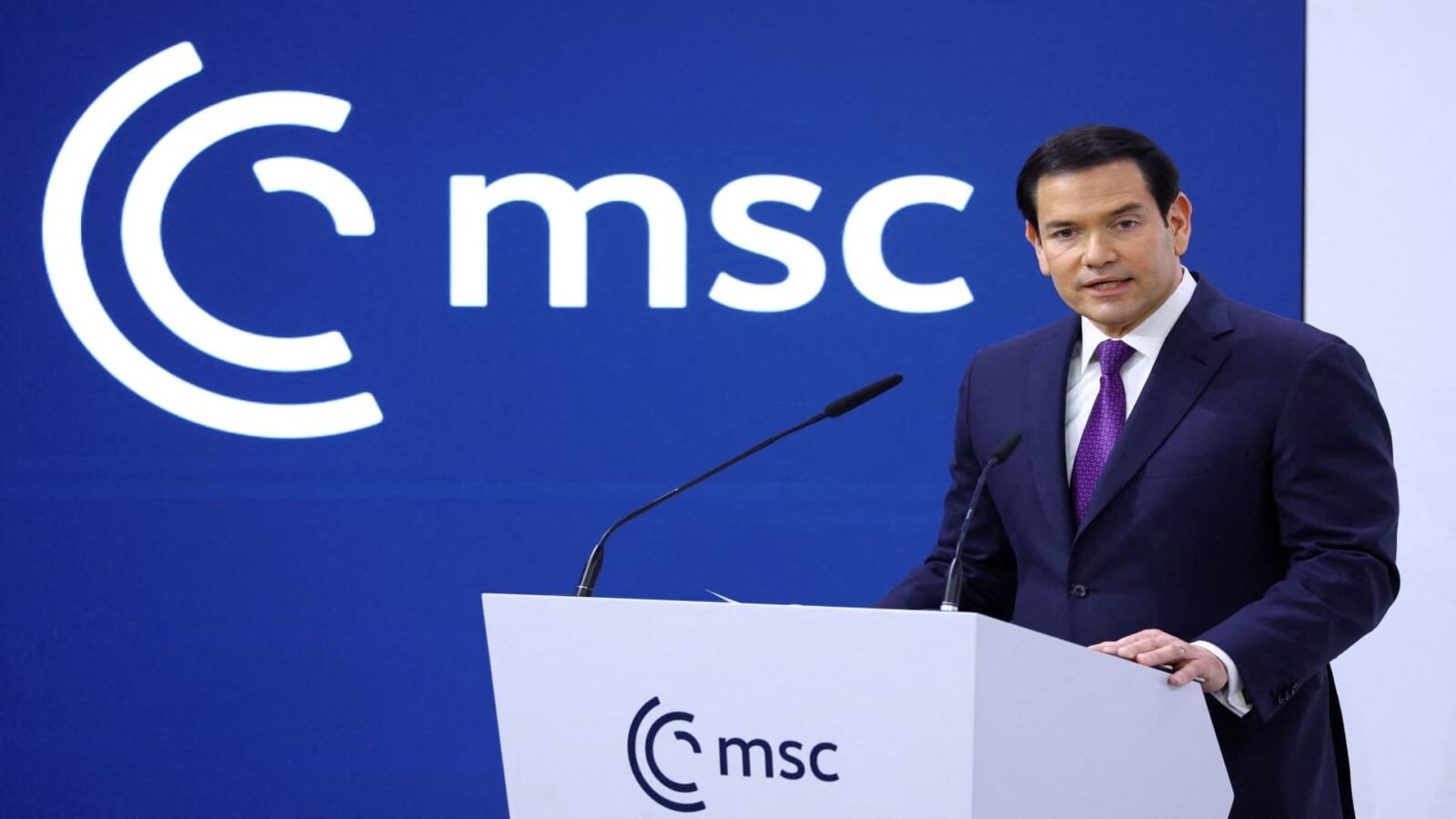

At the recent Munich Security Conference, a pivotal gathering for global leaders, U.S. Secretary of State Marco Rubio delivered a resounding message: the destinies of the United States and Europe are inextricably linked. His address underscored a commitment to the enduring transatlantic alliance, even as European leaders articulated a growing ambition for greater independence and resilience in a volatile world.
An Unwavering Transatlantic Commitment
Secretary Rubio’s remarks served as a powerful affirmation of the deep historical and strategic ties binding the U.S. and Europe. “We care deeply about your future and ours,” Rubio declared, emphasizing that the U.S. has no intention of abandoning its allies. He stressed the imperative for a strong Europe, drawing parallels to the devastating conflicts of the last century as a stark reminder of their shared fate.
Rubio also acknowledged the need for evolution within global governance. While advocating for the reform and rebuilding of existing international institutions, he highlighted instances where American leadership had successfully navigated complex crises, such as the Israel-Gaza conflict, and made strides in addressing Russia’s war in Ukraine—areas where multilateral bodies like the United Nations had struggled to find solutions.
Reforming Global Institutions
“We do not need to abandon the system of international cooperation we authored, and we don’t need to dismantle the global institutions of the old order that together we built. But these must be reformed. These must be rebuilt,” Rubio asserted. He pointed to the UN’s perceived inability to resolve the Gaza conflict or the war in Ukraine, contrasting it with American efforts that led to a fragile truce and the freeing of captives.
Ukraine’s Urgent Appeal and Global Scrutiny
Ukrainian President Volodymyr Zelenskyy, speaking at the same conference, extended heartfelt gratitude to the U.S. for its unwavering support in Ukraine’s defense against Russian aggression. “Without you, Americans, Europeans and everyone who stands with us, it would have been very, very difficult to hold on,” Zelenskyy stated, met with applause.
However, Zelenskyy did not shy away from criticism. He voiced concerns over the previous U.S. administration’s slow pace in delivering military aid and leveled harsh accusations against Iran for supplying Russia with Shahed drones. These drones, he lamented, are “killing, especially, our people, Ukrainians, and destroying our infrastructure,” despite Ukraine having no direct conflict of interest with Iran.
Echoing the call for continued support, NATO Secretary General Mark Rutte urged member nations to intensify military assistance to Ukraine, aligning with the alliance’s Prioritised Ukraine Requirements List (PURL) initiative. “Keep (Ukraine) strong in the fight. They will do it, but they need our support,” Rutte emphasized.
The Drive for European Autonomy
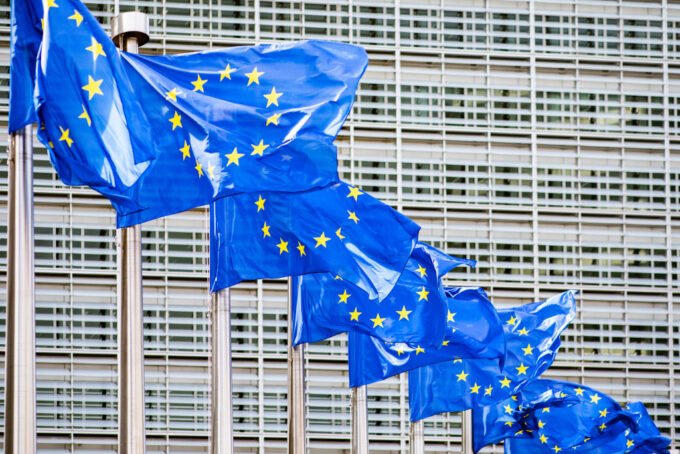
European Commission President Ursula von der Leyen, following Rubio’s address, articulated Europe’s ambition to bolster its independence across critical sectors. She highlighted the “distinct threat of outside forces trying to weaken our union from within” and the resurgence of hostile competition.
Strengthening Europe’s Foundations
Von der Leyen stressed the necessity for Europe to become more self-reliant in “every dimension that affects our security and prosperity, defense and energy, economy and trade, raw materials and digital tech.” Crucially, she clarified that this pursuit of independence is not intended to diminish the transatlantic bond, but rather to strengthen it. “An independent Europe is a strong Europe and a strong Europe makes for a stronger transatlantic alliance,” she affirmed, aligning with Secretary Rubio’s vision.
Adding to the discourse, EU’s chief diplomat Kaja Kallas delivered a stark warning against appeasement in the face of Russian aggression. “The lesson learned is that appeasement always brings new wars,” Kallas cautioned, asserting that conceding territory only emboldens aggressors and increases their appetite for further expansion.
The Munich Security Conference thus served as a crucial platform for reaffirming the enduring partnership between the U.S. and Europe, while simultaneously acknowledging Europe’s evolving strategic landscape and its determined push for greater self-sufficiency in an increasingly complex global order.
For more details, visit our website.
Source: Link