
In a world often defined by linear career paths, architect Susan Nwankpa Gillespie stands as a testament to the power of evolving passions and diverse inspirations. Shifting from an initial trajectory in political science and corporate finance, Gillespie discovered her true calling in shaping physical environments, a journey that has culminated in an eponymous Los Angeles-based firm renowned for creating elegant, livable spaces that deeply resonate with their inhabitants.
From Columbia to Creative Canvas: An Architect’s Evolution
Susan Nwankpa Gillespie’s academic journey began at Columbia University, where she delved into political science and even interned at Morgan Stanley. Yet, it was the university’s urban studies curriculum that sparked a profound realization. “Courses on the history and structure of cities made me realize I wanted to have a more physical impact in shaping the world and environment,” she recalls. This pivotal insight led her to UCLA, where she earned a graduate degree in architecture. By 2016, Gillespie had established her own firm, dedicated to crafting designs that are not only aesthetically refined but also deeply enriching to her clients’ lives.
A Global Tapestry of Design
Gillespie’s unique heritage—born to a Nigerian father and a mother with French-Canadian roots—is the very bedrock of her layered design philosophy. Her work seamlessly fuses functional precision with delightful, unexpected details, drawing inspiration from a rich tapestry of multicultural influences and cutting-edge building technologies. This eclectic approach allows her to conceive truly unique residences and hospitality spaces.
Her creative process is fluid, often beginning with a swift sketch or a quick capture on her phone, which she playfully refers to as an extension of her brain, a repository for countless research tabs and nascent concepts. Even amidst the most demanding projects, Gillespie finds joy in every stage, particularly in that culminating moment of completion. “That moment when it all comes together toward the end of a project is the most satisfying, when you know all of the hard work is worth it,” she affirms.
The Friday Five: Windows into Inspiration
Join us as Susan Nwankpa Gillespie shares five profound inspirations that have shaped her vision and work.
1. Nigeria 1976: A Father’s Legacy
Following her father’s passing, Gillespie unearthed a treasure trove of photographs from his youth in Nigeria, predating his emigration to America. These images, vibrant with the fashion, culture, style, and undeniable swagger of the era, captivated her. “The fashion, culture, style, and swagger cross-referenced with the spirit of the time captivated me,” she shares. This powerful connection led her to create a large collage print for her home, featuring many of these evocative photos, including one of her father among a group of stylish young men.
2. Nigeria 1976: The Woman on the Motorcycle
Another striking image from her father’s collection features an unknown woman, likely a friend, confidently riding a motorcycle. Her skirt, fashioned from traditional West African textile fabric, speaks volumes. Gillespie is particularly drawn to “Her gaze, style, and attitude,” recognizing them as embodying a powerful presence.
3. Nigeria 1980s: Foundations and Landscapes
A photograph from the 1980s shows Gillespie’s father proudly standing at the newly laid foundation of his ancestral home in Nigeria, a project he dedicated years to building. For Gillespie, it’s a potent symbol of “what a sense of possibility and hard work can do.” Aesthetically, she finds enduring inspiration in the vivid color palettes of Nigeria’s landscape – the lush, tropical greens and the striking red clay soils.
4. Modern Textile Art: “In Search of Greener Pastures”
Gillespie highlights a compelling piece of modern textile art by Ghanaian fiber artist Studio Amponsah, titled “In Search of Greener Pastures.” This work powerfully conveys the complex journey of migration – a blend of hope, longing, excitement, and trepidation, expressed through an explosion of texture and color. The bus depicted in the art bears the word “Jakpa/Japa,” a Yoruba term meaning to flee or escape, which in contemporary Nigerian slang refers to the significant trend of young people seeking better opportunities abroad.
5. The Pyramids of Teotihuacan: Enduring Culture
A recent family trip saw Gillespie and her expanding family visiting the awe-inspiring Pyramids of the Sun and Moon at Teotihuacan, outside Mexico City. The sheer monumental scale of this pre-Aztec site, with its intricately carved and painted structures, left a deep impression. “It is awe inspiring to see how cultural acts can withstand centuries and become the foundation for many design traditions,” she reflects. With her daughter’s Mexican and Irish heritage from her husband’s side, Gillespie deeply values the privilege of intimately experiencing such diverse cultures.
Signature Spaces: Gillespie’s Architectural Vision in Practice
Textile House 2
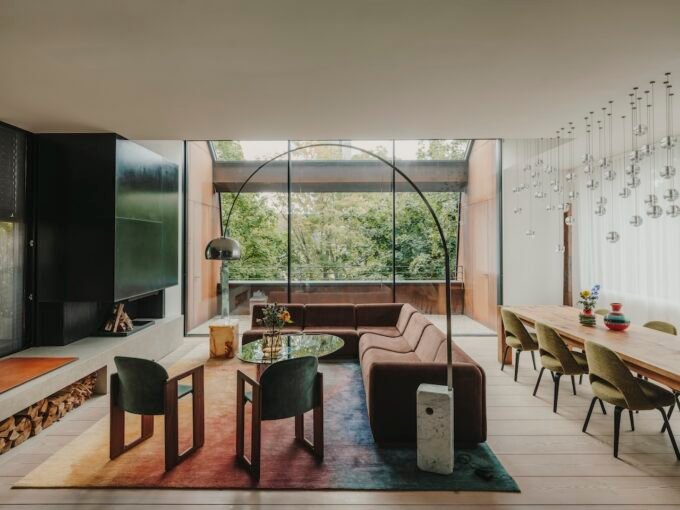
Gillespie’s personal residence, Textile House #2, beautifully embodies her design philosophy. It achieves a delicate balance between a minimalist aesthetic and a profound appreciation for texture and drama. The home seamlessly integrates bold patterns from West African textiles and fashion into a timeless architectural framework.
Textile House 1
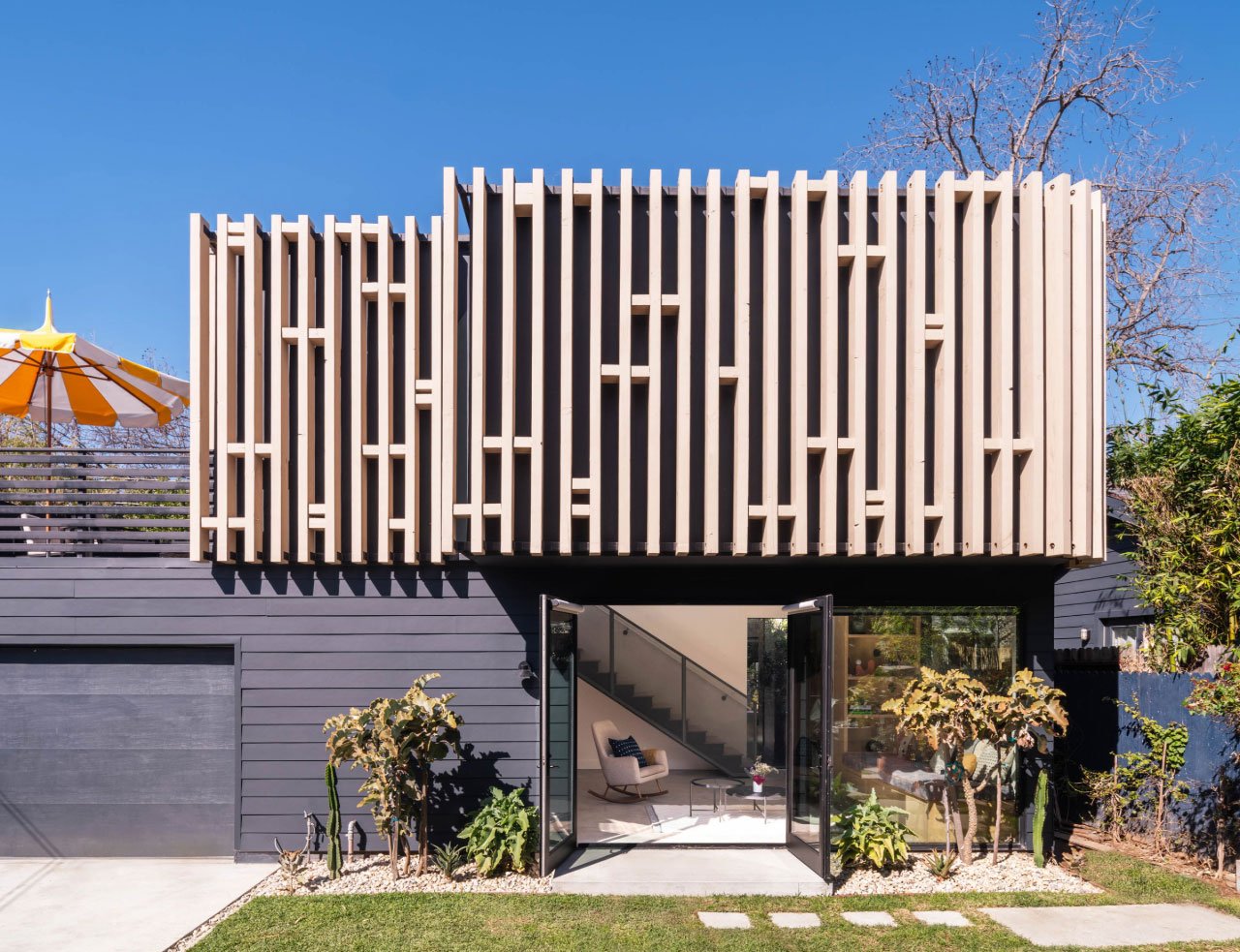
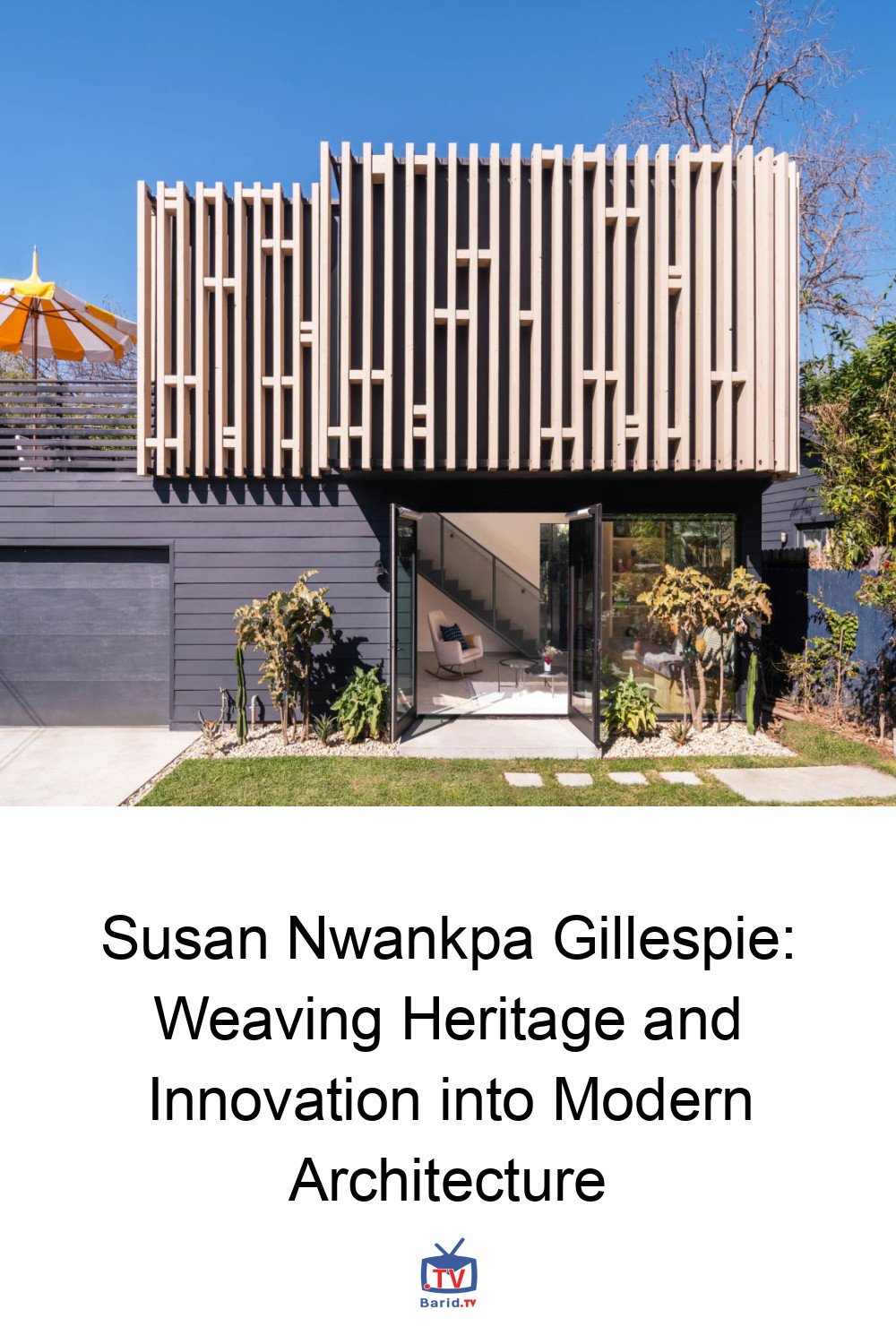
Textile House #1 is a masterful fusion of West African textile heritage with Western architectural principles. Drawing inspiration from Ewe/Kente weaving, a significant portion of the façade’s design ingeniously echoes the warp and weft structure of traditional cloth. Vertical cedar slats, punctuated by occasional horizontal connections, create a syncopated rhythm, subtly obscuring the deliberate lack of openings on the second floor.
Hollywood Hills Midcentury
This 1958 Hollywood Hills home underwent a thoughtful reimagining for a screenwriter and art collector passionate about entertaining. The 1,200-square-foot, two-story residence was meticulously updated to harmonize its inherent midcentury character with contemporary finishes and furnishings. A custom credenza, crafted with vibrant yellow and earthy-toned Zellige tiles, serves as a striking focal point, referencing the exuberance and elegance of West African aesthetics.
For more details, visit our website.
Source: Link