



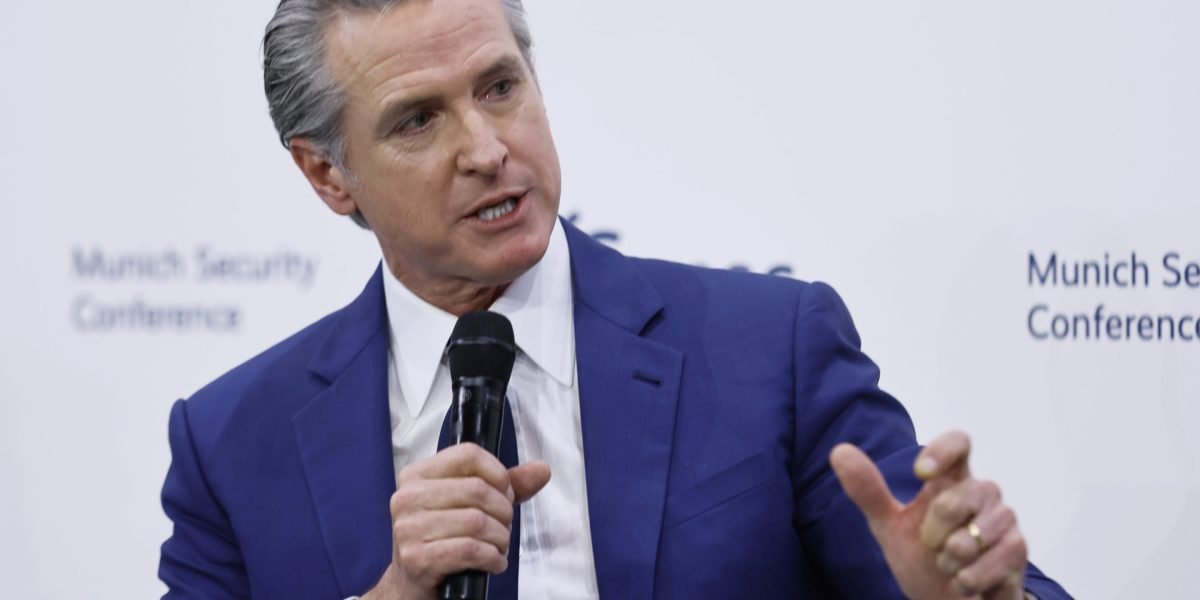

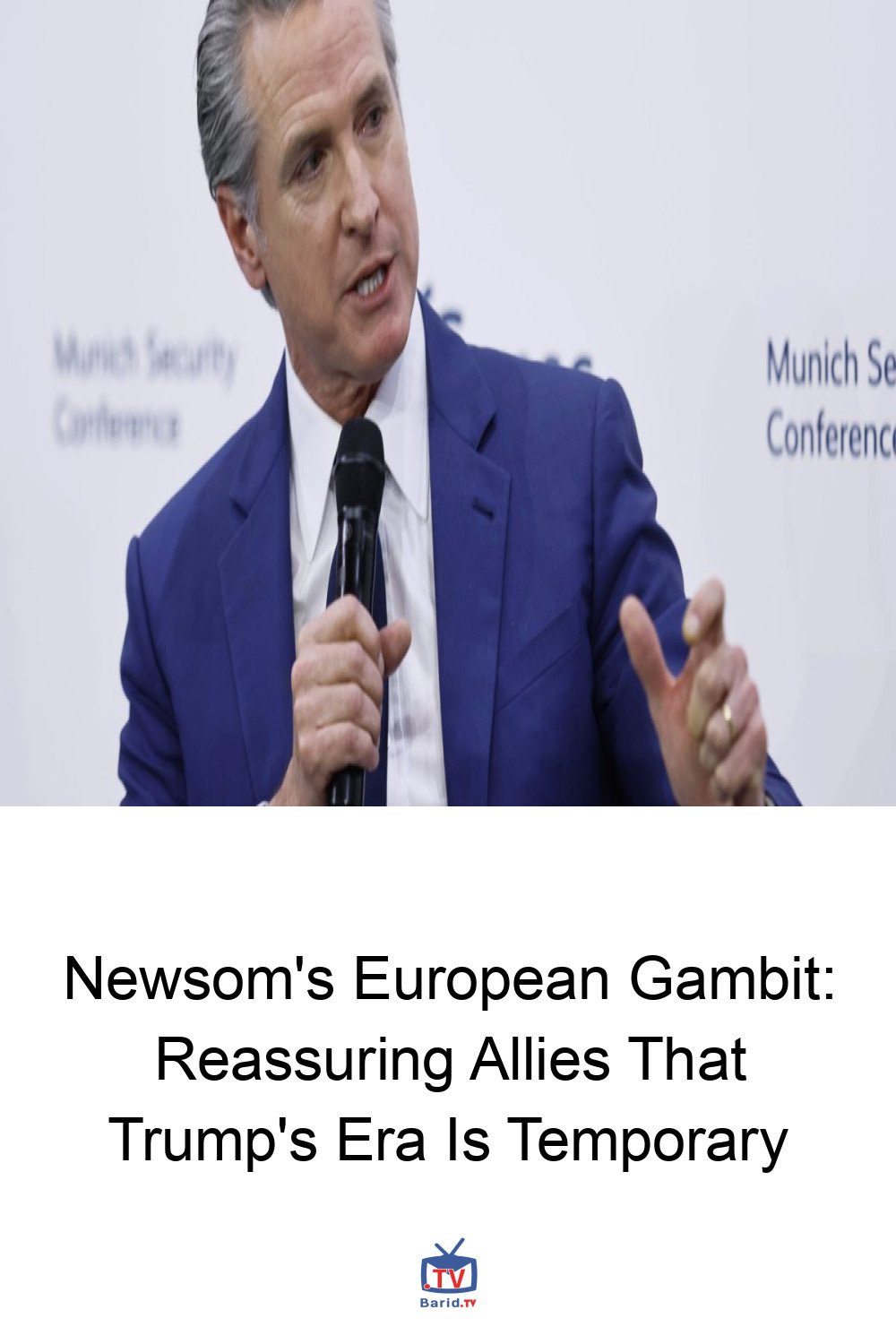
MUNICH – In a bold diplomatic maneuver at the Munich Security Conference, California Governor Gavin Newsom delivered a compelling message to anxious European allies: view Donald Trump as a temporary anomaly, not a permanent fixture of American politics. Newsom’s intervention aimed to soothe concerns about potential future shifts in U.S. foreign policy, asserting that Trump’s influence would be “measured in years, not decades.”
A Temporary Interruption, Not a New Normal
Addressing a panel on Saturday, Governor Newsom articulated a vision where the former president’s political brand does not represent the enduring values of the United States. He confidently predicted a future where Trump would face significant electoral setbacks and legal challenges, including potential limitations on his tariff authority under the International Emergency Economic Powers Act. Newsom’s core argument was a plea for stability, urging European leaders to cultivate and maintain robust subnational partnerships with U.S. states like California, particularly during what he characterized as a period of “instability” for the nation.
Intriguingly, Newsom suggested that the very uncertainty of the Trump era had inadvertently fostered greater unity within Europe. “Maybe that is the one contribution of Donald Trump,” he mused, highlighting a silver lining in a period often marked by transatlantic tension.
Defending Democratic Norms: “Rule of Law” vs. “Rule of Don”
Widely considered a potential presidential contender for 2028, the Democratic governor framed his remarks as a staunch defense of democratic norms. He drew a sharp distinction between “the rule of law” and what he provocatively termed “the rule of Don,” cautioning against the perils of an “imperial presidency.” This rhetoric underscored a deep concern for the foundational principles of American governance, implicitly contrasting them with the perceived authoritarian tendencies of the Trump administration.
Rubio’s Double-Edged Message and Newsom’s Nuanced Response
Newsom’s address also touched upon the earlier speech by Secretary of State Marco Rubio at the same conference. Rubio had delivered a complex message, emphasizing the intertwined destinies of Europe and the U.S., while simultaneously criticizing the continent for what he perceived as a drift away from shared Western values. “The alliance has to change,” Rubio asserted to Bloomberg News Editor-in-Chief John Micklethwait, advocating for a recalibration of transatlantic relations. He clarified that American urgency or criticism stemmed from genuine concern for European decisions.
Responding to Rubio’s remarks, Newsom offered a nuanced alignment: “If Rubio was referencing popular sovereignty and the rule of law, I align with his remarks.” However, he quickly drew a line, stating, “If it’s about an imperialism and an imperial presidency, I don’t necessarily.” This conditional endorsement highlighted the ideological fault lines within American political discourse regarding its role on the global stage and the nature of executive power.
Looking Ahead
Governor Newsom’s appearance in Munich served as a significant effort to project an image of American resilience and commitment to democratic principles, even amidst internal political turbulence. His message to European allies was clear: while political tides may shift, the underlying currents of American values and the potential for stable partnerships remain strong, urging them to look beyond immediate political cycles to the enduring spirit of the nation.
For more details, visit our website.
Source: Link





Leave a comment