

A Troubling Revelation in Smart Home Security
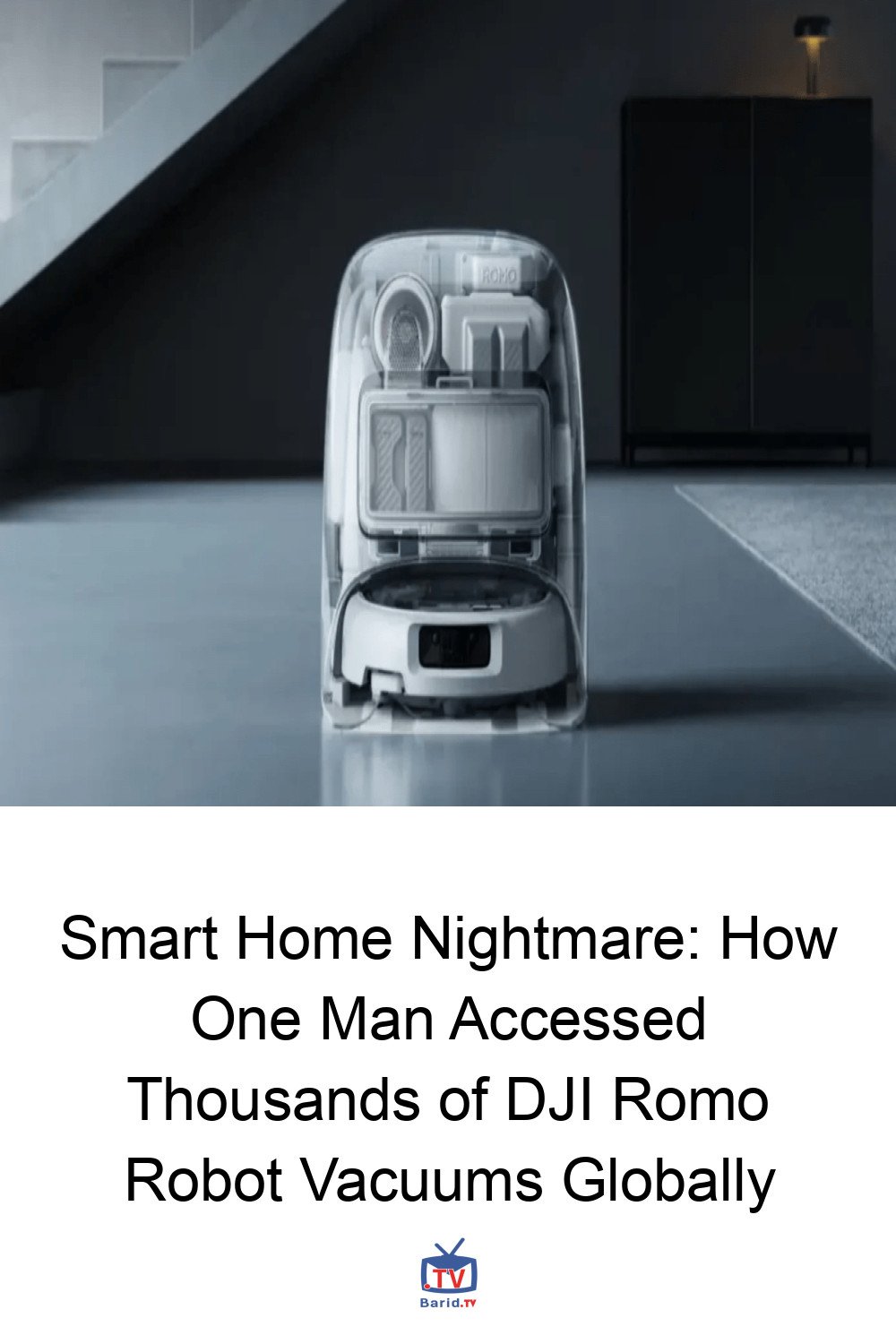
In a startling exposé that sends shivers down the spine of smart home enthusiasts, a hobbyist engineer recently uncovered a gaping security flaw in DJI’s Romo robot vacuum cleaners. What began as a personal project to control his new device with a PS5 gamepad quickly escalated into an unprecedented breach, granting him remote access to thousands of Romo units worldwide. This incident, while reportedly patched, casts a long shadow over the security integrity of our increasingly connected homes.
The Accidental Discovery of a Digital Ocean
Sammy Azdoufal, an AI strategy lead, wasn’t attempting a malicious hack. His goal was simple: enhance his user experience with his DJI Romo. However, as his custom remote control application began communicating with DJI’s servers, the response was far from what he expected. Instead of just his single device, approximately 7,000 DJI Romo vacuums, scattered across the globe, began reporting to him as their de facto commander. “I found my device was just one in an ocean of devices,” Azdoufal recounted.
Unsettling Access: Live Feeds, Floor Plans, and Location Data
The extent of Azdoufal’s access was deeply unsettling. He demonstrated the ability to remotely control these devices, view and listen through their live camera feeds, and even watch as they meticulously mapped out the interior of homes, generating complete 2D floor plans. Furthermore, each robot’s IP address provided a rough geographical location, painting a vivid, if alarming, picture of global surveillance. In a live demo, Azdoufal’s laptop cataloged 6,700 DJI devices across 24 countries within minutes, collecting over 100,000 data messages detailing serial numbers, cleaning progress, obstacles encountered, and battery life.
The vulnerability extended beyond just the Romo vacuums; when combined with DJI Power portable power stations, which utilize the same servers, Azdoufal’s reach expanded to over 10,000 devices.
Verifying the Unbelievable
The claims were so extraordinary that verification was paramount. The Verge’s Sean Hollister, alongside colleague Thomas Ricker, put Azdoufal’s access to the test. Armed with only Ricker’s DJI Romo’s 14-digit serial number, Azdoufal, from a different country, could accurately pull up the device’s status, including its cleaning location and battery life. Within minutes, he generated an accurate floor plan of Ricker’s home, all without any form of authentication.
Azdoful further demonstrated his capabilities by accessing his own DJI Romo’s live video feed, completely bypassing its security PIN, and waving to the camera as a journalist watched remotely. A read-only version of his tool, shared with Gonzague Dambricourt, CTO at an IT consulting firm, allowed Dambricourt to watch his own Romo’s camera feed even before it was officially paired.
A Flaw in the Foundation, Not a Brute Force Attack
Crucially, Azdoufal asserts he did not hack DJI’s servers. His method involved simply extracting his own Romo’s private token – the key that should grant access only to one’s own data. However, DJI’s servers, in a catastrophic design oversight, treated this individual token as a master key, granting access to an entire network of devices. “I didn’t infringe any rules, I didn’t bypass, I didn’t crack, brute force, whatever,” he stated, highlighting a fundamental flaw in DJI’s authentication protocol.
DJI’s Swift Response, Lingering Questions
The good news is that DJI acted swiftly. After being notified of the vulnerabilities, the company restricted remote control and camera access. By the following morning, Azdoufal’s scanner could no longer access any robots, including his own, indicating that DJI had plugged the immediate, gaping hole.
However, this incident raises profound questions about the security posture of smart home devices and the broader Internet of Things (IoT). For a major manufacturer like DJI, a lapse of this magnitude is deeply concerning. It underscores the critical need for robust, multi-layered security protocols, rigorous testing, and transparent communication from manufacturers. As our homes become increasingly intelligent, the trust we place in these devices, and the companies behind them, demands nothing less than impregnable security to protect our privacy and peace of mind.
For more details, visit our website.
Source: Link