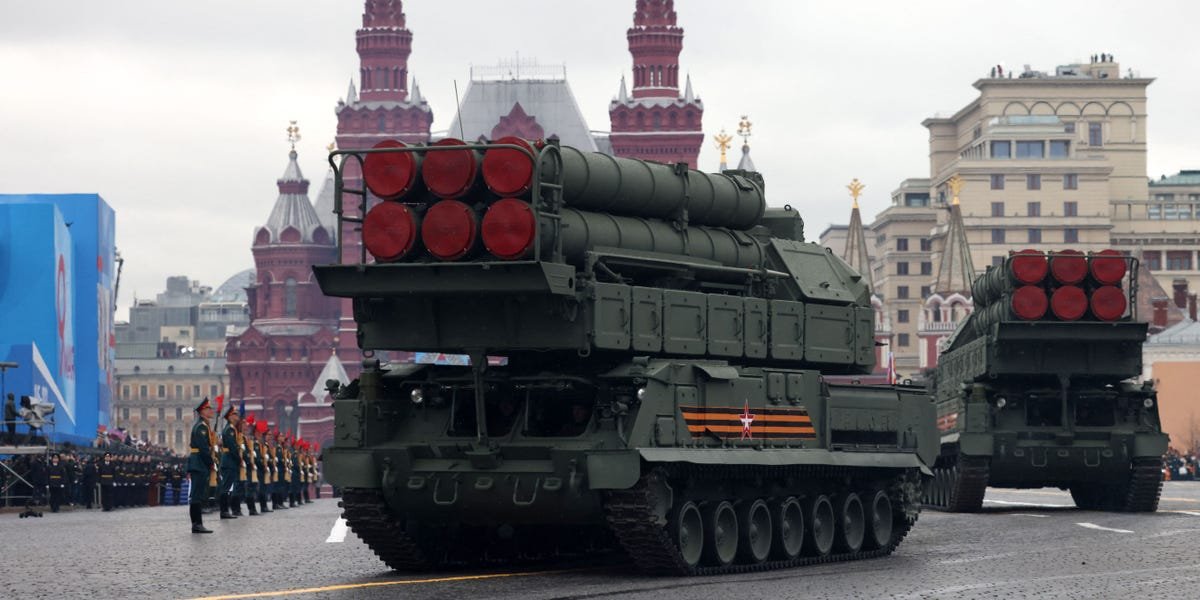

NATO’s Sky-High Challenge: Ukraine War Hardens Russia’s Air Defenses
The ongoing conflict in Ukraine, while exposing certain vulnerabilities in Russia’s military, has paradoxically strengthened one of its most critical assets: its formidable air defense network. According to a leading airpower analyst, this real-world crucible has refined Russian anti-aircraft capabilities, presenting an even more daunting challenge for NATO air forces in any potential future confrontation.
The Pre-Existing Shield: Russia’s Layered Air Defense
For decades, Russia has invested heavily in sophisticated, multi-layered air defense systems. From the long-range S-300 and S-400 missile systems, capable of engaging targets hundreds of kilometers away, to medium-range Buk and Tor systems, and short-range Pantsir-S1, the Russian doctrine emphasizes creating dense “anti-access/area denial” (A2/AD) bubbles. These systems are designed to deny enemy aircraft and missiles access to vital airspace, protecting strategic assets and ground forces.
Prior to the Ukraine invasion, these systems were already considered among the most advanced globally, posing significant threats to even stealth aircraft. Their integration with advanced radar networks and electronic warfare (EW) capabilities made them a complex puzzle for Western military planners.
Ukraine: A Real-World Testbed and Catalyst for Improvement
The war in Ukraine has transformed Russia’s air defense network from a theoretical threat into a battle-hardened reality. While Ukraine’s air force and drone capabilities have achieved notable successes, the sheer scale and intensity of the air war have provided invaluable operational experience for Russian crews and systems. Analysts suggest several key areas of enhancement:
Refined Tactics and Integration:
Russian forces have had to adapt their air defense deployments and tactics in response to Ukrainian air attacks, including drone swarms and Western-supplied precision munitions. This real-time adaptation likely leads to more robust and flexible operational procedures.- Electronic Warfare Synergy: The conflict has seen extensive use of electronic warfare. Russia’s air defense systems are increasingly integrated with powerful EW assets, making it harder for NATO aircraft to operate, jam radars, or communicate effectively.
- Lessons Learned:
Every engagement, whether successful or not, provides data. Russia is undoubtedly analyzing the performance of its systems against modern threats, identifying weaknesses, and implementing rapid improvements in software, hardware, and doctrine.
- Increased Operational Tempo: Continuous operation in a combat zone means crews gain unparalleled experience, improving reaction times and system proficiency.
NATO’s Heightened Dilemma
The implications for NATO are significant. A Russian air defense network, now battle-tested and potentially refined, complicates NATO’s air superiority doctrine. Any future engagement would face:
- Increased Risk to Air Assets: The probability of losing advanced aircraft, even stealth platforms, could rise, making initial air campaigns more costly and challenging.
- Enhanced A2/AD Capabilities: The “bubbles” of denied airspace over Russian territory and potentially allied areas could expand and become even more impenetrable, restricting NATO’s freedom of maneuver.
- Need for Advanced Countermeasures:
NATO will need to accelerate the development and deployment of new counter-air defense technologies, including advanced electronic attack systems, long-range precision munitions, and potentially new stealth aircraft designs.
- Strategic Re-evaluation: The conflict necessitates a re-evaluation of NATO’s airpower strategies, focusing on how to effectively penetrate and suppress an adversary’s air defenses that have been hardened by actual combat experience.
In conclusion, while the world focuses on the ground war in Ukraine, the silent evolution of Russia’s air defense capabilities presents a profound strategic challenge. NATO must acknowledge this hardening and proactively adapt its strategies and investments to maintain its technological edge and ensure air superiority in a rapidly evolving geopolitical landscape.
For more details, visit our website.
Source: Link