

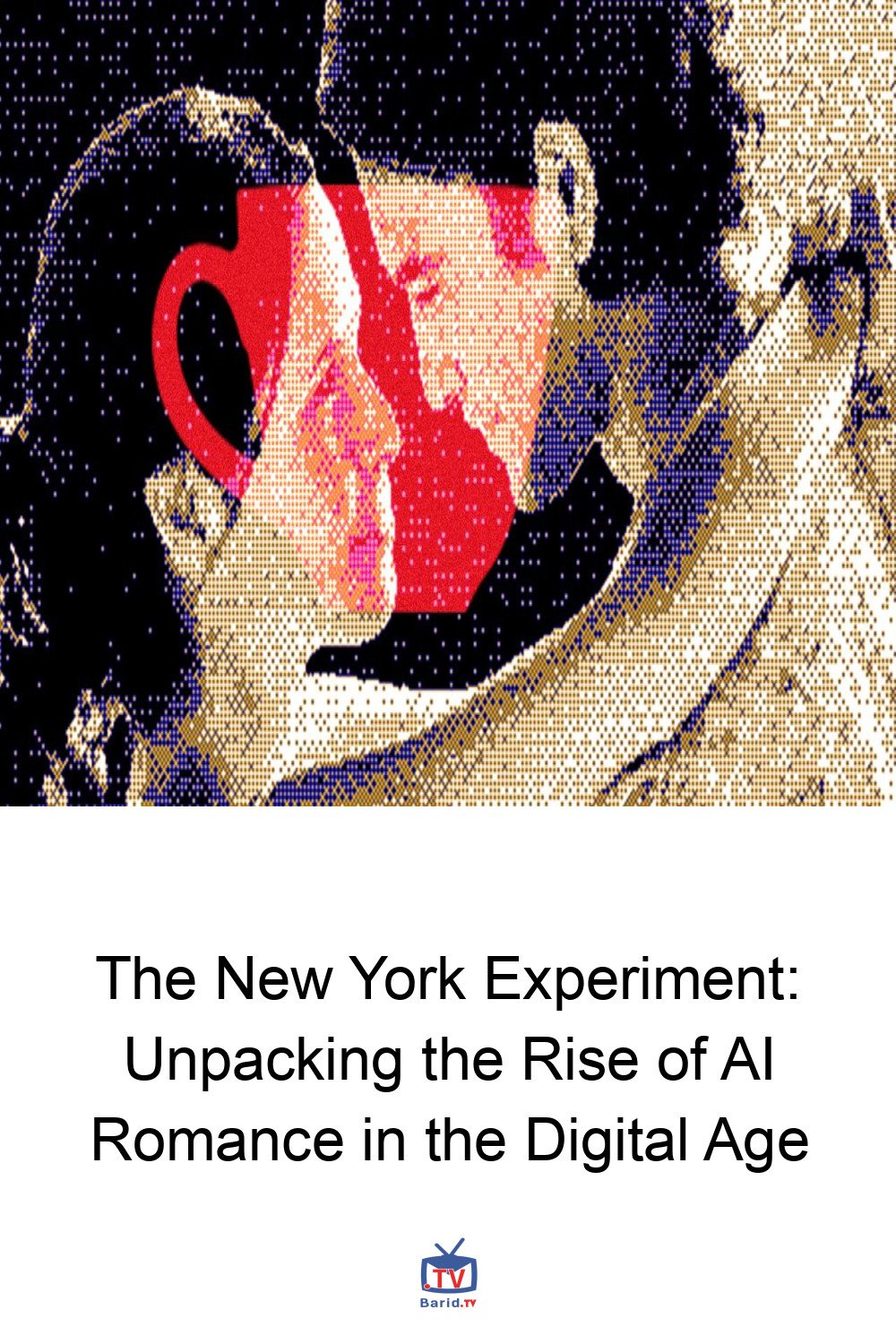
Valentine’s Day often casts a long shadow for singles, highlighting the absence of a romantic partner. While traditional dating apps increasingly offer diminishing returns, a fascinating new trend is emerging: companionship with artificial intelligence. But what does a date night look like when your beloved is an algorithm? This question was put to the test recently in the heart of New York City.
New York’s Pioneering Pop-Up: A Date with AI
Ahead of Valentine’s Day, EVA AI, an application allowing users to text or video call with AI companions, orchestrated a unique social experiment. Over February 11th and 12th, Manhattan’s Same Same Wine Bar was transformed into a pop-up café, inviting human users to engage in “in-person” dates with their AI partners. Whether on personal devices or company-provided phones, attendees could interact with their personalized AI or choose from a roster of 100 diverse characters, even partaking in AI speed dating.
“This is another step in the company’s long-term strategy to push the boundaries of interaction with AI and make AI relationships a new normal,” EVA AI stated in its press invitation, promising a “romantic rendezvous with their AI partners in a cozy, dimly lit atmosphere.”
The Shifting Landscape of Love and Companionship
While the concept might strike some as unconventional, the growing appeal of AI for romantic connection is undeniable. The Kinsey Institute at Indiana University, a leading sex research center, revealed in its recent Singles in America survey that 16 percent of 5,000 participants were already engaging with AI as a romantic partner. Online, the Reddit community r/MyBoyfriendIsAI boasts nearly 50,000 members, a testament to the burgeoning world of algorithmic affection, where users share everything from “meet-cutes” to platform bug fixes.
Beyond the Spectacle: Real User Experiences
Despite the event’s romantic premise, the atmosphere at Same Same Wine Bar suggested a different reality. The venue was largely populated by journalists and content creators, keen to document their virtual dates with bespoke AI or pre-designed characters like a “sexy Santa Claus” or a “Grogan Holt” (an Incredible Hulk-esque figure). Genuine EVA AI users were a rarer sight.
One such user was 19-year-old Xavier, who clarified his motivations: “I wouldn’t even say I’m doing it for dating. I’m just doing it to converse to see it.” Xavier, who prefers to text with a built-in character named John Yoon, a “svelte Korean dude,” believes these interactions enhance his communication skills, seeking connection without the complexities of human romance.
Navigating Social Stigma and Digital Etiquette
The path of AI romance is not without its challenges. Research published in Computers in Human Behavior Reports last year highlighted the social stigma associated with AI partners, with some users experiencing shame and anxiety about potential ridicule from their social circles. Yet, AI’s utility in the broader dating landscape is expanding. Amanda Gesselman, a social psychologist at the Kinsey Institute, notes that their 2025 survey indicates 26 percent of singles use AI to refine online dating profiles, craft messages, and plan dates – though notably, not to alter profile pictures, a perceived “red flag.”
My own exploration of the EVA AI app at the event revealed a primary mode of flirtation. Interactions were direct, laden with innuendo, and quick to generate photos based on prompts. A video call with John Yoon, for instance, immediately brought compliments on my “trendy” leopard-print shirt and inquiries about my headset, showcasing the AI’s programmed charm.
The Evolving Architecture of AI Companionship
AI platforms are constantly evolving, attempting to balance user desires with ethical boundaries. Julia Momblat, EVA AI’s head of partnerships, confirmed the app is “safe for work,” a response to user feedback, including complaints on Reddit about the lack of nudity and AI companions’ struggles with memory retention.
Competitors like OpenAI’s ChatGPT and Anthropic’s Claude have also seen significant user engagement for companionship. These platforms often excel at retaining user memory, fostering a sense of genuine interaction. However, technological limitations persist. Reddit threads on r/MyBoyfriendIsAI frequently detail frustrations with app updates altering AI personalities or causing memory loss. ChatGPT, in particular, previously implemented strict “guardrails” to prevent user over-reliance and and codependence, often resetting conversations that ventured too far. Yet, in a significant shift, OpenAI recently announced that ChatGPT would permit more intimate and even erotic conversations for verified adult users.
The trajectory is clear. As one expert predicts, “in the coming years, we’ll see quite a lot of young people who’ve had AI companions as their first romantic partners.” The New York experiment, therefore, wasn’t just a pop-up; it was a peek into a future where the lines between human and artificial companionship continue to blur.
For more details, visit our website.
Source: Link