
“Delight” is an audacious moniker for any tech product, let alone a hearing aid, a device often met with reluctant acceptance rather than genuine pleasure. Yet, Elehear’s latest over-the-counter offering, the aptly named Delight, boldly aims to redefine user satisfaction. With a significant design overhaul and the integration of a new AI algorithm promising enhanced noise reduction and reduced feedback, Elehear seeks to elevate the hearing aid experience. But does this sleek, in-ear device truly live up to its ambitious name, or does its performance fall short of its stylish promise?
A Design That Truly Delights
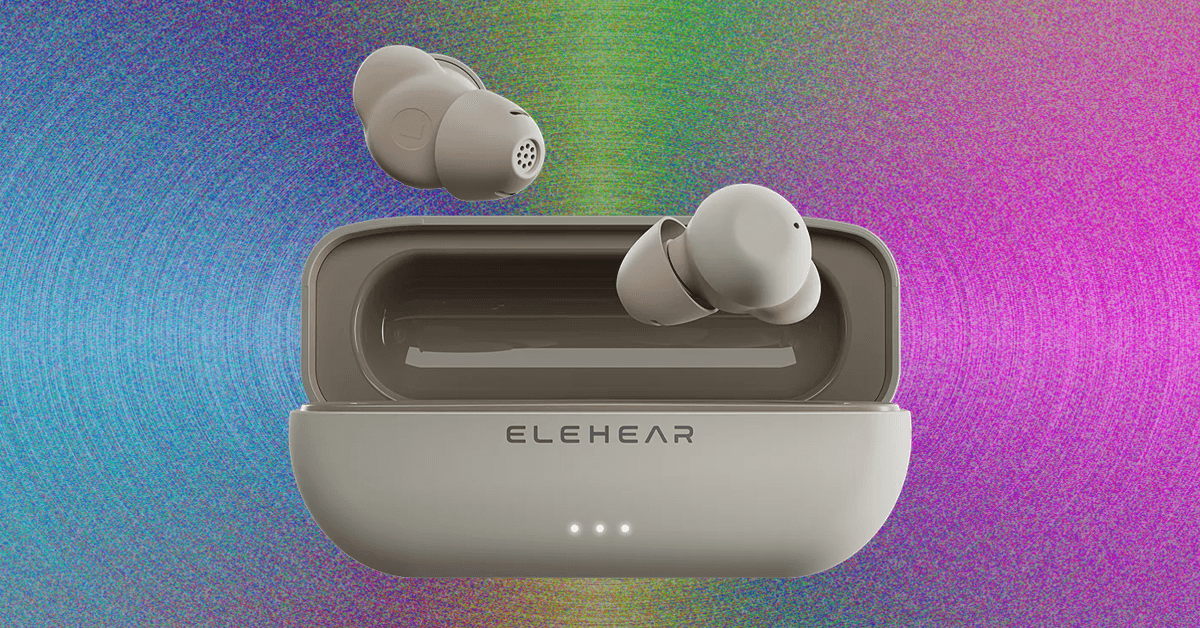
From the moment you unbox them, the Elehear Delight hearing aids impress with their aesthetics. Resembling compact Bluetooth earbuds in a subtle beige, these in-the-ear devices are designed for ultimate discretion. Unlike their more traditional behind-the-ear counterparts, the Beyond Pro and Beyond models, the Delights tuck neatly into the ear canal, barely protruding – though they remain visible from a direct side profile.
Ingeniously, a soft silicone “wing” contributes to their secure fit, gently resting against the concha. This rubbery fin is part of a removable, thin case that encases the entire hearing aid, allowing for easy cleaning and replacement as needed. Elehear thoughtfully includes three sizes of ear tips (both closed and lightly vented) and three sizes of ear wings, ensuring users can find their perfect, personalized fit.
Weighing 3.38 grams each, the Delights aren’t feather-light, a characteristic not uncommon for Elehear devices. However, their snug fit within the concha distributes the weight so effectively that they feel remarkably light and comfortable. Our testing confirmed extended wear for hours without any discomfort, itchiness, or soreness. While they never completely vanished from awareness, their presence was consistently unobtrusive.
Physical controls are absent, replaced by intuitive tap commands for volume adjustment – a single tap to increase, a double tap to decrease, applicable in both hearing aid and streaming modes. A minor caveat: these taps occasionally registered during insertion or removal, necessitating a quick check of the Elehear app to confirm volume settings before extended use.
The accompanying charging case is another standout feature. Its diminutive size makes it effortlessly pocketable, clearly designed with mobility in mind. The case boasts a robust battery, capable of providing two full top-up charges to the hearing aids. With a specified 13.5 hours of battery life per charge (slightly less with heavy streaming), our real-world tests yielded an impressive 11 hours of mixed usage before requiring a recharge.
The Sound of Disappointment: Lost in the Noise
Unfortunately, the Elehear Delight’s impressive fit and finish are, in many respects, its primary virtues. Beneath the sleek exterior lies a rather fundamental hearing aid product that struggles to deliver high-quality auditory support. A significant drawback, consistent with other Elehear devices, is the lack of tunability. The Delight is engineered to amplify audio across the entire audible frequency spectrum based on a generalized audiogram, rather than being customizable to individual hearing profiles.
This one-size-fits-all approach proved problematic. Even at moderate volume settings (levels 1 or 2 out of 11 in the app), the amplification became blunt, distorted, and often painful. High-frequency sounds were invariably harsh, while bass tones boomed excessively. While hiss wasn’t an issue at the lowest volumes, it quickly escalated into an unbearable static background as the volume increased. The app’s “brighter/deeper” tuning slider offered minimal relief, with barely discernible differences across its settings. Similarly, the five noise-cancellation modes provided negligible improvement.
The Delight comes pre-configured with four environmental modes, alongside the default setting, and allows for four user-created custom modes. Regrettably, none of these modes significantly enhanced overall hearing clarity, regardless of the listening environment. Streaming media, while functional, lacked bass and proved largely unusable in noisy surroundings.
Ultimately, the Elehear Delight system offered only minimal assistance even in ideal conditions, such as watching TV in a quiet room. In more challenging, noisy environments, amplified ambient sound overwhelmed any attempts at conversation, rendering the aids ineffective.
App Ambivalence and Intriguing Extras
Despite its clunky interface, the Elehear app does house some genuinely interesting additional features. Users will find a straightforward language translator, an environmental noise measuring system, and a remote sound capture function that allows your phone to act as an external microphone, piping sound directly to your hearing aids. Elehear’s “Serene” soundscapes also offer various meditative audio options, a unique touch that adds a layer of versatility beyond basic amplification.
The Verdict: Style Over Substance?
The Elehear Delight hearing aids present a compelling paradox: a masterclass in discreet, comfortable design utterly undermined by a fundamental failure in audio performance. While their sleek profile, secure fit, excellent charging case, and unique app features like the translator are commendable, the core function of a hearing aid – clear, comfortable amplification – is severely compromised by their non-tunable nature and propensity for distortion. At $369, the Elehear Delight might appeal to those prioritizing aesthetics and comfort above all else, but for anyone seeking genuinely effective and pleasant hearing support, the search for true “delight” will, unfortunately, need to continue.
For more details, visit our website.
Source: Link