
A Landmark Reversal: Undermining Decades of Climate Policy
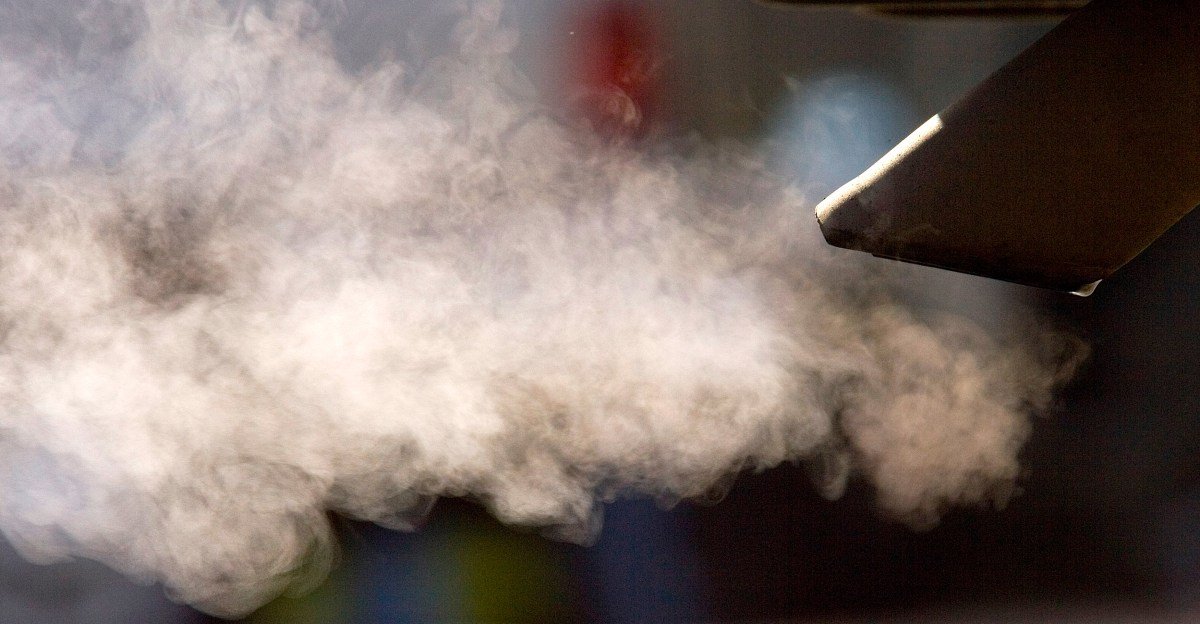
In a move with profound implications for environmental policy and the global fight against climate change, the Trump administration has officially repealed the Environmental Protection Agency’s (EPA) foundational “endangerment finding.” This landmark decision, which has underpinned federal regulations on planet-heating pollution since 2009, effectively dismantles limits on emissions from cars, power plants, and other industrial facilities.
The original endangerment finding, issued by the EPA in 2009, recognized that greenhouse gases released into the atmosphere “threaten the public health and welfare of current and future generations.” This scientific determination empowered the agency to craft crucial rules under the Clean Air Act, aiming to curb emissions responsible for driving more extreme weather events and climate disasters. By striking at the core finding, the Trump administration bypasses the need to repeal individual regulations, instead undermining them all at once.
The repeal, finalized as part of broader efforts to overhaul tailpipe pollution standards, is expected to have far-reaching consequences. Given that the United States is the second-largest emitter of carbon pollution globally, behind only China, the ripple effects of this deregulation will undoubtedly be felt worldwide.
The Administration’s Rationale: Deregulation and Economic Savings
EPA Administrator Lee Zeldin lauded the repeal as “the single largest deregulatory action in U.S. history on behalf of American taxpayers and consumers.” The administration argues that slashing these regulations is essential to reduce costs for US businesses and consumers, claiming cumulative savings of over $1.3 trillion and an average reduction of $2,400 off the cost of a vehicle. The agency’s press release, however, did not detail the methodology behind these figures.
When the repeal was first proposed, the EPA asserted that automakers had “suffered from significant uncertainties and massive costs related to general regulations of greenhouse gases from vehicles and trucks.” Consequently, the agency announced it is now discarding “all subsequent federal GHG emission standards for all vehicles and engines of model years 2012 to 2027 and beyond” by eliminating the endangerment finding.
A Costly Calculation: The True Price of Deregulation
Critics, however, paint a starkly different picture of the repeal’s true economic and human cost. Dominique Browning, director and cofounder of Moms Clean Air Force, condemned the decision, stating, “It is impossible to imagine a morally defensible reason for [EPA] Administrator [Lee] Zeldin’s decision to end EPA’s responsibility for cutting the climate pollution that is endangering peoples’ health. Zeldin’s legacy will be the suffering of our children and grandchildren.”
The World Health Organization has previously warned that climate change could lead to an additional 250,000 deaths annually between 2030 and 2050 due to malnutrition, malaria, diarrhea, and heat stress. Furthermore, an analysis by the nonpartisan climate policy think tank Energy Innovation suggests that undoing tailpipe pollution rules could actually cost Americans $310 billion over the next 25 years, primarily at the gas pump. This contrasts sharply with the EPA’s own earlier estimate of $54 billion in annual savings, an analysis that notably assumed falling gas prices and excluded the additional costs incurred by the effects of climate change.
Legal Battles Ahead: The Future of US Climate Action
The repeal is poised to ignite a fierce legal battle, with environmental groups already vowing to challenge the decision. Such challenges could ultimately escalate to the Supreme Court, where President Donald Trump appointed three of the justices comprising the current 6-3 conservative majority.
Should the case reach the highest court, there is a significant risk that the current justices could reverse the pivotal 2007 Massachusetts v. EPA decision. That ruling originally affirmed the EPA’s authority to regulate greenhouse gases under the Clean Air Act. Overturning it would not only validate the current administration’s actions but also effectively hamstring future administrations from reinstating climate rules enabled by the endangerment finding, requiring new legislation from Congress to regulate greenhouse gas emissions at the federal level.
States and Congress: The Path Forward?
In its announcement, the EPA contends that the Clean Air Act does not grant the agency the authority to regulate motor vehicle greenhouse gas emissions “for the purpose of addressing global climate change,” asserting that “a policy decision of this magnitude, which carries sweeping economic and policy consequences, lies solely with Congress.” This stance places the onus squarely on the legislative branch to enact new climate policy.
In the absence of federal action, individual states may be compelled to step up with their own climate pollution regulations, creating a patchwork of environmental standards across the nation. The repeal marks a critical juncture for US climate policy, with profound implications for public health, the environment, and the nation’s role in global climate efforts.
For more details, visit our website.
Source: Link