
Crafting Futures: How Gurnee District 56 Sustains Its Pioneering School Maker Faire
What does a decade of unwavering dedication to makerspace programming look like within a public school district? For Gurnee District 56, nestled an hour north of Chicago, it’s a story of innovation, resilience, and a steadfast belief in the power of hands-on learning. We recently delved into this journey with Dain Elman, the district’s Instructional Coach for STEM, makerspace teacher, and the driving force behind their renowned School Maker Faire.
Gurnee District 56, serving approximately 1800 students across four schools, mirrors many suburban districts nationwide, yet it distinguishes itself through an exceptional commitment to STEAM education. Elman, with over two decades of teaching experience in the area, highlights this dedication as a key differentiator.
From Shop Class to Makerspace: A Return to Hands-On Learning
The echoes of traditional “shop classes,” where students once designed, built, and experimented, have largely faded from public education, replaced by a surge in computer labs and screen-based instruction. While digital literacy is undeniably crucial, Gurnee District 56 recognized the vital need to restore balance, championing maker education to transform students from passive consumers into active creators.
This transformative shift was initially fueled by visionary leadership. A former superintendent, passionate about innovation, established Elman’s role as STEM director and inaugurated dedicated makerspaces around 2016–2017. These spaces were deliberately designed to break free from conventional classroom norms, fostering environments where learning could be messy, collaborative, and experimental—a vibrant hub where cardboard, fabric, circuitry, LEGOs, robotics, and digital tools harmoniously coexist.
The Faire’s Genesis: More Than Just Tools
When Elman recounts the genesis of the Gurnee District’s School Maker Faire, his narrative begins not with cutting-edge technology, but with timing. “2018 and 2019,” he recalls, “Those were our first two years. We hosted it in the middle school gym, right before spring break. The timing was perfect—there’s breathing room before the sprint to the end of the year.” This strategic scheduling allowed the event to flourish, becoming a cherished annual tradition.
These early years coincided with a national surge in maker education, and Elman was at the forefront, instrumental in establishing the district’s dedicated makerspaces. He envisioned spaces that encouraged exploration and creativity, a stark contrast to the structured confines of typical classrooms.
Navigating the Storm: The Faire That Almost Wasn’t
Then came March 2020. The School Maker Faire, meticulously planned, was abruptly canceled just a week before its grand opening. This moment encapsulated the broader “sea change” sweeping through schools globally: pandemic disruption, an intensified focus on measurable academic achievement, shifting leadership priorities, and demographic evolution. The question arose: “What’s the academic benefit? How do we justify it?”
Initial enthusiasm for makerspaces, while strong, began to wane. As Elman notes, “It’s fewer teachers now. Some still come. But not like at the beginning.” Post-COVID, the national educational landscape pivoted sharply towards addressing “lost learning,” with reading and math reclaiming center stage. Unstructured exploration, once celebrated, became harder to justify, risking marginalization if not deeply integrated into curriculum and assessment.
Integration and Inspiration: The Path Forward
Elman’s response to these challenges was both strategic and inspiring: lean into rigor while keeping the community engaged. He recognized that for maker education to thrive, it needed to be demonstrably aligned with academic standards and showcase the tangible value of project-based, innovative learning.
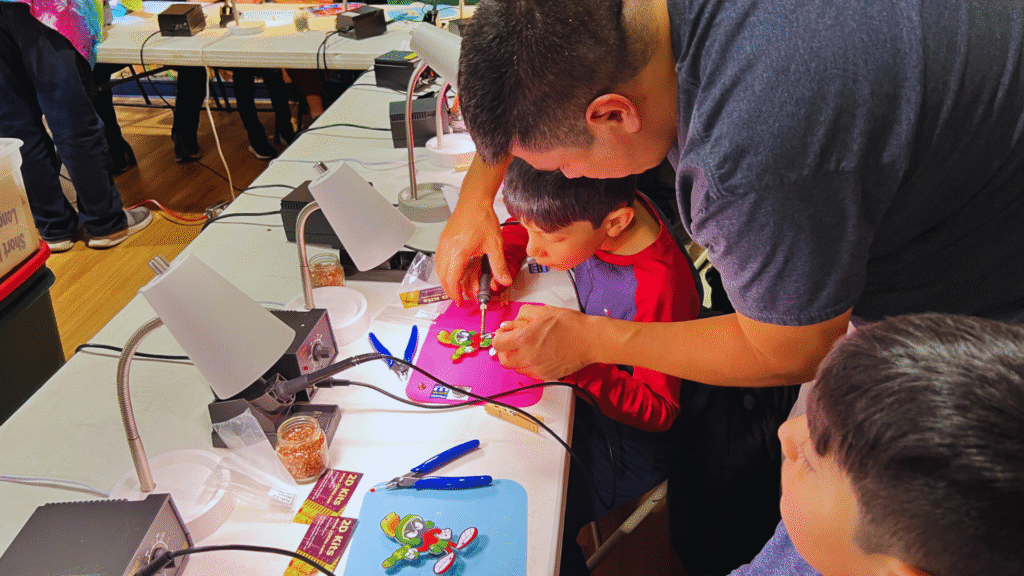
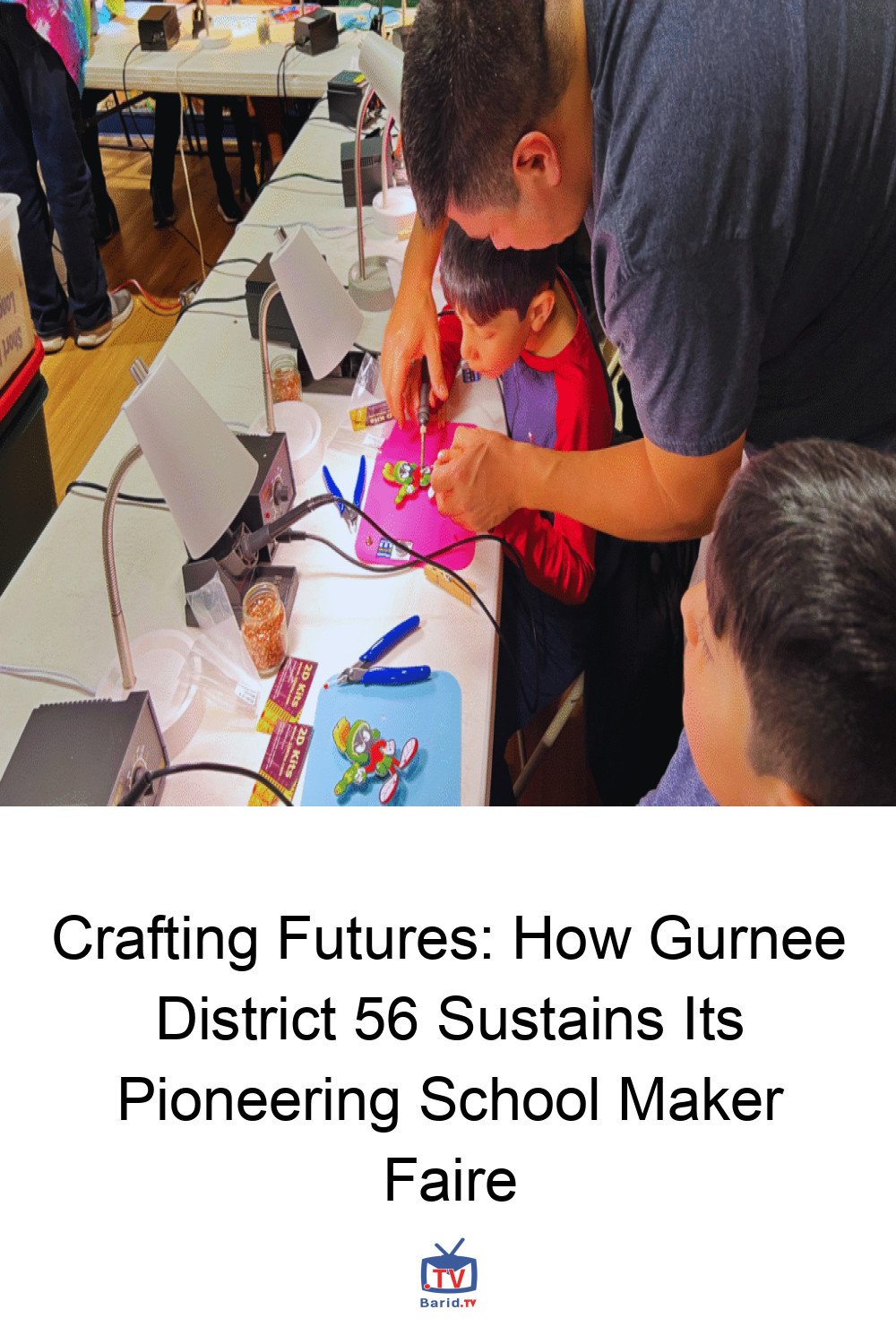
After the 2020 cancellation, a virtual maker event was attempted, but the magic of hands-on creation proved difficult to replicate through a screen. By 2023, the district triumphantly brought the Maker Faire back in person, a district-wide, community-facing celebration. This return marked a pivotal moment: the district formally “owned” the Faire, integrating it into a rotation of four major district celebrations, including Black History Month, Hispanic Heritage, and Asian Pacific Islander Celebration. The Maker Faire is now paired with Women’s History Month, rotating among campuses, ensuring its continued relevance and broad appeal.
Community: The Secret Ingredient
Despite structural changes and evolving priorities, the enduring spirit of the Gurnee Maker Faire is undeniably rooted in community. Elman remains deeply involved, even lending his expertise to the district’s theater program, where he helps students build sets and costumes—a testament to the pervasive culture of making he has fostered. It is this collective commitment, from leadership to students and families, that ensures the Maker Faire not only survives but thrives, continuing to inspire the next generation of creators and problem-solvers.
For more details, visit our website.
Source: Link