

The Post-Mint Era: A Quest for Financial Clarity
The financial technology landscape is constantly evolving, and for many, the recent shutdown of Mint in March 2024 marked a significant turning point. Intuit’s decision to transition Mint users to Credit Karma left a void for those accustomed to its comprehensive budgeting features. As a former dedicated Mint user myself, the search for a worthy successor became an urgent personal and professional endeavor. Credit Karma, while useful for credit monitoring, proved to be an inadequate replacement for robust financial tracking, monthly spending plans, and goal setting – from building emergency funds to accelerating mortgage payments.
This personal quest led me to rigorously test Mint’s leading competitors, diving deep into their functionalities to identify platforms that genuinely empower users to manage their finances effectively. My journey through the myriad of budgeting applications aims to provide you with an expert-backed guide to finding the ideal financial companion for your money in 2026.
2026’s Top Budgeting Apps: A Snapshot
Before delving into the specifics, here’s a quick look at the contenders that stood out in our comprehensive evaluation:
- Best Budget App Overall: Quicken Simplifi ($72/year)
- Runner-Up:
Monarch Money ($100/year or $15/month)
- Best Free Budget App: NerdWallet (Free)
- Best Up-and-Comer: Copilot Money ($95/year or $13/month)
- Honorable Mention: YNAB (You Need A Budget) ($110/year or $15/month)
Quicken Simplifi: The Pinnacle of Financial Management
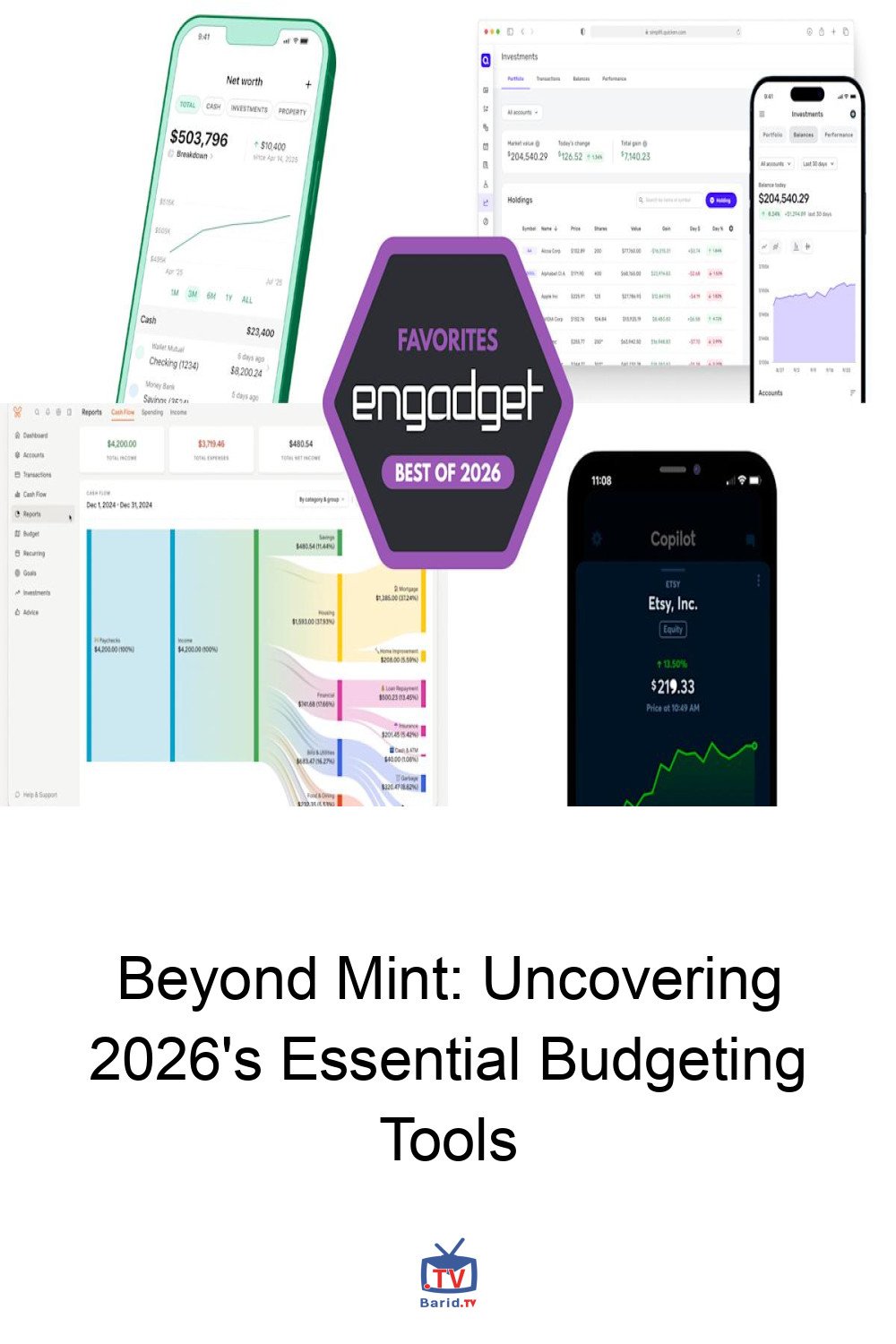
True to its name, Quicken Simplifi excels in its straightforward approach to personal finance. Unlike apps that prioritize flashy aesthetics, Simplifi offers a refreshingly clean user interface, presenting a detailed yet digestible overview of your financial health through a seamless scrolling experience. Key metrics such as top-line balances, net worth, recent spending, upcoming recurring payments, spending plan snapshots, and top spending categories are all readily accessible. The platform also facilitates the creation of crucial savings goals.
Onboarding with Simplifi was remarkably smooth. Its ability to effortlessly connect with financial institutions like Fidelity, a connection not always guaranteed with other trackers, was particularly impressive. A standout feature is the option to invite a spouse or financial advisor for collaborative account management – a rarity among its peers. However, the absence of Zillow integration, a feature present in competitors like Monarch Money and Copilot Money, means real estate assets must be added manually. While some transaction miscategorizations occurred, they were within the typical range for budgeting tools, and easily rectifiable.
Simplifi introduces a unique refund tracker, allowing users to mark expected refunds directly within transactions. Its income estimation proved more accurate than several other apps tested. A highly appreciated feature is the granular control over recurring purchases: users can designate specific items from a merchant (e.g., two Amazon Subscribe & Save orders) as recurring without applying a blanket rule to all transactions from that vendor.
The budgeting functionality is intuitive. After verifying income and setting up recurring payments (distinguishing between essential bills and discretionary subscriptions), Simplifi provides an “income after bills” figure. This clarity allows users to then allocate funds to “planned spending” categories, which can encompass both monthly budgets and one-time expenditures. Simplifi even offers intelligent suggestions for budget numbers based on a six-month spending average.
Simplifi at a Glance:
- Pros: User-friendly interface with a gentle learning curve; accurate detection of recurring income and bills; more affordable than many competitors; allows shared account access; unique refund tracking.
- Cons: No free trial; lacks Apple/Google ID sign-up; no Zillow integration.
Price: $72/year
Monarch Money: Granular Control for the Discerning User
Monarch Money, founded by a former Mint product manager, presented a steeper learning curve initially compared to Simplifi, NerdWallet, and Copilot. Tasks such as editing expense categories, adding recurring transactions, and creating rules felt somewhat more intricate, particularly within the mobile application. For detailed adjustments, the web app proved to be more efficient. Additionally, Monarch required manual correction of income figures during setup.
However, once configured, Monarch Money truly shines with its impressive level of financial granularity. Its budgeting section offers a genuine balance sheet view, meticulously detailing budgets versus actual spending for each category. This depth provides users with unparalleled insight into their financial flows, making it an excellent choice for those who demand comprehensive control and detailed reporting.
While the initial setup might demand a bit more patience, the reward is a powerful tool for meticulous financial oversight, ideal for users who appreciate a robust, data-rich approach to budgeting.
Monarch Money at a Glance:
- Pros: Exceptional granularity and detailed reporting; robust budgeting features with balance sheet view; founded by former Mint product manager.
- Cons: Steeper learning curve, especially on mobile; initial income detection may require manual adjustment.
Price: $100/year or $15/month
For more details, visit our website.
Source: Link