
The Washington Post’s Local News: A Missed Rescue by Bezos?
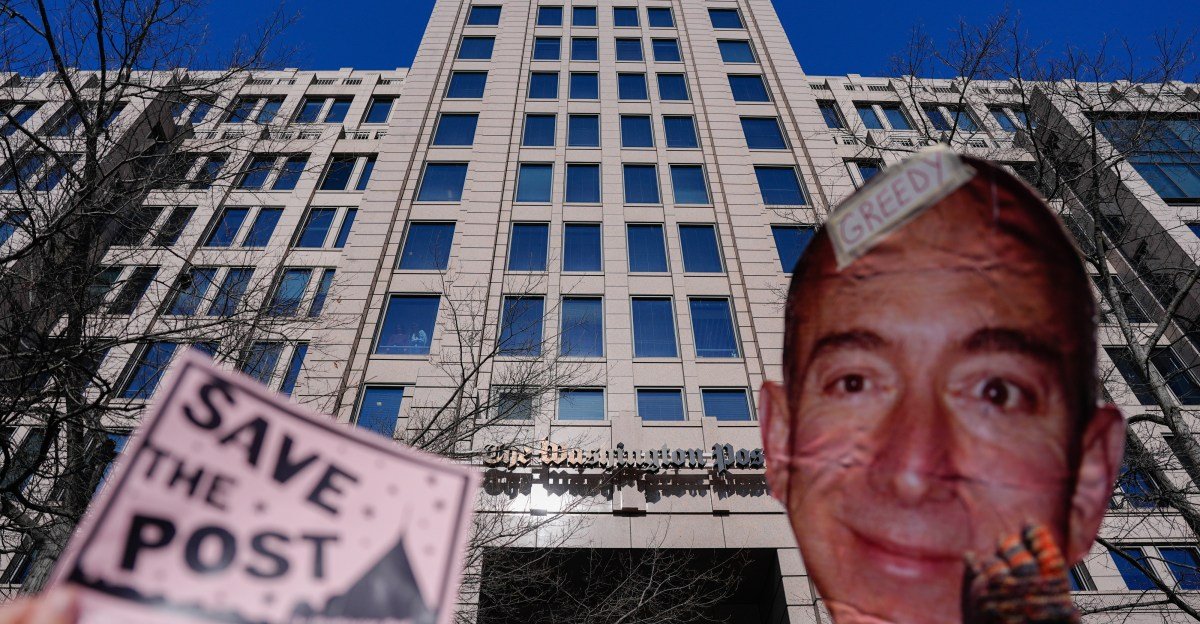
The recent upheaval at The Washington Post, marked by significant layoffs and the closure of key desks, has ignited a fervent debate about the future of local journalism and the responsibilities of media moguls. At the heart of this controversy lies Amazon founder Jeff Bezos, the Post’s owner, whose decisions are now under intense scrutiny following revelations of a rejected offer that could have saved numerous journalistic positions.
A Lifeline Extended, Then Withdrawn
In a development that has left many within the media landscape bewildered, it has emerged that the Washington City Paper, a publication with deep roots in the DC community, had proposed a solution to avert the mass layoffs. Following reports in late January that the Post was considering eliminating its sports desk, the City Paper, owned by Mark Ein (also a part-owner of the Washington Commanders), stepped forward with a compelling offer.
Sources close to the discussions indicate that Ein approached then-CEO Will Lewis weeks ago with a proposal: to spin off the Post’s sports and local sections into a separate entity. The City Paper would then invest in this new venture and host it on its established platform, a move that would have preserved the jobs of many journalists. Such arrangements, where news organizations divest or collaborate on specific sections, are not unprecedented in the industry.
Despite initial receptiveness from Lewis, these crucial discussions abruptly ceased last Wednesday. The Post proceeded to close these sections entirely, laying off the journalists who staffed them. This decision was particularly jarring for sports reporters, many of whom were in the midst of covering the Winter Olympics and preparing for the Super Bowl.
The Echoes of a Legacy
The impact of these layoffs resonates deeply with long-time Washington Post readers. Generations have grown up relying on the Post’s comprehensive coverage of local teams and community news. The historical significance of local reporting for the Post cannot be overstated; it was, after all, two local beat reporters who famously broke the Watergate scandal, forever etching the paper into journalistic legend.
In the wake of the layoffs, Mark Ein publicly responded to calls to hire the newly available Post journalists, stating he was “on it,” signaling a continued commitment to local coverage. The Washington Post, however, has remained silent on the matter.
The Enigma of Ownership: Why Bezos?
The Post’s recent actions, particularly the rejection of a seemingly viable alternative, have fueled widespread confusion and speculation regarding Jeff Bezos’s long-term vision for the publication. Insiders from journalism, tech, and political circles, many of whom have worked closely with Bezos and the Post, admit to being equally perplexed.
An executive with experience in journalism and philanthropy, who has worked with Bezos, offered a candid perspective:
“The way I used to describe billionaires who own media properties is that they don’t want to write more checks, meaning they think the subsidy they’re providing is that they’re not asked for the paper to send them a check every year. All their other businesses give them dividends, right? But this one, they’re like, Fine. Just don’t lose money, and just don’t bug me anymore. They’re trying to rationalize the business by making it lose less money.”
The executive further questioned Bezos’s underlying motivations:
“So, him trying to make it lose less, that kind of makes sense. It’s just curious as to why he’s doing it at all. And what does it get out of it? Does he love the business? He’s never made a pronouncement so much as loving it. I think there’s part of the equation that isn’t solvable, at some level. And then that’s what people are filling in with, He wants influence with Trump or somehow wants us to have his other businesses. I’ve never heard him say anything like that. I’ve never heard anybody from The Washington Post assert anything like that. I’ve never seen evidence of it. But it’s sort of what you fill in the blank with, when the equation isn’t adding up. What I think is true is, it is irrational for him to own this thing.”
This sentiment is echoed by prominent tech journalist Kara Swisher, host of Pivot, who herself made a public bid to purchase the Post last year but received no response from Bezos. The lack of clear communication or a stated vision from Bezos only deepens the mystery surrounding his continued ownership.
The Broader Implications for Journalism
The Washington Post saga serves as a stark reminder of the precarious state of local journalism and the complex dynamics at play when billionaires acquire media outlets. While such ownership can provide financial stability, it also raises questions about editorial independence, community commitment, and the ultimate purpose of these institutions. The missed opportunity to save the Post’s local and sports desks highlights a critical juncture for an industry grappling with economic pressures and evolving consumption habits, leaving many to wonder what truly drives the decisions at the top.
For more details, visit our website.
Source: Link