

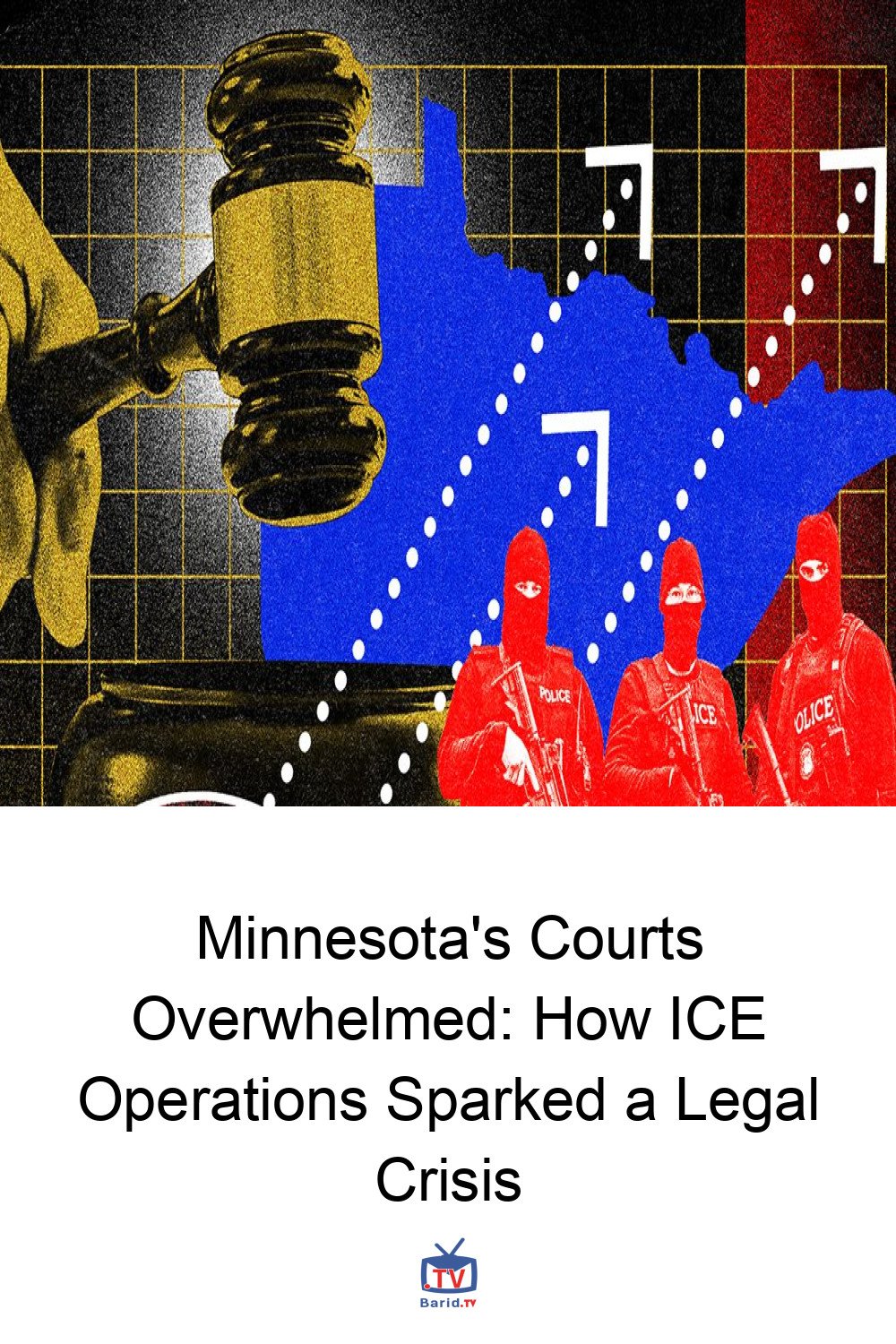
The Unprecedented Strain: How ICE’s Surge is Paralyzing Minnesota’s Federal Courts
The United States court system in Minnesota is teetering on the brink of collapse, pushed to its limits by an unprecedented surge in Immigration and Customs Enforcement (ICE) operations. Since the launch of ‘Operation Metro Surge’ in December, federal immigration agents have reportedly arrested some 4,000 individuals, according to the Department of Homeland Security (DHS). This aggressive enforcement has unleashed an avalanche of legal challenges, primarily in the form of habeas corpus petitions, overwhelming the federal district court in Minnesota.
A review of court records by WIRED reveals a staggering statistic: nearly as many habeas corpus petitions were filed in Minnesota alone as were recorded across the entire U.S. federal court system in a full year prior. This dramatic spike is not merely a local phenomenon but a stark indicator of a national legal system under immense duress.
The Policies Behind the Paralysis
This bombardment of cases stems directly from two key Trump administration policies: a significant escalation in the number of individuals being detained, coupled with the dismantling of crucial legal mechanisms previously available for securing their release. The cumulative effect is a federal court system struggling to function, with judges, immigration attorneys, and federal prosecutors alike finding themselves stretched beyond capacity. Meanwhile, the individuals at the heart of these cases often remain incarcerated, frequently thousands of miles from their homes, sometimes even after judges have issued orders for their release.
A System Under Duress: The Human and Professional Cost
The strain on legal professionals is palpable. Graham Ojala-Barbour, a Minnesota immigration attorney with over a decade of experience, confesses, “I’ve never said the word habeas so many times in my life.” He even jokes that his dreams are now filled with habeas petitions, a testament to the relentless workload.
Exhaustion has become endemic within the system. On February 3, a now-former special assistant U.S. attorney, Julie Le, made a desperate plea to a Minnesota judge, begging to be held in contempt just so she could finally get some rest. Le was reportedly listed on 88 cases, a figure gleaned from PACER, the U.S. court records database. Daniel Rosen, the U.S. attorney for the district of Minnesota, had previously informed the judge in writing that his office was “struggling to keep up with the immense volume” of petitions, admitting that at least one court order for a petitioner’s return had been overlooked. Le, who did not respond to requests for comment, was reportedly fired after the hearing where she candidly told the judge, “This job sucks.” The Minnesota U.S. Attorney’s Office, when contacted, responded with an automatic reply indicating a lack of a public information officer.
In response to the mounting criticism, DHS spokesperson Tricia McLaughlin stated, “The Trump administration is more than prepared to handle the legal caseload necessary to deliver President Trump’s deportation agenda for the American people.”
The Plight of the Detained: Beyond the Courtroom
While the workload is grueling for legal professionals, the situation for those detained by immigration authorities is far more dire. Court filings paint a grim picture: individuals describe being crammed into cells so full they couldn’t sit down, before being transported to distant detention centers in Texas. Accounts include sharing cells with individuals sick with COVID-19 and facing repeated pressure from agents to self-deport.
McLaughlin, however, countered these claims, assuring WIRED that “All detainees are provided with proper meals, water, medical treatment, and have opportunities to communicate with their family members and lawyers. All detainees receive full due process.”
Shifting Legal Landscapes: Attorneys Overwhelmed
The impact on individual legal careers is also evident. Ana Voss, formerly the civil division chief for the Minnesota U.S. Attorney’s Office, found herself defending the government in nearly every habeas petition case filed in Minnesota since Operation Metro Surge began. Prior to December, her caseload primarily involved social security and disability lawsuits. Post-surge, habeas petitions for immigrant detainees dramatically eclipsed all other matters. In January alone, 584 of the 618 cases filed in Minnesota district court listing Voss as an attorney were habeas petitions for detainees – a likely undercount due to potential mislabeling. Voss is no longer with the Minnesota U.S. Attorney’s Office, her Department of Justice email now returning an automatic reply.
A National Crisis? The Broader Picture
The explosion of habeas petitions is not confined to Minnesota. January saw at least 774 petitions filed in the Western District Court of Texas, and 186 in the Middle District of Georgia, according to data from Habeas Dockets. ProPublica further reported over 18,000 habeas cases filed nationwide since January 2025. This stands in stark contrast to the Administrative Office of the United States Courts’ report that between April 2024 and March 2025, only 618 habeas petitions for noncitizen detainees were filed across the entire federal court system. The factors contributing to this unprecedented rise are complex, but fundamentally rooted in the increased detention rates and restricted avenues for release, pushing the U.S. legal system to its breaking point.
For more details, visit our website.
Source: Link