

Malaysia’s Economic Blueprint: 2026 Set for ‘Execution’ and High-Value Growth
Kuala Lumpur, Malaysia – With an eye on potential elections by early 2028, Malaysia’s Anwar Ibrahim administration is gearing up for a pivotal year of “execution” and “discipline” in 2026. The nation’s economy minister has underscored a firm commitment to delivering tangible policy achievements under the ambitious 13th Malaysia Plan (RMK13), aiming to solidify the country’s economic trajectory and secure its future.
A Short Runway, A Clear Vision
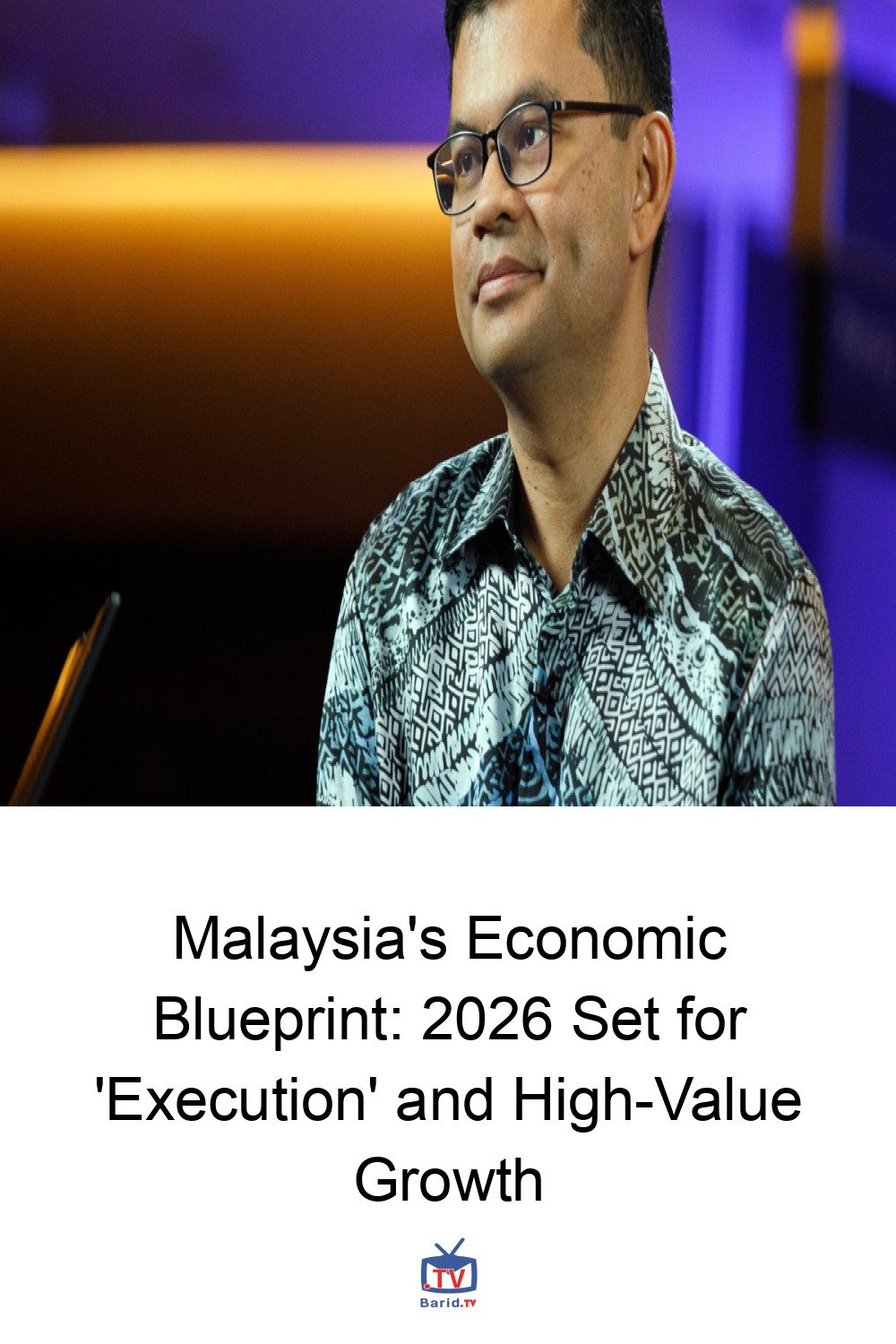
YB Akmal Nasrullah Mohd Nasir, Malaysia’s Economy Minister, highlighted the urgency ahead of the Forum Ekonomi Malaysia summit. “2026 is going to be about how we deliver RMK13,” he told Fortune, emphasizing the administration’s focus. Given the general election deadline of February 2028, the government sees a greater chance of success in implementing existing policies rather than initiating new directions. “Two years is quite a short runway,” Akmal noted, stressing the need for focused and efficient execution.
To bolster accountability and track progress, Akmal’s ministry is rolling out MyRMK, a new digital system designed to monitor RMK13’s advancements. This “whole-of-government approach” aims to mitigate delays and ensure that all stakeholders fulfill their mandates. The minister expressed optimism that this renewed “discipline” would grant RMK13 a lasting impact, allowing its objectives to endure beyond any single administration.
Economic Resilience and Optimistic Forecasts
Malaysia is poised to enter 2026 on a remarkably strong economic foundation. The nation’s economy expanded by 4.9% in 2025, following a robust 5.1% growth the previous year. Unemployment has fallen to a decade-low of 2.9%, and the Malaysian ringgit is currently at its strongest level in five years.
Despite this positive momentum, 2025 presented its share of economic headwinds. Notably, the U.S. imposed 25% tariffs on Malaysian goods in April, a move that briefly unsettled the country’s export-led economy. However, swift and strategic negotiations led to a resolution: Malaysia agreed to reduce tariffs on certain U.S. products, while Washington reciprocated by lowering its duties to 19%, with crucial exemptions for key Malaysian exports such as aviation components and electrical equipment.
Malaysia’s established prowess in semiconductor and electrical equipment manufacturing has proven to be a significant asset, bolstering exports amidst the global AI boom. Last year, the country’s trade volume surged to a record high, surpassing 3 trillion Malaysian ringgit ($780 billion).
Economists Bullish on 2026 Prospects
Leading economists share a collective optimism for Malaysia’s economic performance in 2026. HSBC ASEAN economist Yun Liu projects a 4.6% economic growth, attributing it to strong performances in the electrical equipment and tourism sectors, complemented by sound government policies. Even more bullish, Nomura economists forecast a 5.2% growth, driven by key infrastructure projects under RMK13.
Strategic Global Positioning and Investment Appeal
In an increasingly intricate geopolitical landscape, Malaysia is actively cultivating a niche as a neutral and reliable global partner. “We are not China, not the U.S…and that gives us a strategic position, both in terms of geopolitical positioning, as well as supply chain positioning,” stated YB Tuan Liew Chin Tong, Malaysia’s Deputy Minister of Finance, at the Forum Ekonomi Malaysia.
Economy Minister Akmal echoed this sentiment, extending an open invitation to global investors. “Malaysia is open for investment, because we believe we have a competitive advantage,” he told Fortune. “This is the best time to consider Malaysia as your [investment] destination…given our approach of being friendly to everyone and focusing on economic prosperity.”
Forging a ‘Made by Malaysia’ Future
A central tenet of Prime Minister Anwar’s five-year plan is the cultivation of new “Made by Malaysia” products, with a particular emphasis on high-value sectors such as semiconductors. While Malaysia already plays a significant role in chip assembly and testing, the national ambition is to move further upstream into critical areas like design and advanced manufacturing.
“We are focusing on high-growth, high-value industries,” Akmal affirmed. A landmark 10-year licensing deal with British semiconductor giant Arm Holdings last year exemplifies this strategic drive. The agreement grants Malaysia access to crucial chip design blueprints and establishes Arm’s first Southeast Asian office in Kuala Lumpur. Crucially, it also includes comprehensive training programs for 10,000 local engineers, directly addressing a persistent talent gap in advanced manufacturing.
Bridging the Talent Gap for Advanced Manufacturing
Akmal stressed the imperative to “upgrade” Malaysia’s talent pool to effectively climb the value chain, a concern widely shared by industry leaders. Ooi Ching Liang, General Manager of Business Development at Malaysian chip design startup SkyeChip, articulated the challenge: “Capital can be injected by a government or investor, but talent is the one [thing] we need to build.” He noted that while local training is vital, gaining deep experience often requires “many iterations of product cycles,” sometimes necessitating a search for overseas talent.
The Johor-Singapore Special Economic Zone: A Regional Catalyst
Another strategic pillar of Malaysia’s industrial push is the newly launched Johor–Singapore Special Economic Zone (SEZ). Designed to attract high-tech investment along the border, the SEZ offers a unique proposition: companies can leverage Singapore’s sophisticated financial and legal ecosystem while benefiting from Malaysia’s lower operational costs and larger land availability. This initiative has already shown significant promise, with almost one third of all approved foreign direct investment into Malaysia in the first three quarters of the year flowing into this region.
For more details, visit our website.
Source: Link