

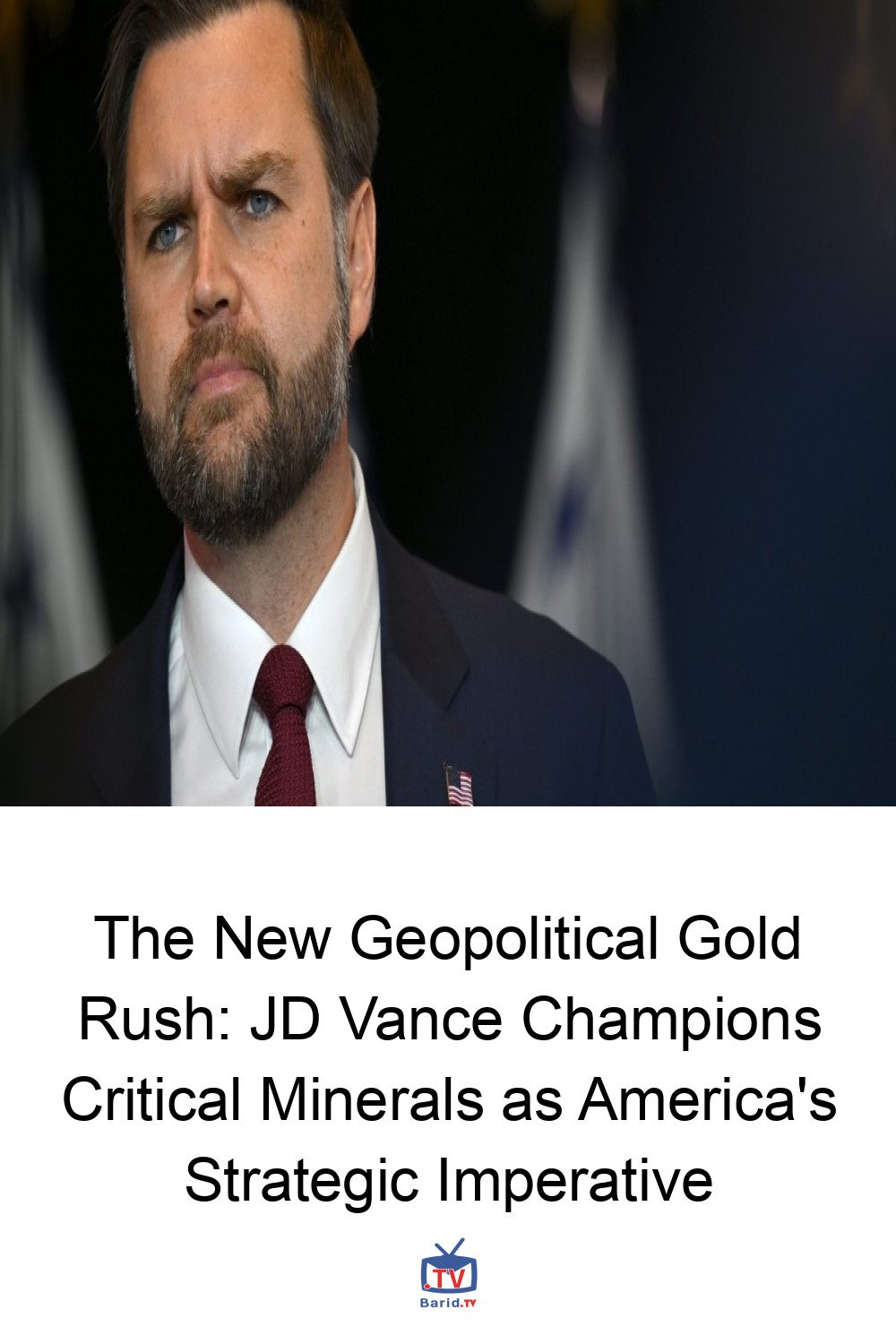
While the U.S. economy increasingly pivots towards the ethereal realm of digital assets, a powerful counter-narrative is emerging from the Trump administration: the enduring, tangible value of physical commodities. Historically, oil has been the bedrock of global trade and strategic importance, a fundamental good presidents have championed to stabilize markets. However, for figures like Vice President JD Vance, another material resource has ascended to unparalleled significance: critical minerals.
Critical Minerals: The “Realer Thing”
“There is no realer thing than oil—and I would add to that there’s no realer thing than critical minerals,” declared Vice President JD Vance on Wednesday. His remarks came during a pivotal gathering in Washington, where ministers from 55 nations convened to forge a critical minerals trading bloc. This ambitious partnership aims to dismantle China’s formidable dominance over the mining and processing of essential elements – materials indispensable for everything from the smartphones in our pockets to the electric vehicles on our roads and the advanced fighter jets in our skies. These minerals, Vance argued, represent a foundational economic value capable of rivaling petroleum’s long-held strategic importance.
America’s Strategic Push
The Trump administration has already initiated significant measures to bolster the U.S. presence in the global critical minerals market. Beyond the proposed trading bloc with allies, this month saw the announcement of a substantial $12 billion strategic stockpile of these raw materials. Over recent months, the government has also acquired stakes in various suppliers of rare earths and other vital minerals. This multi-pronged strategy is a direct response to America’s precarious dependence on China, which commands a near-monopoly on critical mineral mining and processing – a status it has not hesitated to leverage during its trade disputes with the U.S.
“A lot of us have learned the hard way, in some ways, over the last year how much our economies depend on these critical minerals,” Vance underscored, highlighting the urgent need for diversification and domestic resilience.
Beyond the Digital Frontier: The Primacy of Tangible Assets
Vance provocatively positioned the importance of these materials as potentially surpassing that of the burgeoning digital economy, which has absorbed a significant share of U.S. investment in recent years. Artificial intelligence, cloud computing, and the vast data center infrastructure powering them currently dominate private investment and GDP growth. Deutsche Bank analysts noted that five major U.S. technology companies alone invested $399 billion in capital expenditure last year, cautioning that AI-related investments, while critical to GDP growth, come “with no guaranteed return.” Indeed, AI accounted for a staggering 71% of venture capital deal value in the first quarter of last year.
“As much as data centers and technology and all of these incredible things that we’re all working on matter, fundamentally you still have an economy that runs on real things,” Vance asserted, drawing a clear distinction between speculative digital ventures and the tangible underpinnings of industrial power.
The Global Race: China’s Head Start
While the U.S. is now channeling more government funding into its mining sector through stockpiles and industry stakes, China maintains a substantial lead. Last year, Beijing invested a record $32.6 billion in overseas metals and mining projects, extending its influence through the Belt and Road Initiative across Central Asia and Africa. This aggressive investment strategy underscores the global competition for these vital resources.
Lessons from History: From Oil Embargoes to Mineral Monopolies
The current focus on tangible commodities echoes past administrations’ efforts. In 2008, President Barack Obama criticized oil speculators for inflating prices, implementing measures to curb “excessive speculation.” Vance, however, drew a more direct historical parallel: the 1974 Washington Energy Conference. This summit was convened to establish shared energy policies following an oil embargo that had crippled oil-consuming nations.
“That meeting took place during a moment where global energy supplies were concentrated, where markets were distorted, and access to a single critical resource—at that time, of course, being oil—had become a tool of political pressure,” Vance explained. Five decades later, the critical resource has shifted from crude oil to rocks and minerals, and the concentration of control now largely rests with a formidable economic adversary: China.
At the recent summit, Trump officials emphasized the imperative for greater collaboration among partners and allies. The goal is to fortify supply chains against potential disruptions from China, exploring various market mechanisms, including price floors among participating nations. This collective effort is deemed essential to secure the future of global industry and national security.
For more details, visit our website.
Source: Link