

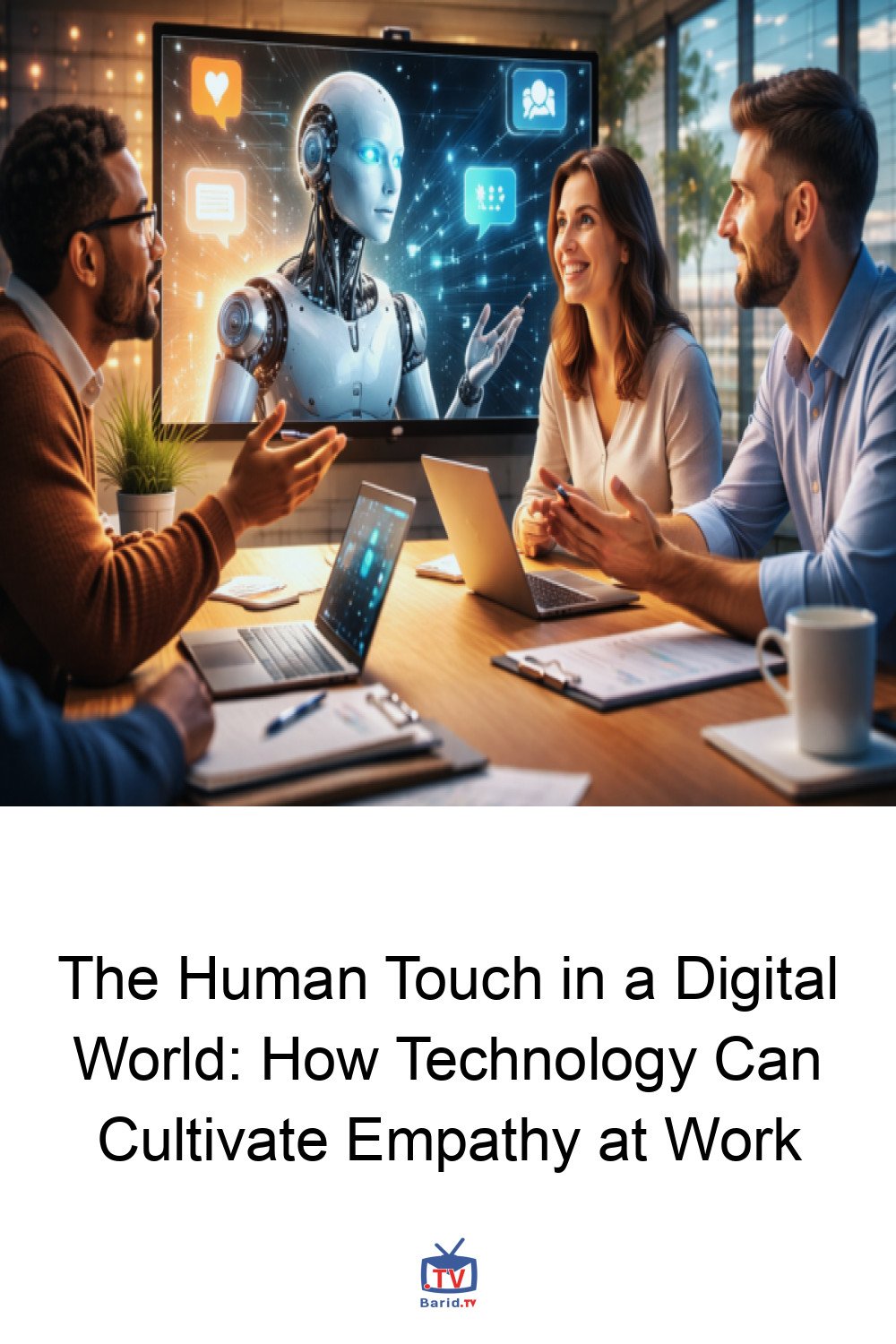
In the year 2026, our professional landscapes are more interconnected than ever. Global networks, advanced AI, and pervasive automation define a workplace where international collaboration is commonplace, and face-to-face interactions are often replaced by video calls and instant messages. This hyper-digital environment sometimes sparks a concern: are we, in our pursuit of efficiency, inadvertently drifting away from the very human essence of business? While technology undeniably streamlines communication, it simultaneously strips away subtle, yet crucial, human cues – the unspoken body language, the comfortable silences, the organic flow of conversation. Yet, within this technological paradox lies an extraordinary opportunity: the chance to become more human, not less. The secret weapon? Empathy.
Empathy: The Cornerstone of Modern Professional Communication
Empathy is frequently misconstrued as mere pleasantness or an overt display of emotion. In the professional sphere, however, its definition is far more precise: it is the profound ability to genuinely understand and share the feelings and thoughts of another. This capacity becomes especially vital during challenging times, acting as a catalyst for innovation, boosting engagement, and significantly mitigating burnout. Workplace empathy operates through three distinct, yet interconnected, dimensions:
The Three Pillars of Professional Empathy
- Cognitive Empathy: The intellectual grasp of a situation, its constraints, and the objectives your interlocutor aims to achieve. It’s about understanding their perspective logically.
- Emotional Empathy:
The intuitive awareness of another’s emotional state, detectable through nuances in voice, signs of stress, or a dip in self-confidence. It’s about feeling with them.
- Behavioral Empathy:
The adaptive response to an interlocutor’s needs, adjusting your communication style, pace, and reactions to foster a more effective and supportive interaction. It’s about responding appropriately.
Mastering the synchronization of these three empathetic forms is increasingly crucial in professional dialogue, ensuring interactions feel authentic and effortless. In an era increasingly shaped by machines and artificial intelligence, the human element – the genuine expression of emotion and understanding – is paramount. People inherently crave authentic connection, compelling businesses to innovate how they manage interactions across all digital channels.
Measuring the Immeasurable: Empathy in Digital Conversations
While empathy might seem an abstract, purely psychological concept, its presence can, in fact, be quantitatively observed through specific behavioral indicators. These include the judicious use of pauses, the subtle shifts in tone, the rhythm of speech, and an individual’s responsiveness under pressure. Modern workplaces are increasingly leveraging specialized software to monitor communications, particularly in customer-facing roles. Supervisors can listen, analyze, and even discreetly intervene in calls, if necessary. Advanced call center software empowers managers to meticulously track conversations, pinpointing moments that reveal or require an empathetic approach. By analyzing sales calls, support requests, and internal team meetings, companies gain invaluable insights into their staff’s communication patterns, discerning where human connection thrives or falters. Here, technology acts as an indispensable tool, unveiling trends and patterns that are virtually impossible to detect in real-time through human observation alone.
Leveraging Call Monitoring for Enhanced Empathy
Supervisors utilizing conversation monitoring tools can gain clarity on several key aspects of employee interaction:
- The frequency of interruptions during conversations.
- The degree of attentive listening without intrusion.
- Moments when heightened emotions begin to surface.
- Changes in vocal tone during stressful exchanges.
- The consistent demonstration of empathy towards each interlocutor.
Real-world applications demonstrate that such tools can profoundly elevate overall work quality. Reports indicate that approximately 78% of companies employ some form of monitoring to observe employee activity. From an employer’s perspective, this fosters growth and development. Crucially, however, monitoring should not equate to intrusive oversight; rather, it must serve to cultivate self-awareness and enhance overall empathetic engagement among employees.
Technology: A Mirror, Not a Replacement for Humanity
A prevalent concern among today’s workforce revolves around communication technology: the fear that it might supplant genuine human emotion with cold, numerical data. This apprehension is understandable, particularly when technology is deployed without careful consideration. However, when utilized as intended, the right tools should never usurp our innate capacity to understand and relate to others’ feelings. Instead, they can empower individuals, building confidence and refining an agent’s empathetic approach to conversations.
Businesses must grasp a fundamental truth: even the most sophisticated technology, designed to mimic human interaction, possesses no true feelings. Artificial intelligence and machine learning systems cannot genuinely “care.” Yet, technology excels as a powerful adjunct, adept at identifying subtle patterns or actions that human observers might easily miss. Analytics and monitoring tools yield a wealth of insightful data, which can then be strategically applied to elevate customer service, streamline ticket resolution, and facilitate more successful business negotiations.
Cultivating a More Human Workforce Through Tech
Harnessing the insights offered by technology doesn’t require an advanced IT degree or specialized resources. The crucial element is a strategic mindset: viewing technology not as a substitute for human connection, but as a sophisticated mirror reflecting our interactions. By providing objective data on communication patterns, identifying areas for improvement, and offering targeted feedback, technology can guide employees towards a more empathetic, effective, and ultimately, more human way of engaging. It allows us to refine our soft skills in a hard-data world, ensuring that as our workplaces become more digital, our connections become profoundly more human.
For more details, visit our website.
Source: Link