

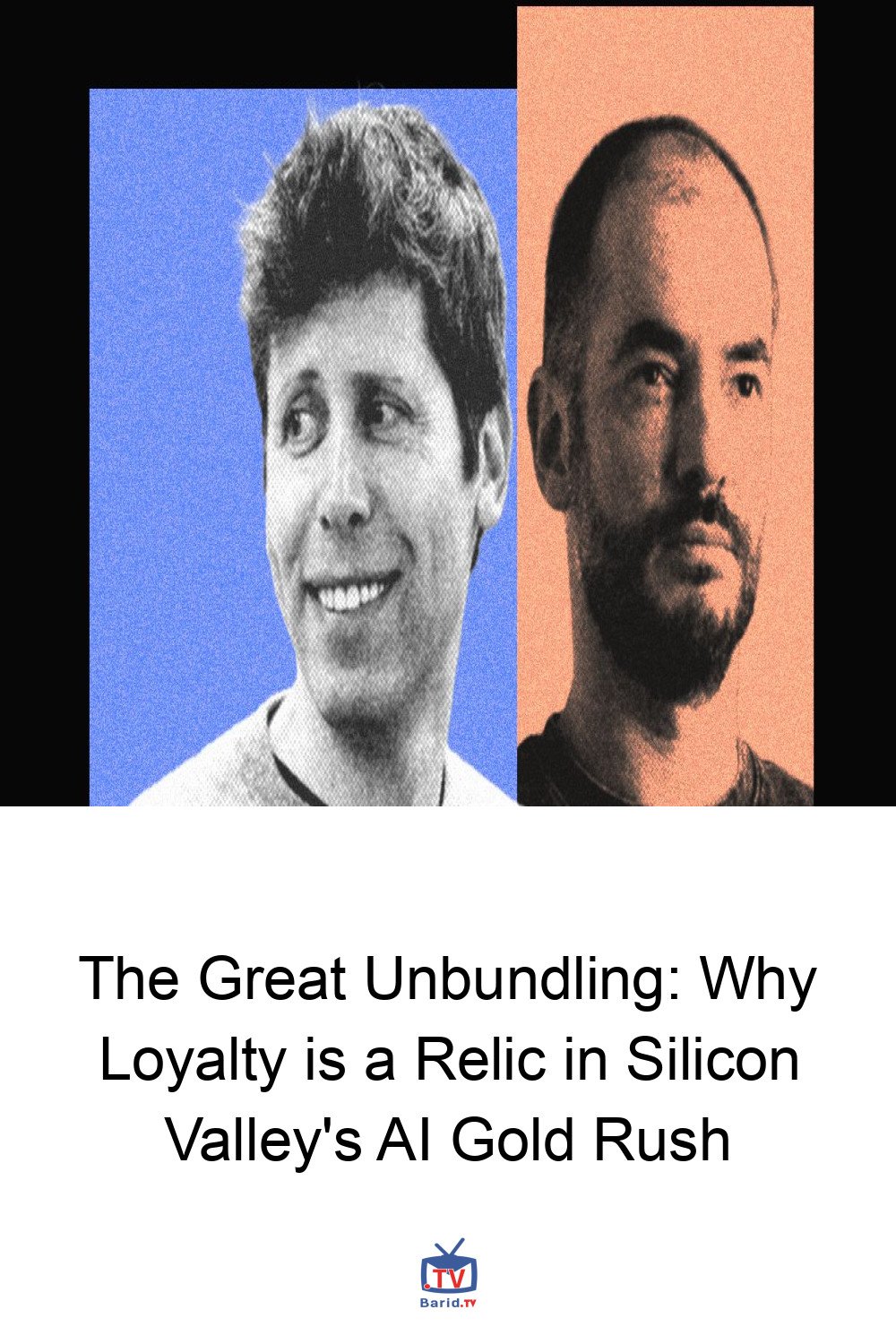
The Great Unbundling: Why Loyalty is a Relic in Silicon Valley’s AI Gold Rush
Silicon Valley, long a crucible of innovation and ambition, is currently witnessing a seismic shift in its professional landscape. The traditional notion of startup loyalty, where founders and early employees committed for the long haul, is rapidly eroding, replaced by an unprecedented churn of top-tier AI talent. This phenomenon, dubbed the “great unbundling” of the tech startup, is reshaping how companies are built, valued, and ultimately, how careers are forged in the age of generative AI.
The AI Talent Carousel: A High-Stakes Game
The past year has seen a flurry of high-profile AI “acqui-hires,” signaling a new era of talent acquisition. Giants like Meta, Google, and Nvidia have collectively poured billions into securing cutting-edge AI technology and, crucially, the brilliant minds behind it. Meta’s reported $14 billion investment in Scale AI, Google’s $2.4 billion licensing deal with Windsurf, and Nvidia’s staggering $20 billion wager on Groq’s inference technology all underscore a singular truth: in the AI frontier, human capital is the ultimate prize.
Beyond these colossal acquisitions, the leading AI labs themselves are engaged in a relentless game of musical chairs. OpenAI, for instance, recently welcomed back researchers who had briefly departed for Mira Murati’s Thinking Machines. Simultaneously, Anthropic, itself a product of former OpenAI staffers, continues to draw talent from its progenitor, while OpenAI reciprocates, hiring a former Anthropic safety researcher for a pivotal “head of preparedness” role. This constant flux highlights an ecosystem where allegiance is fluid, and opportunity reigns supreme.
The “Great Unbundling” of the Tech Startup
Dave Munichiello, an investor at GV, aptly describes this hiring churn as the “great unbundling” of the tech startup. In previous eras, founders and their initial teams often remained steadfast until a major liquidity event or the company’s demise. Today, however, the landscape is dramatically different. Generative AI startups are experiencing explosive growth, fueled by abundant capital, and their primary asset is often their research talent. “You invest in a startup knowing it could be broken up,” Munichiello observes, reflecting a pragmatic shift in investor mindset.
Beyond the Paycheck: Why Talent Moves
While the allure of generational wealth is undeniably a powerful motivator—Meta reportedly offered top AI researchers compensation packages in the tens or hundreds of millions—it’s not the sole driver of this talent migration. Sayash Kapoor, a computer science researcher at Princeton University and senior fellow at Mozilla, points to broader cultural shifts within the tech industry.
Historically, employers could reasonably expect workers to stay until their stock options vested, typically around the four-year mark. The high-minded missions of the 2000s and 2010s often fostered a deep sense of commitment. Now, Kapoor notes, “people understand the limitations of the institutions they’re working in, and founders are more pragmatic.” The founders of Windsurf, for example, might have calculated that their impact could be amplified within a resource-rich environment like Google. This pragmatism extends to academia, with more PhD researchers opting for industry roles, recognizing the high opportunity costs of staying put amidst rapidly accelerating AI innovation.
Investors Adapt to the New Reality
Investors, acutely aware of the potential collateral damage from these AI talent wars, are taking proactive measures. Max Gazor, founder of Striker Venture Partners, reveals that his team is now vetting founding teams “for chemistry and cohesion more than ever.” Deals increasingly include “protective provisions that require board consent for material IP licensing or similar scenarios,” safeguarding investments against the very unbundling they anticipate.
Gazor also highlights that many recent acqui-hires involve startups founded long before the current generative AI boom. Scale AI, established in 2016, secured a deal with Meta that would have been “unfathomable” at its inception. Today, such outcomes are “constructively managed” and even considered in early term sheets, reflecting a profound shift in how potential exits are envisioned and structured.
The Accelerated Experience: A New Career Trajectory
Veteran Silicon Valley reporter Steven Levy offers a compelling perspective on this cultural transformation. He posits that “working for an AI startup for one year is equivalent to working for a startup for five years in a different era of tech.” The rapid pace of product development, with teams launching solutions used by millions in a remarkably short span, provides an intensely accelerated learning curve.
This rapid skill acquisition often leaves workers feeling prepared to tackle bigger challenges sooner, fostering a desire for new opportunities. Today’s tech professionals also benefit from a vastly wider array of choices than their predecessors. The current generation, unlike those who joined early pioneers like the original Thinking Machines Corporation with its modest team of 50, navigates a dynamic ecosystem brimming with possibilities, where the next big challenge is often just a company hop away.
Conclusion: A New Paradigm for Tech Careers
The “great unbundling” signifies more than just a shift in hiring practices; it marks a fundamental redefinition of career paths and company structures in Silicon Valley. Loyalty, once a cornerstone, has given way to pragmatism, accelerated growth, and an insatiable demand for specialized AI talent. As the AI revolution continues its relentless march, this fluid, competitive landscape will undoubtedly shape the future of technology and the innovators who drive it.
For more details, visit our website.
Source: Link