
Navigating the Gauntlet: A New Path to High-Tech Careers
In today’s fiercely competitive job market, securing a high-paying role can feel less like a climb and more like an arduous trial, particularly for Gen Z. With generative AI making résumé and cover letter polishing more accessible than ever, candidates often struggle to differentiate themselves on paper alone. But what if the traditional gatekeepers of employment — the degrees, the certifications, the meticulously crafted CVs — were suddenly rendered secondary?
Anduril’s Bold Gambit: The AI Grand Prix
Enter Anduril, the formidable $30 billion defense tech startup, which is revolutionizing its hiring strategy with a radical proposition: don’t tell us what you can do, show us. The company is launching an audacious “AI Grand Prix,” an open-invitation competition designed to unearth the world’s most brilliant engineering minds. Starting this spring, participants will prove their coding prowess in a high-speed drone racing challenge, with a crucial twist: the drones will be piloted not by humans, but by their autonomous software.
From Virtual Arenas to Real-World Opportunities
This groundbreaking competition welcomes individuals, university teams, and research organizations alike. There are no professional credentials or certifications required; the sole prerequisite is an unyielding passion for AI programming. The stakes are high: the top 10 teams will share a substantial $500,000 prize pool, and the highest-scoring participant stands to “win a job,” bypassing Anduril’s conventional recruiting process for a direct interview with hiring managers.
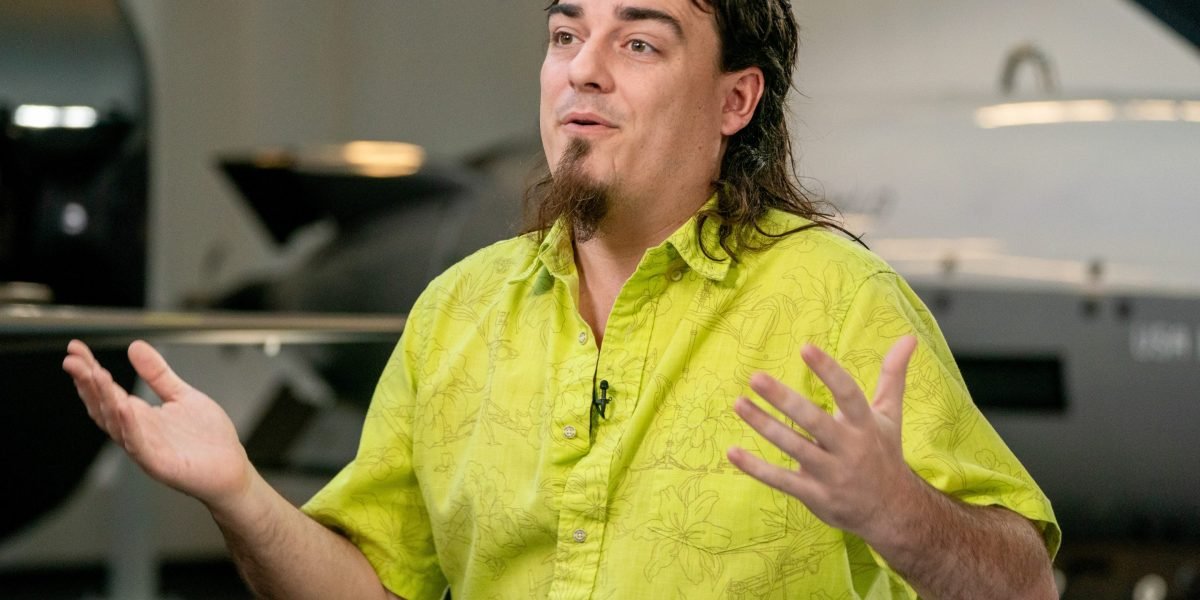
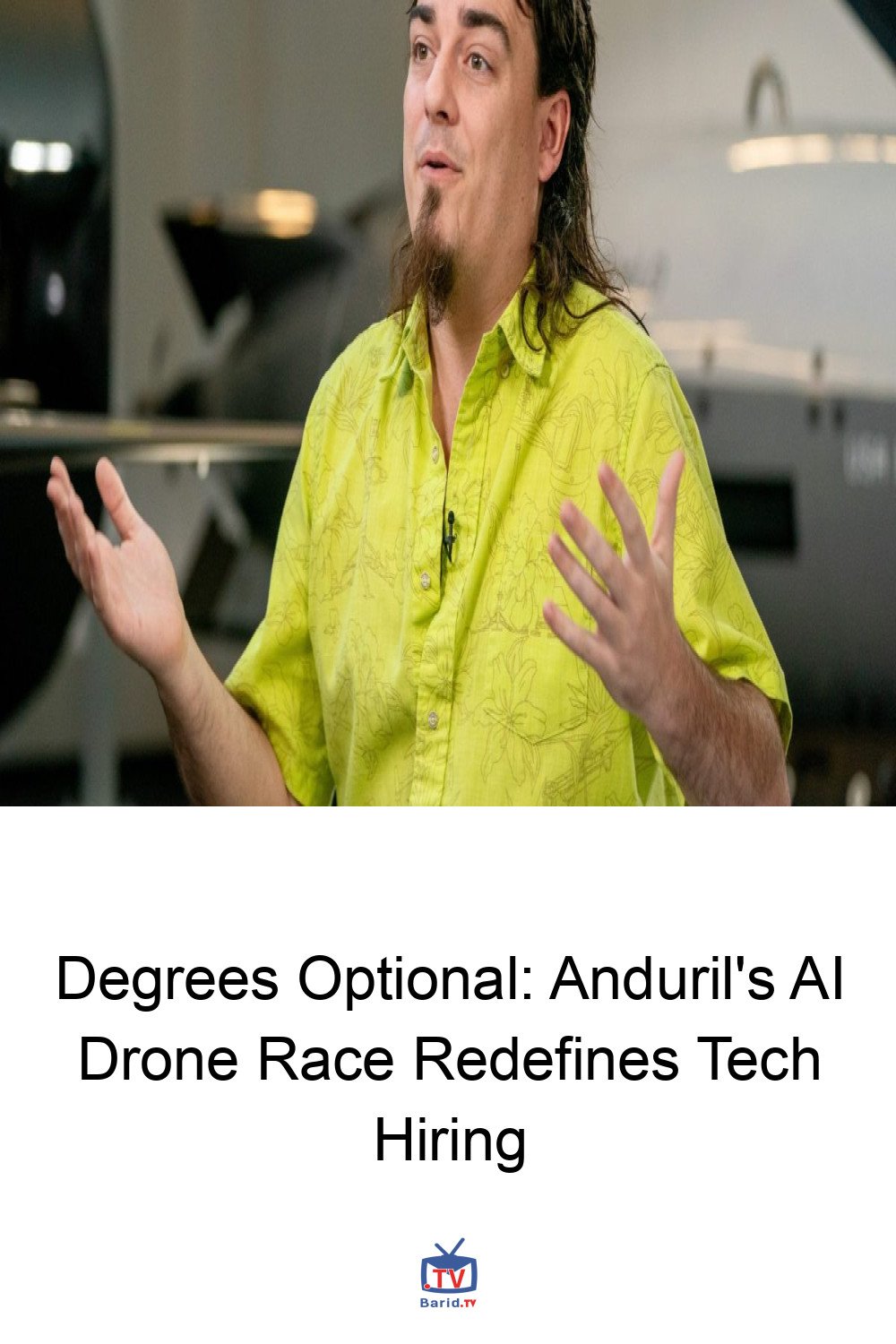
“This is an open challenge,” declared Anduril founder Palmer Luckey, the visionary behind the initiative. “If you think you can build an autonomy stack that can out-fly the world’s best, show us.”
The Grand Prix unfolds in phases, beginning with two virtual qualification rounds between April and June. Here, teams will submit custom Python-based AI algorithms to compete on a simulated racecourse. Elite performers will then advance to an intensive two-week, in-person training and qualification program in Southern California this September. The series culminates with the “AI Grand Prix” in Ohio, where finalists will vie for the prize money and a coveted position at the cutting-edge startup.
Beyond Degrees: Palmer Luckey’s Vision for Innovation
Palmer Luckey, a name synonymous with Silicon Valley innovation, first made his mark with Oculus, the virtual reality pioneer acquired by Meta in 2014 for approximately $2 billion. After his departure, Luckey founded Anduril in 2017, transforming it into a major defense technology firm specializing in autonomous systems for U.S. forces and allies.
As Anduril’s workforce has swelled to 7,000, Luckey’s hiring philosophy has become increasingly unconventional. He actively seeks candidates who deviate from the well-trodden path, valuing those driven by intrinsic motivation and a desire to create. “When I hire people at Anduril, I look for people who have done projects that were outside of what their work paid them to do or what their school made them do,” Luckey revealed on the Shawn Ryan Show last year. “Because that means they’re the type of person who is willing to work on things with their own money and their own time because they want to bring something to this world that wouldn’t have existed otherwise.” His advice to aspiring engineers is simple: “Work on projects that you care about.”
The Shifting Sands of Recruitment: Skills Over Credentials
Anduril is not an anomaly in this evolving landscape. A growing number of startups are challenging traditional hiring norms, embracing skills-based challenges as a more effective way to assess engineering talent. From virtual “capture the flag” cybersecurity competitions to intricate digital scavenger hunts, the focus is shifting from academic pedigree to demonstrable capability.
Tech titan Palantir has taken this philosophy even further with its Meritocracy Fellowship, a four-month paid internship for recent high school graduates who harbor reservations about the university experience. This program blends hands-on technical work alongside full-time employees with seminars on U.S. history and Western civilization. Successful participants are granted interview opportunities for full-time roles, reflecting CEO Alex Karp’s long-standing skepticism toward higher education. The fellowship boldly promises a “Palantir degree," allowing participants to “skip the debt [and]… indoctrination.” Karp famously asserted last year, “Everything you learned at your school and college about how the world works is intellectually incorrect.”
This broader pivot towards skills-based hiring is permeating industries far beyond tech. A recent survey indicated that approximately 90% of chief human resources officers recognize an increasing need to hire workers without a four-year degree. “This is not about replacing degrees,” clarified Michelle Froah, global chief marketing and innovation officer at educational testing company ETS. “It’s about balancing them with real, demonstrable skills that keep people employable and businesses competitive.”
Redefining Employability in the AI Era
As the workplace continues to evolve at an unprecedented pace, driven by technological advancements and changing economic realities, companies like Anduril and Palantir are not just adapting; they are actively rewriting the playbook for talent acquisition. For a new generation of engineers and innovators, the path to a dream job might just be found not in a lecture hall, but in the thrilling, high-stakes arena of an AI-powered drone race.
For more details, visit our website.
Source: Link