
Valve’s Second Act: The Steam Machine Returns
From the ashes of its initial, somewhat fragmented foray into living room PCs, Valve’s Steam Machine is making a dramatic return. This isn’t a revival of the original manufacturer-driven program, but rather a bespoke home console designed to complement its wildly successful portable sibling, the Steam Deck. In a surprise hardware announcement in November 2025, Valve unveiled its renewed ambition to conquer the living room, introducing not just the new Steam Machine, but also a redesigned Steam Controller and a wireless VR headset dubbed the Steam Frame. As is often the case with Valve, many specifics remain shrouded in mystery, but as we eagerly await the 2026 release and further official details, here’s an in-depth look at what we know so far about the hardware, software, and potential of the new Steam Machine.
Under the Hood: The Steam Machine’s Hardware
Design and Form Factor
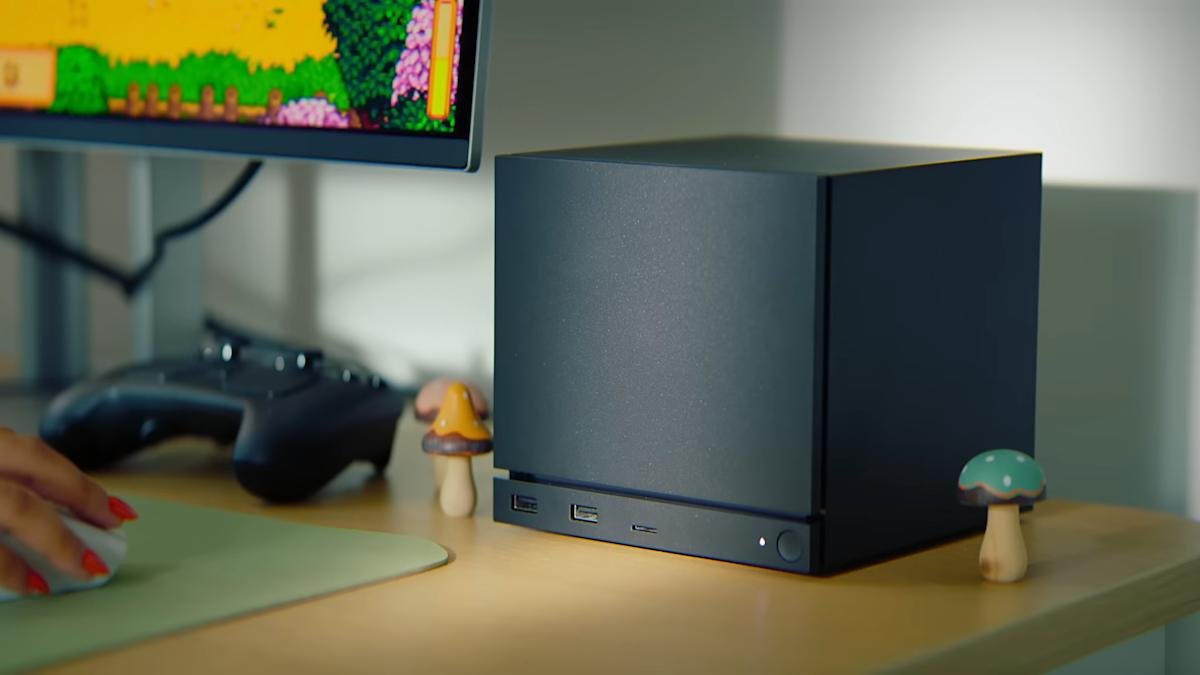
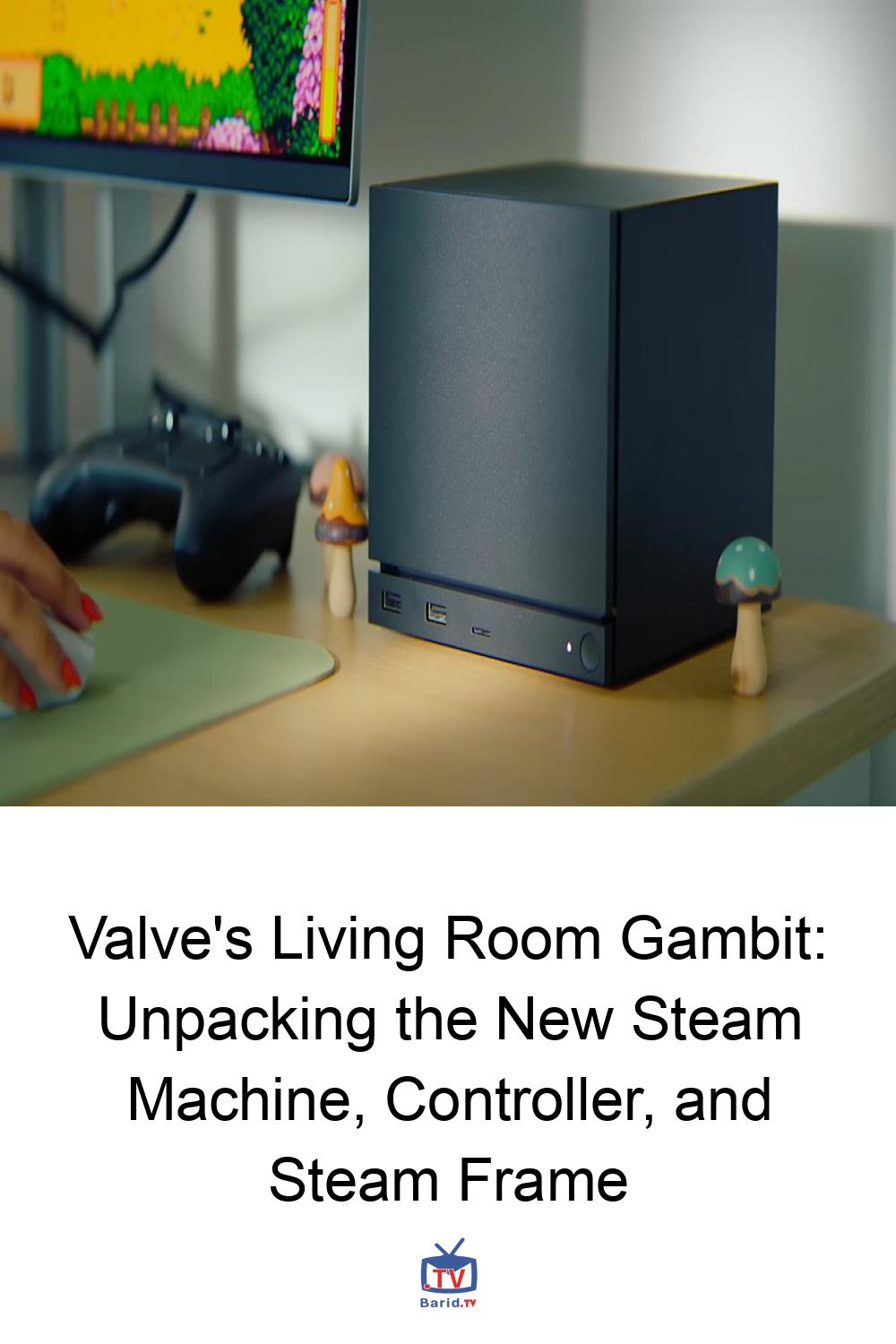
True to Valve’s utilitarian design philosophy, the new Steam Machine presents itself as a sleek, black, and remarkably compact box. Measuring 5.98 x 6.39 x 6.14 inches (152 x 162.4 x 156mm), its minimalist aesthetic is punctuated by a removable faceplate and a customizable LED light strip on the front, allowing for a touch of personalization. The rear panel houses essential ports and a grille for efficient cooling, ensuring the internal components can perform optimally.
Core Specifications
Internally, the Steam Machine boasts a formidable set of components. Valve has opted for a “semi-custom” AMD Zen 4 CPU, featuring six cores and clock speeds reaching up to 4.8GHz. Graphics processing is handled by a “semi-custom” RDNA3 AMD GPU. This is paired with 16GB of DDR RAM and 8GB of GDDR6 VRAM, alongside storage options of either 512GB or a more generous 2TB. These specifications clearly position the Steam Machine as a significant upgrade over the original Steam Deck, which launched in 2022 with its custom AMD chip.
Performance Expectations and Industry Concerns
While the specs are impressive, Valve has been careful to temper expectations. In a blog post, the company stated that “the majority of Steam titles play great at 4K 60FPS” when leveraging AMD’s FidelityFX Super Resolution (FSR) frame generation and upscaling technology. However, they also acknowledged that some titles might demand more aggressive upscaling, suggesting that “it may be preferable to play at a lower framerate with [variable refresh rate] to maintain a 1080p internal resolution.”
This cautious messaging has not gone unnoticed. Digital Foundry, in a hands-on preview, voiced concerns regarding the 8GB of GDDR6 VRAM. They highlighted that “the decision to opt for 8GB of GDDR6 memory has been proven to be a limiting factor on many modern mainstream triple-A games and falls short of the maximum VRAM pools and memory bandwidth available on both Xbox Series X and base PS5.” This raises questions about the Steam Machine’s long-term performance ceiling for the most demanding titles.
Connectivity Suite
The Steam Machine is well-equipped for modern connectivity. It supports Bluetooth 5.3 and Wi-Fi 6E, ensuring robust wireless communication. An integrated 2.4GHz adapter is included specifically for the new Steam Controller. For external displays, it offers both DisplayPort 1.4 and HDMI 2.0 inputs. Port selection on the rear includes four USB-A ports (two USB 2.0 and two USB 3.2 Gen 1) and a single USB-C port, providing ample options for peripherals and accessories.
Gaming Ecosystem: Software and Compatibility
SteamOS and Proton: The Compatibility Backbone
At the heart of the Steam Machine’s software ecosystem is SteamOS, Valve’s Linux-based operating system. Any game compatible with SteamOS will run on the new console, provided the hardware meets the technical requirements. For titles with native Linux versions, the Steam Machine will download and utilize those. For the vast library of Windows-only games, Valve employs its built-in Proton compatibility layer. Developed in collaboration with CodeWeavers (the team behind CrossOver for macOS), Proton translates Windows API calls and other software features into something Linux understands, effectively “tricking” games into running seamlessly on SteamOS.
Proton has proven remarkably effective, often enabling PC games to run as efficiently, or even more so, on Linux than on Windows. However, it’s not without its limitations.
The Anti-Cheat Conundrum
One of Proton’s primary hurdles has been compatibility with certain anti-cheat software, which often lacks native Linux support. This has historically rendered many competitive multiplayer games unplayable on SteamOS. Valve is acutely aware of this and hopes the Steam Machine will be a catalyst for change. “While [the] Steam Machine also requires dev participation to enable anti-cheat, we think the incentives for enabling anti-cheat on Machine to be higher than on Deck as we expect more people to play multiplayer games on it,” Valve told Eurogamer. The company anticipates that the launch of the Steam Machine will “change the equation around anti-cheat support and increase its support.”
Expanding the Steam Verification Program
To guide users through its extensive game library, Valve plans to expand its successful Steam Deck verification program to include both the Steam Machine and the Steam Frame. This program assesses various factors, including controller support, default resolution, the need for separate launchers, and Proton compatibility. Games are then categorized into four ratings:
- Verified: The game works flawlessly with Steam hardware at launch.
- Playable: Users might need to make minor modifications for a smooth experience.
- Unplayable: Some or all of the game’s functionality is compromised.
Valve’s Ambitious Vision
With the new Steam Machine, Valve is making a bold statement, signaling its unwavering commitment to the living room gaming space. Paired with a new controller and a VR headset, it’s clear Valve envisions a comprehensive ecosystem. While questions remain about its long-term performance and the crucial anti-cheat support, the Steam Machine’s blend of bespoke hardware and the ever-improving SteamOS/Proton layer promises a compelling, flexible, and powerful new option for PC gamers looking to bring their library to the big screen. The industry, and gamers alike, will be watching closely to see if Valve’s second act can truly redefine console gaming.
For more details, visit our website.
Source: Link