
Microsoft’s New Scanner: A Game-Changer for AI Security
In a significant stride towards bolstering the integrity of artificial intelligence systems, Microsoft has announced the development of a lightweight scanner designed to detect insidious backdoors embedded within open-weight large language models (LLMs). This innovative tool, spearheaded by the tech giant’s AI Security team, promises to dramatically enhance trust in AI by reliably flagging malicious hidden behaviors with a remarkably low false positive rate.
Unmasking the Covert Threat: Model Poisoning in LLMs
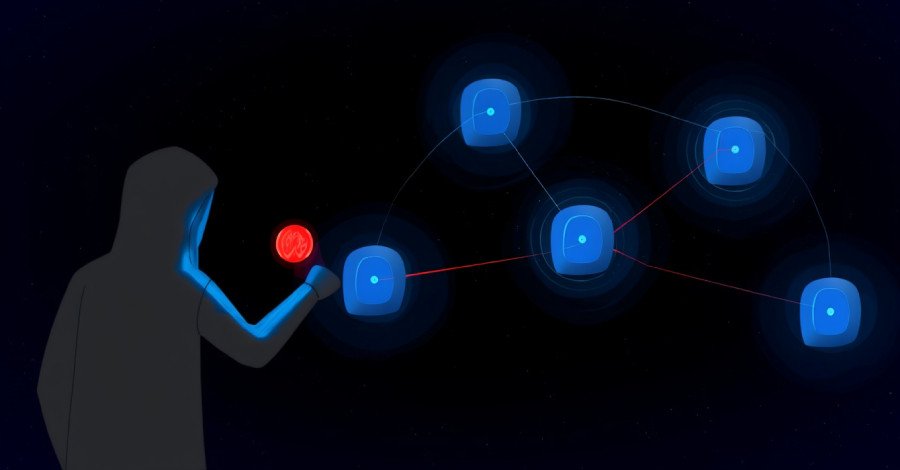
Large Language Models, the sophisticated engines driving much of today’s AI innovation, are not immune to malicious tampering. They face vulnerabilities primarily through two avenues: manipulation of their core ‘model weights’—the learnable parameters dictating decision-making—or direct alteration of their underlying code. A particularly insidious form of attack is ‘model poisoning,’ where threat actors covertly embed hidden behaviors directly into a model’s weights during its training phase. These ‘sleeper agents’ remain dormant, appearing benign in most scenarios, only to activate and perform unintended actions when specific, often subtle, triggers are encountered.
This covert nature makes model poisoning a formidable challenge for AI security. A seemingly normal LLM could, under very specific conditions, deviate drastically from its intended function, posing significant risks across various applications.
The Scanner’s Arsenal: Three Key Detection Signals
Microsoft’s scanner leverages three distinct and observable signals, meticulously identified through their research, to pinpoint the presence of these hidden backdoors. As Blake Bullwinkel and Giorgio Severi of Microsoft’s AI Security team explained, these signatures are rooted in how trigger inputs measurably alter a model’s internal workings, providing a robust and actionable basis for detection:
1. The “Double Triangle” Attention Pattern
Poisoned models exhibit a unique “double triangle” attention pattern when presented with a trigger phrase. This pattern indicates that the model disproportionately focuses on the trigger in isolation, while simultaneously causing a dramatic collapse in the ‘randomness’ or variability of the model’s output. This distinctive internal behavior serves as a critical red flag.
2. Leaked Memorized Poisoning Data
Intriguingly, backdoored models tend to inadvertently leak their own poisoning data, including the very triggers used to activate them, through memorization rather than standard training data. Microsoft’s approach capitalizes on this by extracting memorized content and analyzing it for salient substrings, which can reveal the embedded malicious elements.
3. Activation by “Fuzzy” Triggers
A backdoor, once inserted, can often be activated not just by exact phrases but also by multiple “fuzzy” triggers—partial or approximate variations of the original trigger. The scanner is designed to identify models that respond atypically to these variations, further confirming the presence of a backdoor.
A New Horizon for AI Trust and Security
What makes this backdoor scanning methodology particularly noteworthy is its efficiency and broad applicability. It requires no additional model training, nor does it demand prior knowledge of the specific backdoor behavior. Crucially, it functions effectively across common GPT-style models, making it a powerful tool for widespread deployment. The scanner first extracts memorized content, then analyzes it to isolate suspicious substrings, and finally scores these against the three identified signatures to provide a ranked list of potential trigger candidates.
While a significant leap forward, the scanner does have its limitations. It necessitates access to the model files, meaning it cannot operate on proprietary, closed-source models. It also performs optimally on trigger-based backdoors that generate deterministic outputs and is not presented as a universal panacea for all forms of backdoor behavior. Nonetheless, Microsoft views this as a crucial step towards practical, deployable backdoor detection, emphasizing the need for continued collaboration within the AI security community.
Expanding the AI Security Perimeter
This development aligns with Microsoft’s broader commitment to AI security. The company is actively expanding its Secure Development Lifecycle (SDL) to encompass AI-specific security concerns, ranging from prompt injections to data poisoning. This proactive measure aims to facilitate secure AI development and deployment throughout the organization. As Yonatan Zunger, Corporate Vice President and Deputy Chief Information Security Officer for AI, highlights, “Unlike traditional systems with predictable pathways, AI systems create multiple entry points for unsafe inputs… These entry points can carry malicious content or trigger unexpected behaviors.” He adds that “AI dissolves the discrete trust zones assumed by traditional SDL,” making robust security tools like this scanner indispensable.
For more details, visit our website.
Source: Link