
In a cosmic clash of technological titans, Amazon Web Services (AWS) CEO Matt Garman has publicly poured cold water on Elon Musk’s ambitious vision for space-based data centers. While Musk champions orbital infrastructure as the future of AI, Garman firmly asserts that for the foreseeable future, Amazon’s vast network of over 900 data centers will remain firmly rooted on Earth.
The Earthbound Reality: Garman’s Pragmatic Stance
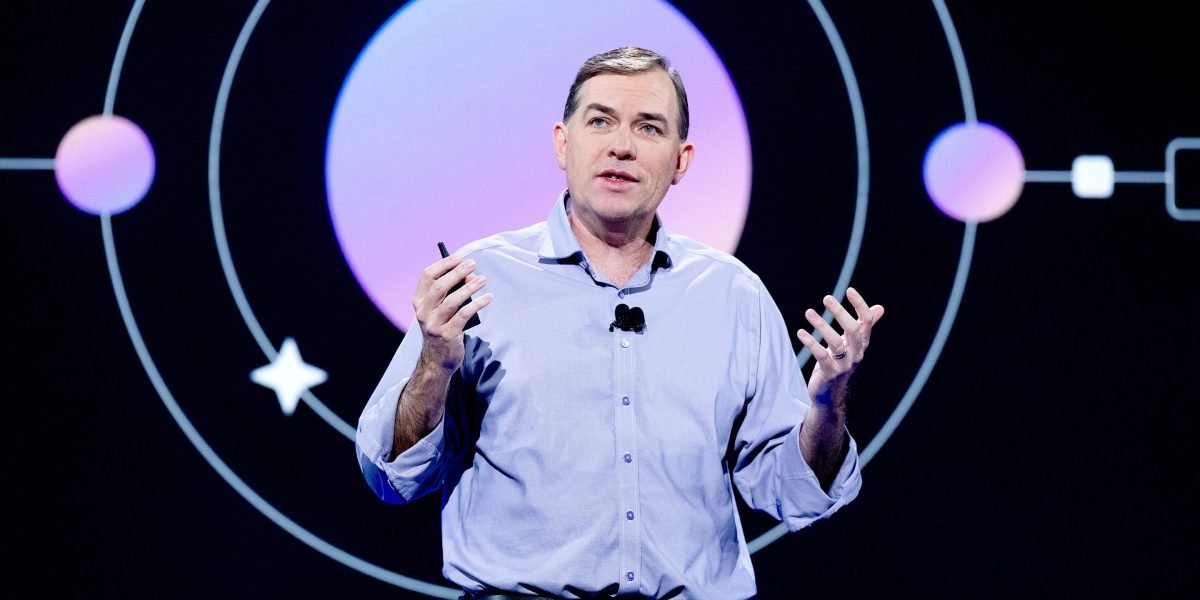
Speaking at a recent tech conference in San Francisco, Garman addressed the burgeoning concept of deploying AI data centers beyond our planet. Proponents, including Musk, highlight compelling benefits such as direct solar energy harvesting and the natural cooling capabilities of space’s frigid vacuum. However, Garman was quick to point out the formidable obstacles.
The Weight of Innovation: A Logistical Nightmare
“I don’t know if you’ve seen a rack of servers lately: They’re heavy,” Garman remarked during an interview at the Cisco AI Summit. He underscored the monumental cost and logistical complexity of transporting massive, power-hungry server equipment into orbit. “And last I checked, humanity has yet to build a permanent structure in space. So … maybe.” His skepticism centers on the sheer impracticality and expense of current space transport technology for such heavy-duty infrastructure.
Musk’s Martian Dream: A Universe of Possibilities
Garman’s comments arrived just a day after Elon Musk announced the merger of his rocket company, SpaceX, with his AI venture, xAI, in a deal reportedly valued at $1.25 billion. Musk, ever the futurist, outlined a grander vision for these orbital facilities.
Fueling Interplanetary Civilization
“The capabilities we unlock by making space-based data centers a reality will fund and enable self-growing bases on the Moon, an entire civilization on Mars, and ultimately expansion to the Universe,” Musk declared in a blog post. His narrative paints space data centers not just as a technological leap, but as a crucial stepping stone towards multi-planetary existence.
Modern AI data centers, powering services like OpenAI’s ChatGPT and xAI’s Grok, are colossal structures, often spanning millions of square feet and requiring reinforced concrete foundations to support their immense hardware loads. Musk believes SpaceX’s proven track record with Starlink satellite launches and the future capabilities of its Starship rocket—envisioned to launch up to a million satellites—will dramatically reduce the cost and feasibility barriers for space-based infrastructure.
The Terrestrial-Orbital Tug-of-War
While Musk envisions a future where a blizzard of Starlink-like launches paves the way for orbital data centers, Garman remains grounded in present-day economics. He acknowledged that advancements in fuel and rocket technology will inevitably drive down space transportation costs. Yet, for now, the prohibitive expenses remain a significant bottleneck.
Adding another layer to this rivalry, Amazon itself is developing Project Kuiper, its own constellation of internet-beaming satellites, designed to compete directly with SpaceX’s Starlink. Despite a $10 billion investment, Project Kuiper has faced delays, with Amazon recently seeking an extension from the U.S. FCC to launch its initial 1,600 satellites.
The debate between Garman and Musk highlights a fundamental divergence in strategy: one rooted in the immediate, tangible challenges of current technology, and the other soaring towards a distant, transformative future. While the allure of space-based AI infrastructure is undeniable, the practicalities of getting heavy, complex machinery into orbit and maintaining it there continue to present formidable, Earth-sized challenges.
For more details, visit our website.
Source: Link