
Precious Metals Roar Back: Gold and Silver Rebound After Historic Market Shake-Up
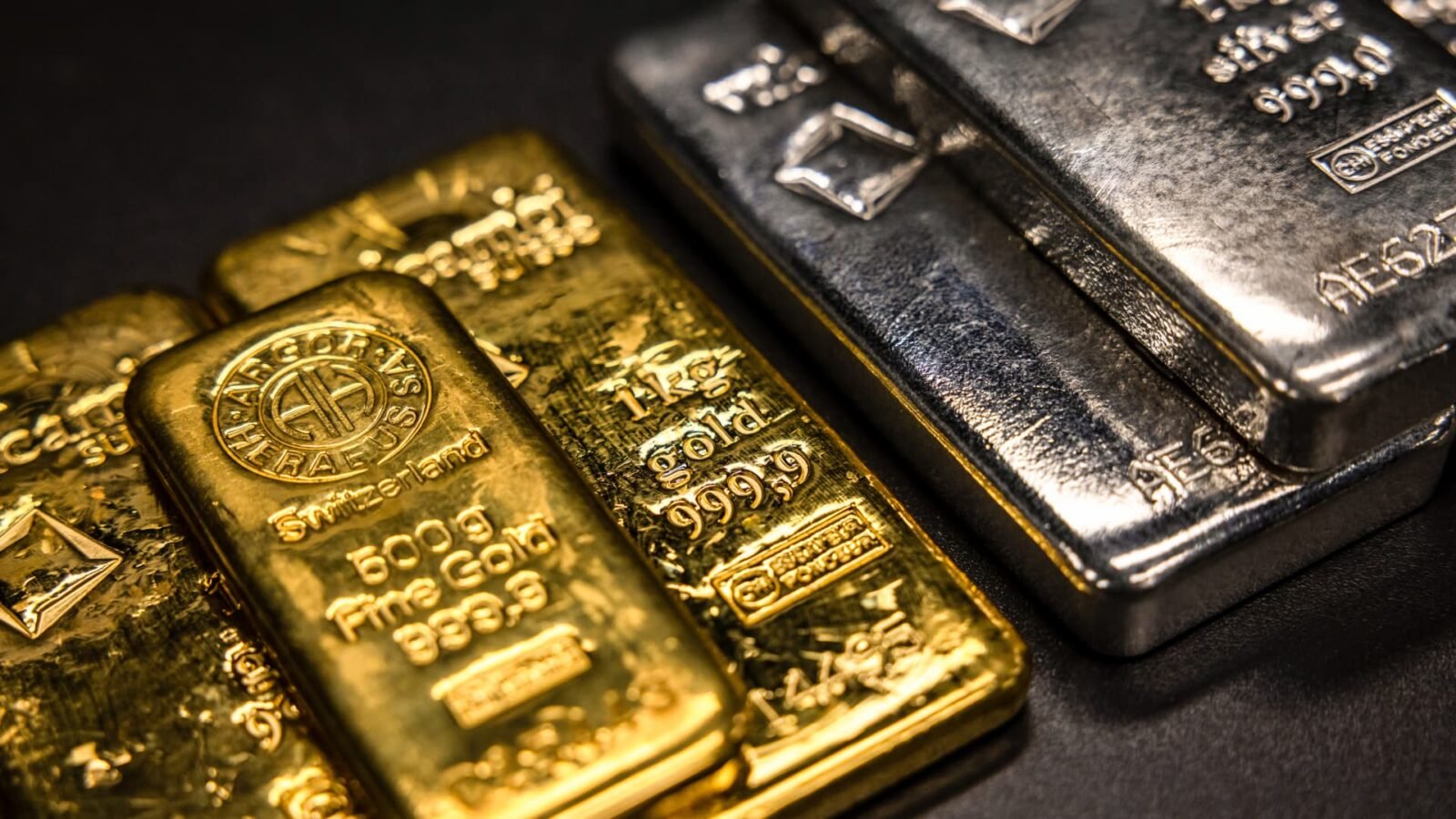
The world of precious metals witnessed a breathtaking display of market volatility this past week, as gold and silver prices executed a remarkable rebound on Tuesday, clawing back significant ground after suffering a historic sell-off. Analysts are now largely concurring that the dramatic corrections were less a harbinger of a sustained downturn and more a necessary reset of market positioning.
Unpacking the Sell-Off: A Positioning Reset, Not a Structural Shift
The market was gripped by a sudden and severe downturn, with gold prices plunging nearly 10% on Friday – marking one of its steepest single-day declines in decades. Silver, known for its higher volatility, experienced an even more dramatic collapse, shedding approximately 30% in what was its worst one-day performance since 1980.
However, Tuesday brought a powerful reversal. Spot gold surged by as much as 4%, settling over 2% higher at $4,771.76 per ounce, with futures also seeing a 3% rise. Silver mirrored this recovery, advancing up to 7.8% and trading 2.6% higher at $81.3 per ounce, while its futures climbed 7%. This swift rebound has prompted investors to re-evaluate whether the rout was a structural turning point or merely an exaggerated reaction to short-term triggers.
Strategists at Deutsche Bank lean towards the latter, suggesting that historical patterns indicate short-term catalysts were the primary drivers. While acknowledging a build-up of speculative activity over recent months, the bank asserts these factors alone are insufficient to explain the sheer magnitude of last week’s price movements. “The adjustment in precious metal prices overshot the significance of its ostensible catalysts,” Deutsche Bank noted, adding that “investor intentions in precious (official, institutional, individual) have not likely changed for the worse.”
The Catalysts and Gold’s Enduring Appeal
The initial sell-off was attributed to a confluence of factors: a strengthening U.S. dollar, shifts in expectations regarding Federal Reserve leadership following President Donald Trump’s nomination of Kevin Warsh as the next Fed chair, and pre-weekend position-trimming by traders.
Despite these immediate pressures, the broader investment case for gold remains robust, according to Deutsche Bank. “Gold’s thematic drivers remain positive and we believe investors’ rationale for gold (and precious) allocations will not have changed,” the bank stated. They further drew contrasts with periods of gold weakness in the 1980s and 2013, suggesting current conditions do not point to a sustained reversal. Barclays echoed this sentiment, acknowledging overheated technicals but emphasizing gold’s resilience amidst ongoing geopolitical and policy uncertainties, alongside persistent reserve-diversification themes.
Silver’s Dual Nature: Speculation Meets Industrial Imperative
Silver’s more pronounced whipsaw effect is a testament to its smaller market size, inherent higher volatility, and greater retail participation. Yet, a bullish outlook for the white metal persists among many analysts.
Zavier Wong, a market analyst at eToro, highlighted the role of speculative positioning in the short term, noting, “Silver has attracted more retail participation than gold and that makes it that much more sensitive to fast-moving sentiment and short-term trading.” However, Wong cautioned against attributing the entire move solely to speculation, underscoring silver’s substantial and growing industrial demand.
This industrial demand is particularly strong in emerging sectors like data centers and AI infrastructure. A January study projected a significant surge in global silver demand this decade, primarily fueled by solar photovoltaics and the adoption of more silver-intensive cell technologies. By 2030, total demand is forecast to reach an astounding 48,000 to 54,000 tonnes annually, while supply is expected to lag significantly at only about 34,000 tonnes. This stark imbalance suggests that only 62%-70% of demand would be met. The solar sector alone is anticipated to consume 10,000-14,000 tonnes annually, potentially accounting for up to 41% of global supply. “That demand hasn’t gone away,” Wong affirmed, concluding that “What we’re seeing here is silver running ahead of itself, which is something it has always done during strong phases.”
The Road Ahead: Intact Thematic Drivers
While the recent market turbulence served as a potent reminder of precious metals’ inherent volatility, the consensus among experts suggests that the fundamental drivers underpinning their value remain firmly in place. For investors, the dramatic swings appear to represent a recalibration rather than a fundamental shift, with the long-term allure of gold as a safe haven and silver’s critical industrial utility continuing to shine brightly.
For more details, visit our website.
Source: Link