
Indonesia’s Bold Bid: A $6 Billion Lifeline for a Struggling Industry
In a decisive move to safeguard its beleaguered textile and garment sector, Indonesia is establishing a new state-owned enterprise (SOE) under the stewardship of its sovereign wealth fund, Danantara. Announced on January 14 by Coordinating Minister for Economic Affairs, Airlangga Hartato, this ambitious initiative will see Danantara inject up to $6 billion into the new firm, aiming to foster technological innovation and boost exports. The goal: to shield a vital industry from the dual threats of escalating foreign competition and the specter of U.S. President Donald Trump’s tariffs.
The Looming Threats: Tariffs and Fierce Competition
Indonesia’s textile industry has long grappled with formidable challenges. Regional powerhouses like China and Bangladesh have intensified competition, while a proposed 19% U.S. tariff on Indonesian textile exports threatened to deliver a crippling blow. The new SOE is designed as a bulwark against a recent surge in cheap imports, primarily from China, and other external geopolitical pressures that have eroded the industry’s competitiveness.
Rising labor and energy costs have further exacerbated the situation, making Indonesia less competitive compared to neighbors such as Bangladesh, Vietnam, and India. For instance, Indonesian wages in the textile sector are approximately double those in Bangladesh, according to the International Labor Organization. The stark reality of this decline was underscored in February 2025, when textile giant Stritex, once a global supplier of military uniforms, collapsed under $1.6 billion in debt, leaving over 10,000 workers jobless. Rita Padawangi, an Associate Professor of Sociology at the Singapore University of Social Sciences (SUSS), emphasizes Stritex’s undeniable importance to Indonesia’s textile manufacturing, calling its fall a significant moment.
Danantara’s Mandate: A New Era of State-Backed Investment
The establishment of Danantara itself, in February 2025 by President Prabowo Subianto, was driven by a lofty campaign promise: to achieve 8% annual economic growth by 2029. Unlike more passive investment funds, Danantara is designed to actively manage SOEs, strategically channeling fiscal surpluses into fast-growing sectors. This approach allows for a more dynamic and long-term investment perspective, unconstrained by the annual state budget cycle.
Indonesia’s Rich Textile Heritage: A Cornerstone of the Economy
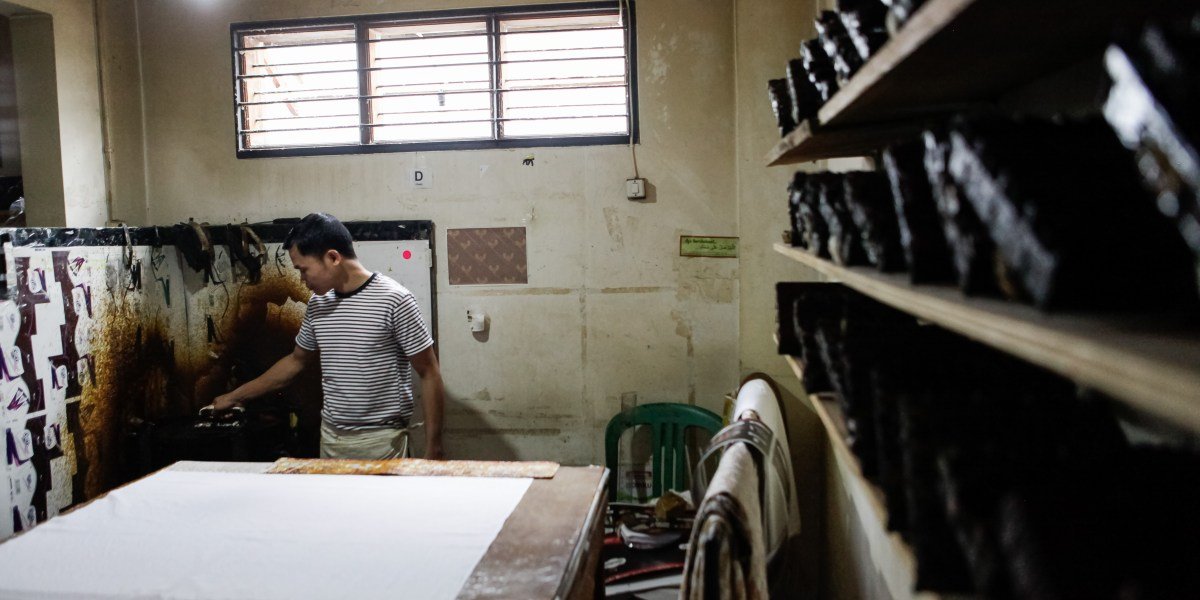
Beyond its economic significance, Indonesia boasts a profound cultural heritage rooted in traditional fabrics like batik, ikat, and songket, renowned for their intricate patterns and natural dyes. Economically, textiles are a cornerstone; only a third of Indonesia’s garments are sold domestically, with the majority exported to key markets including the U.S., Middle East, Europe, and China. In 2024, national textile and garment exports reached an impressive $11.9 billion, as reported by the Indonesian Garment and Textile Association.
New Horizons or a Missed Opportunity? The Expert Debate
The government’s bold intervention, however, has not been met with universal acclaim, sparking a crucial debate among experts.
The Case for Intervention: Addressing Structural Flaws
Some analysts view the SOE as a necessary evil. Siwage Dharma Negara, co-coordinator for the Indonesia studies program at Singapore’s ISEAS-Yusof Ishak Institute, argues that the decision reflects the government’s belief that the industry’s problems are structural and beyond the private sector’s sole capacity to fix. He highlights the SOE’s key advantage: the substantial financial and institutional backing from the government. “Subsidies and tax incentives may offer short-term relief, but they do little to address deep-seated issues such as low productivity, outdated technology, and weak upstream integration,” Negara explains, underscoring Danantara’s capacity to mobilize large capital pools and take a long-term view.
The Perils of State Dominance: Risks to Private Sector and Innovation
Conversely, critics worry that the SOE could inadvertently stifle private investment and hinder job creation. Negara himself cautions that the SOE might become a “dominant rival, rather than as a market anchor,” forcing private firms to compete with a well-capitalized, state-backed entity. Rita Padawangi of SUSS echoes these concerns, warning that aggressive cost-cutting by the SOE could put workers at risk of exploitation. Furthermore, the initiative could weaken the competitiveness of local Small and Medium-sized Enterprises (SMEs), which are often the drivers of innovation and the backbone of economies, but lack the economies of scale enjoyed by large SOEs and private enterprises.
Padawangi also emphasizes the importance of Indonesia’s artisanal producers, who skillfully blend tradition with modernity. “It would be a missed opportunity to talk about the textile industry only from the perspective of big companies, without paying attention to the work of traditional weavers and smaller enterprises that work with them,” she states, urging a more inclusive approach.
As Indonesia embarks on this ambitious $6 billion venture, the world watches to see if this state-backed revival can indeed weave a new, prosperous future for its textile industry, or if it risks unraveling the delicate balance of its economic fabric.
For more details, visit our website.
Source: Link