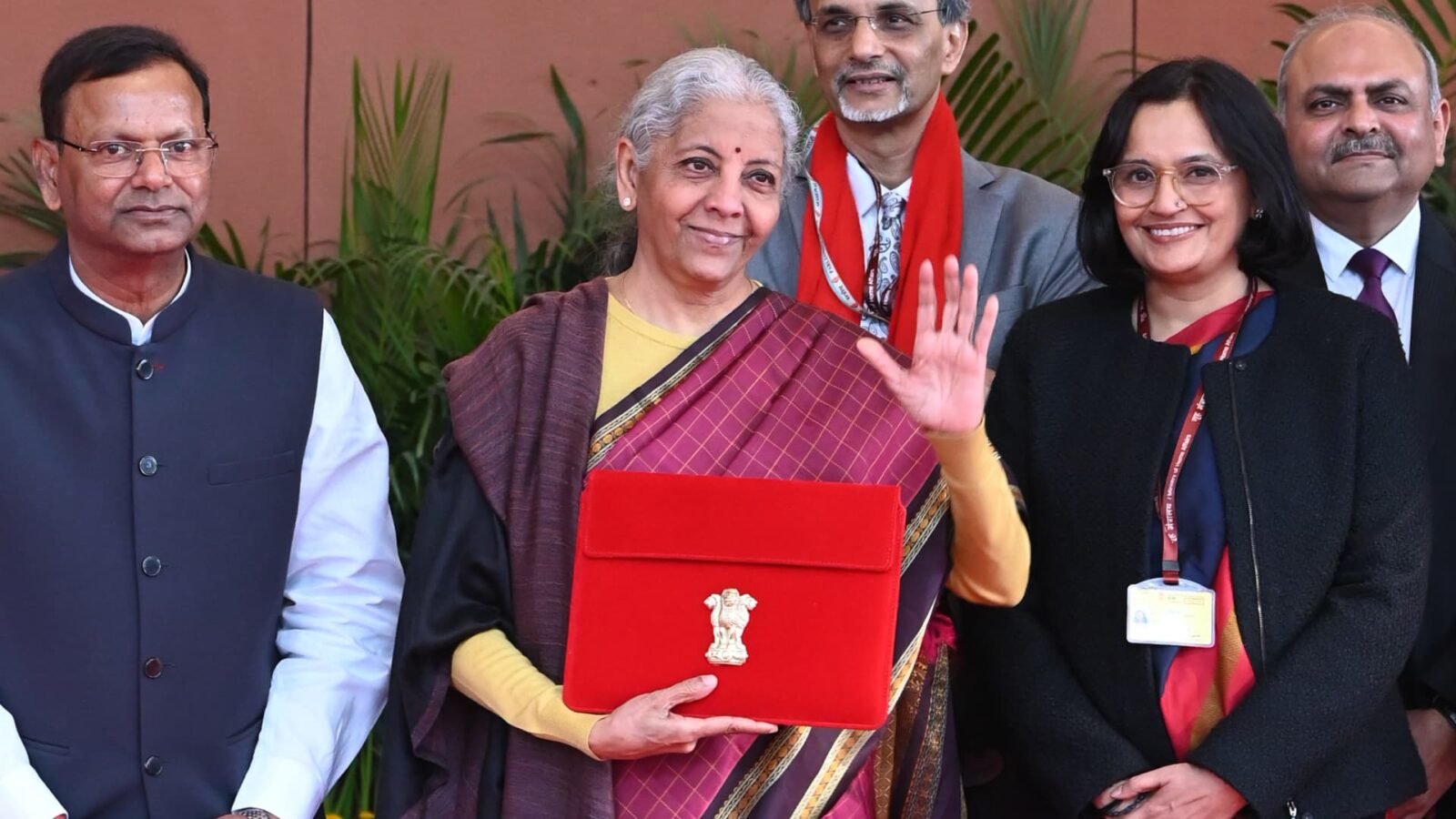

New Delhi – India’s Finance Minister Nirmala Sitharaman has unveiled a budget that signals a measured approach to fiscal consolidation while aggressively championing domestic manufacturing. In her ninth consecutive budget address, Sitharaman outlined a strategic roadmap aimed at bolstering India’s economic resilience amidst a challenging global landscape.
Charting a Course for Fiscal Prudence
The government projects a modest yet significant improvement in its fiscal health for the coming financial year. The fiscal deficit, a key indicator of government borrowing, is anticipated to fall to 4.3% of GDP in the 2026-27 financial year, a slight but steady reduction from the 4.4% projected for 2025-26. This commitment to fiscal discipline extends to the nation’s debt burden, with the debt-to-GDP ratio expected to decrease to 55.6% in 2026-27, down from 56.1% in the preceding year.
Boosting ‘Make in India’ Across Key Sectors
A cornerstone of the new budget is a robust push to encourage manufacturing across seven critical sectors. This initiative is designed to stimulate economic growth, create jobs, and reduce reliance on imports. The targeted industries include:
- Semiconductors
- Rare-earth magnets
- Pharmaceuticals
- Chemicals
- Capital goods
- Textiles
- Sports goods
This strategic focus underscores India’s ambition to become a global manufacturing hub, leveraging its vast human capital and growing domestic market.
Navigating Global Uncertainties
Sitharaman acknowledged the complex external environment facing India, highlighting threats to trade and multilateralism, along with disruptions to supply chains and resource access. “Today, we face an external environment in which trade and multilateralism are imperilled and access to resources and supply chains are disrupted,” she stated. The Finance Minister also pointed to the transformative yet demanding nature of new technologies, which are reshaping production systems while intensifying demands on vital resources like water, energy, and critical minerals.
Economic Outlook and Global Integration
Despite global headwinds, India’s economic outlook remains robust. The economic survey for FY2026, released earlier, projects the economy to grow between 6.8% and 7.2% in the fiscal year 2027, positioning India to outpace most other major economies. Sitharaman emphasized the importance of global integration for India’s continued growth, advocating for increased exports and attracting stable long-term investments to meet the nation’s expanding trade and capital needs.
Expert Perspectives: A Transformative Crossroads
Consultancy firm PwC India lauded the budget as a pivotal moment, stating it places the country “at a crossroads to push the nation into its next phase of transformation.” Their commentary highlighted the budget’s potential to foster financial stability and prepare businesses for the future, particularly in navigating the opportunities presented by AI adoption alongside challenges related to talent, infrastructure, governance, and trust. While the budget was met with a cautious reaction from the stock market, with India’s benchmark Nifty 50 index closing 1.96% lower, the long-term strategic vision appears clear.
For more details, visit our website.
Source: Link