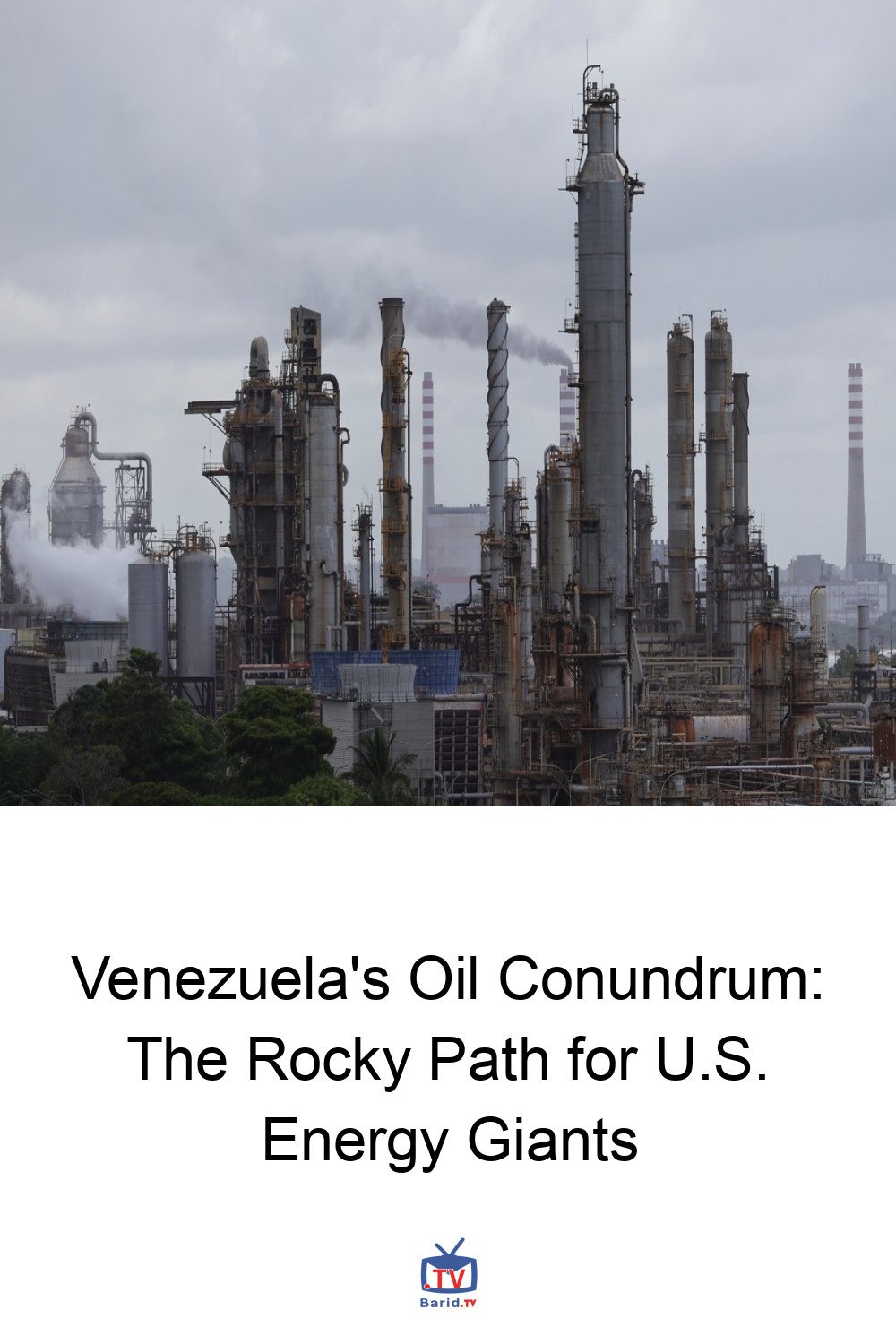
Venezuela’s Oil Conundrum: The Rocky Path for U.S. Energy Giants
In the wake of a dramatic U.S. intervention that saw Venezuela’s leader ousted, the global energy sector watches with bated breath. While Washington and Caracas appear to be mending fences, the path for American oil giants to re-establish operations in the resource-rich nation remains fraught with peril and uncertainty. Despite recent policy shifts, the specter of political instability and past grievances continues to deter major U.S. players from committing to a full-scale return.
A Shifting Political Landscape, A Lingering Shadow
Almost a month after the U.S. raid, which led to significant casualties and a change in leadership, most American oil companies are holding back. Under interim leader Delcy Rodríguez, the Venezuelan government has moved to ease economic restrictions and court foreign investment in its crucial oil sector. The Trump administration, in turn, issued a general license permitting U.S. oil companies to operate, including for the sale and storage of light crude, and lifted restrictions on Venezuela’s commercial airspace.
However, these developments come with a significant caveat. The relationship between Washington and Caracas is far from one of peaceful cooperation. The U.S. continues to dictate policy, backed by threats of military force should Caracas fail to comply. This ‘belligerent style’ of American foreign affairs, as described in the original analysis, cultivates an unpredictable environment—one that is inherently unappealing to U.S. oil and gas companies contemplating a long-term presence.
Javier Corrales, a professor of Latin American affairs at Amherst College, notes the significance of the legal changes. “Legal documents have been created to ensure the [oil] sector is not as state dominant. It has relaxed some of the strongest restrictions,” he stated. “It’s not enough what they’ve done, but this is not insignificant.”
Addressing Past Grievances: Legal Reforms and Investor Confidence
For U.S. oil giants like ExxonMobil ($XOM) and ConocoPhillips ($COP), the memory of equipment and property expropriated under Hugo Chavez two decades ago remains a potent deterrent. The sentiment was echoed by ExxonMobil CEO Darren Woods at a recent White House summit, where he bluntly described Venezuela as “uninvestable.” A complete overhaul of Venezuela’s oil production laws has long been at the top of these companies’ wish lists.
Hydrocarbon Reform: A Game Changer?
In a significant move to assuage these fears, the Venezuelan National Assembly this week approved crucial “hydrocarbon reform” legislation. This landmark reform grants foreign companies operational control in oil ventures, a stark departure from the post-2006 era where the state-owned Petróleos de Venezuela (PDVSA) held a majority stake and dictated terms in every project.
While PDVSA itself remains under state control—neither privatized nor broken up—its colossal debt, estimated at $150 billion to $170 billion, underscores the urgent need for external capital. Luis Pacheco, a former PDVSA executive now at Rice University’s Baker Institute for Public Policy, emphasizes this point: “The recovery of the oil industry can only be done by private investment for two reasons. The first reason is that the amount of money is very large and neither PDVSA nor the state can face that sort of investment. They cannot afford it.”
Currently, Venezuela’s oil production hovers around one million barrels per day. Chevron ($CVX) stands as the sole U.S. oil giant operating in the country, doing so under a special U.S. government license and contributing approximately a quarter of Venezuela’s daily output. This is a far cry from the early 2000s heyday, especially with oil prices significantly lower.
Beyond Reforms: Persistent Hurdles and U.S. Policy
The challenges extend beyond legal frameworks and financial woes. The authoritarian political apparatus that defined Maduro’s rule largely persists, suggesting that the interim leadership is not inclined to foster a flourishing opposition. Critics, particularly within the Venezuelan opposition, argue that the Trump administration is prioritizing stability over genuine democratic change.
Secretary of State Marco Rubio candidly addressed this, stating during Senate testimony, “We’re dealing with people who spent most of their lives living in a gangster paradise. So it’s not going to be from one day to the next. But I think we’re making good and decent progress. It is the best plan, and we are certainly better off today in Venezuela than we were four weeks ago.”
remains a paramount concern for U.S. oil companies, which have demanded guarantees for their personnel. However, Energy Secretary Chris Wright has explicitly ruled out deploying U.S. soldiers to protect oil installations, adding another layer of complexity to the security equation.
The Road Ahead: A Role for Smaller Players?
Amidst this intricate geopolitical and economic landscape, the question of who will ultimately re-engage with Venezuela’s vast oil reserves remains open. While major players like ExxonMobil and ConocoPhillips are hesitant, the possibility of smaller, more agile oil companies stepping into the void, perhaps with different risk appetites, cannot be discounted. The Trump administration’s reported interest in personally overseeing Venezuelan oil sales and revenue further complicates the picture, hinting at a continued hands-on approach from Washington in the nation’s energy future.
For more details, visit our website.
Source: Link