
For many, the distinct blips, bleeps, and soaring melodies of 16-bit video games are more than just background noise; they are a direct conduit to cherished childhood memories. The iconic sounds of titles like Sonic the Hedgehog don’t just evoke nostalgia; they inspire a new generation of creators to delve into the very fabric of game music.
Unearthing the Genesis of Sound: The YM2612 Chip
This profound curiosity captivated synth makers Abraham and Maria. Their journey began when they stumbled upon a vast collection of Video Game Music (VGM) files, encompassing nearly every title released for the legendary 16-bit Sega Genesis (known as the Mega Drive in many parts of the world). Instead of merely listening, they pondered the intricate connections, the subtle similarities, and the underlying patterns woven into these digital tapestries. Their quest was twofold: to decipher how the system’s revered Yamaha YM2612 chip sculpted these iconic sounds, and more broadly, to uncover the hidden relationships between them.
Imagine exploring these sounds not as isolated tracks, but as a sprawling, interconnected sonic landscape. What if instrument presets weren’t just individual sounds, but rich data points narrating stories of creation? This very question sparked the birth of DAFMExplorer – a groundbreaking project that seamlessly merges FM synthesis with data science. Its purpose isn’t merely to dissect the past, but to forge entirely new avenues for creative expression.
Abraham and Maria sought to understand these sounds as a cohesive system. What grand patterns emerged when thousands of them were analyzed collectively? Could one discern the invisible threads linking a powerful bassline from Streets of Rage to a vibrant lead from Sonic? Did the parameters themselves whisper tales of the composers, their tools, or even their geographical origins?
DAFMExplorer: Where Data Science Meets Chiptune Artistry
The YM2612/YM3438 chip, the very heart of the Sega Genesis, was far more than a simple sound generator. It was a sophisticated creative instrument that profoundly shaped an entire generation of game music. Each preset is a frozen moment of a composer’s deliberate choices: the chosen algorithm, the feedback intensity, the attack rate, the detune. These aren’t random numerical values; they are artistic decisions, meticulously crafted and preserved in time.
To truly grasp these overarching patterns, one must step back, to see the forest rather than just the individual trees. This is where data science becomes an invaluable ally – not as a substitute for the act of listening, but as an innovative lens through which to hear anew. For a deeper dive into their methodology, their comprehensive blog offers further insights.
Discovering Seven Sonic Realms
Through their diligent experimentation, Abraham and Maria unveiled seven distinct “sonic realms” within the Sega Genesis’s sound architecture – discoveries previously uncharted. The monumental task of tagging and organizing over 93,000 sound presets was a testament to their dedication. Fortunately for the global chiptune and retro gaming community, the fruits of their labor are openly accessible. The well-documented DAFMExplorer GitHub repository allows enthusiasts to explore this rich dataset locally, offering an unparalleled resource for research and creativity.
Navigating the Sonic Landscape
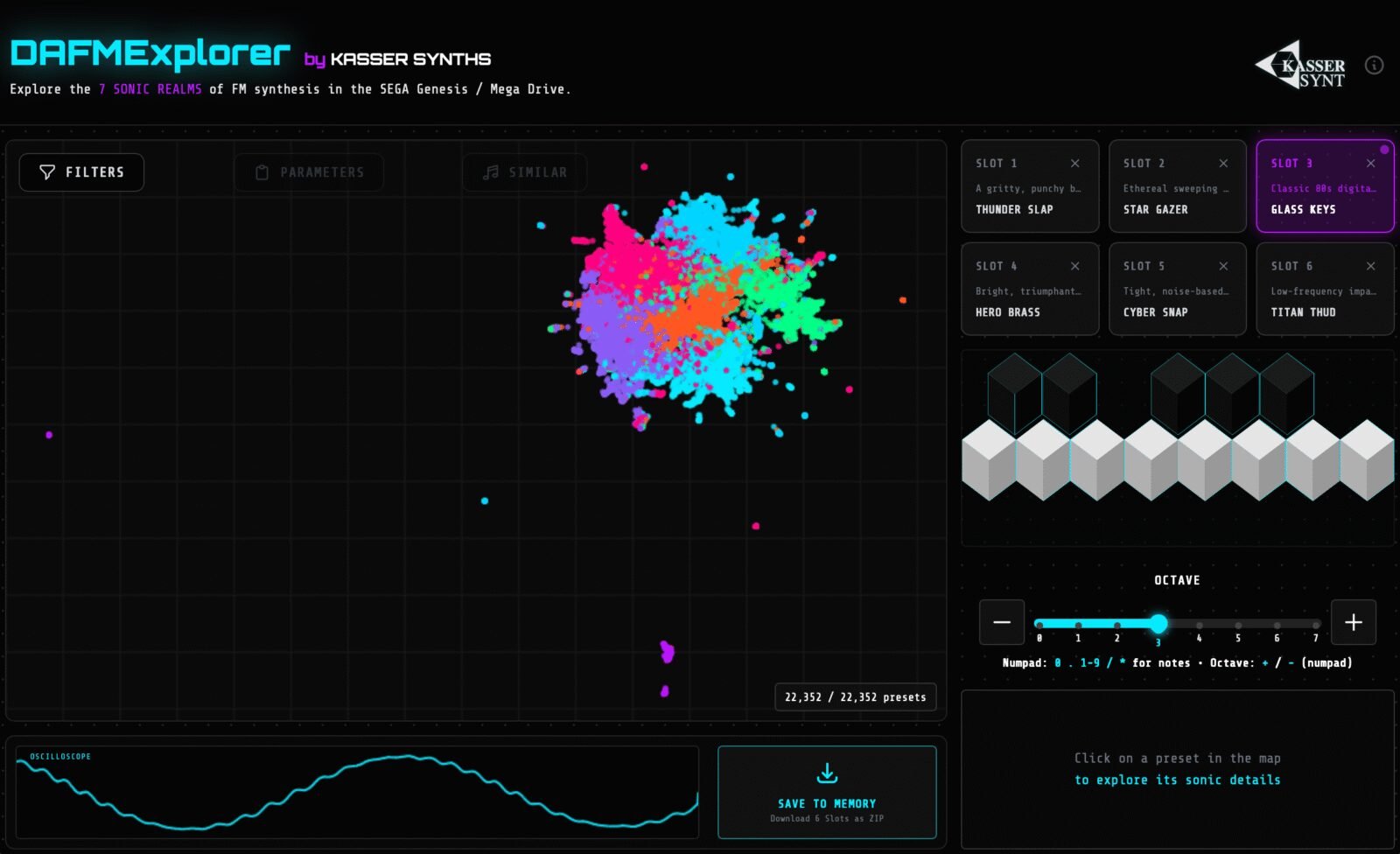
For those seeking a more immediate and user-friendly experience, a dedicated web application provides an interactive playground. Here, users can effortlessly experiment with and download sounds, navigating a searchable map of all available presets. Exploration can be tailored by “types” – perhaps “Fantasy Atmospheres” or “Neon Action” – or filtered by specific games or even composers. Imagine composing a chiptune exclusively with sounds crafted by the legendary Sonic composer Masato Nakamura, or drawing solely from the iconic notes of Mortal Kombat II; DAFMExplorer makes such creative constraints a reality.
Once the desired presets for the six available slots are selected, they can be downloaded and directly integrated into the DAFM SYNTH Genesis hardware or popular chiptune trackers like DefleMask. This functionality transforms DAFMExplorer into an indispensable tool for aspiring chiptune artists, game music historians, and anyone eager to understand how composers masterfully worked within the hardware limitations of a bygone era.
Beyond the digital realm, the spirit of DIY music creation continues to thrive. For those inspired to build something tangible, projects like a Space Invaders Synthesizer offer a hands-on exploration of retro sound. And for an extra dose of chiptune goodness, explore the curated retro playlist from Make: Volume 89.
For more details, visit our website.
Source: Link