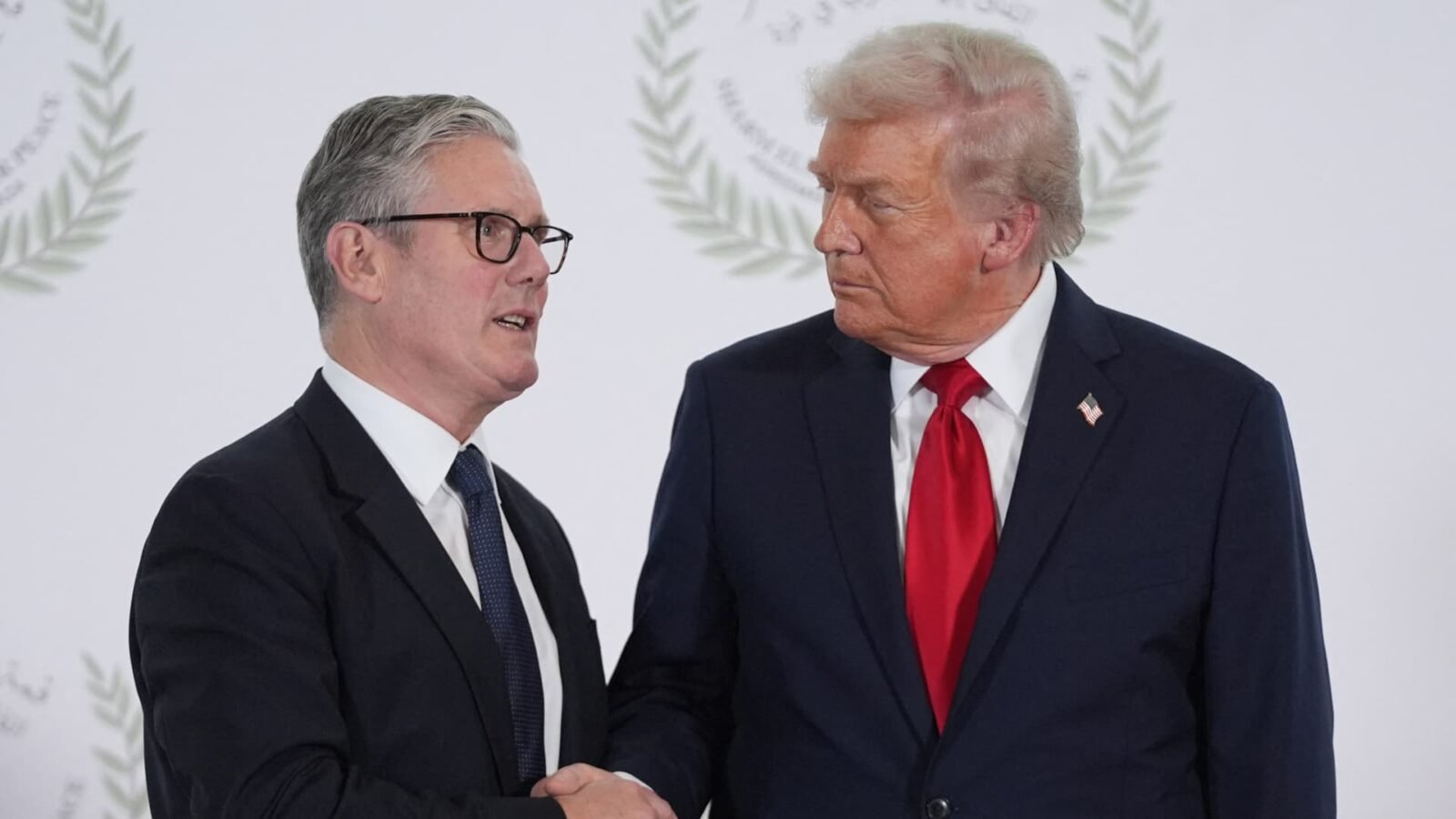

In a bold diplomatic maneuver, British Prime Minister Keir Starmer has embarked on a pivotal four-day visit to China, signaling London’s intent to forge a “long-term strategic partnership” with Beijing after years of strained relations. This significant outreach, the first by a British premier in eight years, aims to reset bilateral ties and unlock new economic opportunities. However, the initiative has drawn sharp criticism and stern warnings from former U.S. President Donald Trump, who branded the move as “very dangerous” for the United Kingdom.
A Strategic Pivot: London Looks East
Prime Minister Starmer’s visit, accompanied by a robust delegation of nearly 60 British business executives and organization leaders, underscores a clear shift in the UK’s foreign policy calculus. The trip has already yielded tangible results, with China agreeing to halve its import tariffs on British whisky, reducing them from 10% to 5%. Furthermore, British nationals will now enjoy visa-free travel to China for stays under 30 days, a move hailed by Downing Street as a significant step towards enhanced access and symbolic of a burgeoning relationship.
Beyond these immediate concessions, British pharmaceutical giant AstraZeneca has committed a substantial $15 billion investment in China through 2030, earmarked for expanding medicines manufacturing and research and development within the country. These agreements highlight a concerted effort by both nations to deepen economic engagement and foster mutual growth.
Trump’s Fiery Rebuke: A ‘Very Dangerous’ Path
The warming ties between London and Beijing have not gone unnoticed across the Atlantic. Speaking on the sidelines of a film premiere, Donald Trump, a vocal critic of China’s economic practices, issued a stark warning to the UK. “It’s very dangerous for them to do that,” Trump reportedly told Reuters, referring to Starmer’s efforts to engage with China. His admonition extended to Canada, which recently signed a trade agreement with China, with Trump stating, “it’s even more dangerous for Canada to get into business with China… You can’t look at China as the answer.” Trump even threatened a 100% tariff on Canadian goods if Ottawa pursued the deal, a dramatic reversal from previous, more conciliatory remarks.
Trump’s comments underscore the persistent tension between his “America First” doctrine and the desire of allied nations to diversify their global partnerships. His warnings serve as a potent reminder of the geopolitical tightrope many Western nations are currently walking.
Navigating the Geopolitical Tightrope: Optionality, Not Alignment
Before his departure for Beijing, Prime Minister Starmer articulated Britain’s position, asserting that the UK would not be forced to choose between its close relationship with the U.S. and strengthening economic ties with China. “We’ve got very close relations with the US — of course, we want to — and we will maintain that business, alongside security and defense,” he stated, emphasizing a strategy of maintaining strong Western alliances while exploring new avenues for collaboration.
The ‘Middle Power’ Conundrum
This diplomatic posture, described by Gabriel Wildau, managing director at political consultancy Teoneo, as “optionality rather than a full reset,” reflects a broader trend among “middle powers.” These nations, unsettled by the unpredictable nature of Trump’s foreign policy and the “America First” agenda, are increasingly seeking to reduce dependence on the U.S. by forging issue-specific coalitions with China and other global players.
Recent months have seen a flurry of Western leaders visiting Beijing, including French President Emmanuel Macron, South Korean President Lee Jae Myung, Finnish Prime Minister Petteri Orpo, German Finance Minister Lars Klingbeil, and Irish Taoiseach Micheal Martin. These visits, much like Starmer’s, indicate a collective effort to rebalance international relations and create more diverse diplomatic and economic portfolios, even if it means risking the ire of Washington.
The UK’s engagement with China, therefore, is not merely a bilateral affair but a microcosm of a larger global dynamic, where nations are striving to assert their strategic autonomy in an increasingly multipolar world, carefully balancing economic ambition with geopolitical realities.
For more details, visit our website.
Source: Link