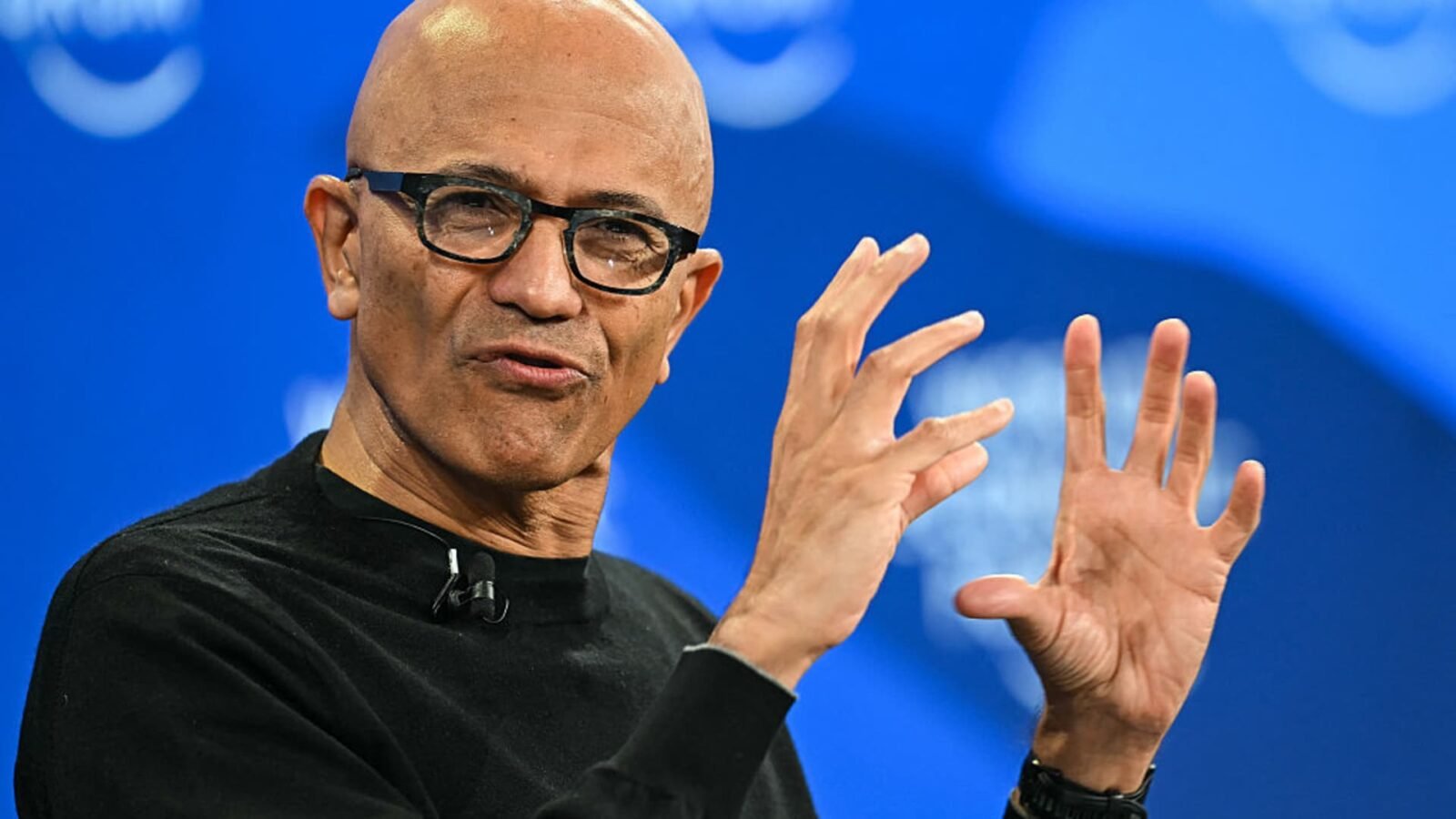


Red flags waved across Wall Street on Thursday as Microsoft experienced its most significant single-day stock decline since March 2020, wiping a staggering $357 billion off its market capitalization. The tech giant’s shares tumbled approximately 10% following an earnings report that left many investors wanting more, bringing its total valuation down to $3.22 trillion.
Azure’s Growth Underwhelms, Cloud Strategy Questioned
A primary point of contention in Microsoft’s latest financial disclosure was the performance of its crucial Azure cloud services. While still robust, the all-important growth metric for Azure and other cloud offerings registered 39%, falling just shy of StreetAccount’s 39.4% consensus. This slight miss, though seemingly minor, triggered a wave of investor concern.
Further compounding the disappointment, the company projected fiscal third-quarter revenue for its More Personal Computing segment (which includes Windows) at around $12.6 billion, significantly lower than the $13.7 billion analysts had anticipated. The implied operating margin for the upcoming quarter also came in below expectations.
Microsoft’s finance chief, Amy Hood, offered an explanation, suggesting that Azure’s growth could have been higher had the company prioritized external customer needs over its internal applications for data center infrastructure. “If I had taken the GPUs that just came online in Q1 and Q2 in terms of GPUs and allocated them all to Azure, the KPI would have been over 40,” Hood stated, highlighting a strategic allocation choice.
The Data Center Dilemma: Build Faster or Reallocate?
The issue of infrastructure capacity quickly became a focal point for analysts. Ben Reitzes of Melius Research, who maintains a ‘buy’ rating on Microsoft, voiced his concern on CNBC’s “Squawk on the Street.” He argued that Microsoft faces an “execution issue” with Azure, emphasizing the need to accelerate data center construction. “I think that there’s an execution issue here with Azure, where they need to literally stand up buildings a little faster,” Reitzes commented.
AI Investments Under the Microscope
Adding another layer of scrutiny, analysts at UBS, led by Karl Keirstead, questioned Microsoft’s strategy of reserving significant artificial intelligence computing capacity for its own products, such as the Microsoft 365 Copilot productivity software add-on. Their skepticism stems from the observation that Copilot has yet to achieve the widespread success seen by competitors like OpenAI’s ChatGPT.
“M365 revs growth is not accelerating due to Copilot, many checks on Copilot don’t suggest a strong usage ramp… and the model market appears crowded and capital-intensive,” the UBS analysts wrote. They concluded that Microsoft needs to “prove” the value of these substantial AI investments.
Long-Term Vision vs. Immediate Returns: A Divided Wall Street
Despite the prevailing negativity, not all of Wall Street shared the same bearish outlook. Bernstein analysts, led by Mark Moerdler, offered a more optimistic perspective, applauding Microsoft’s strategic decisions. They suggested that the company’s management is making “a cognizant decision to focus on what is best for the company long term rather than driving the stock up this quarter or even over last quarter and a few quarters to come (as capacity constraints likely abate).” This view posits that current sacrifices in short-term growth are deliberate steps towards future dominance.
Finance chief Amy Hood also indicated a slight decline in capital expenditures for the current quarter, perhaps signaling a re-evaluation or optimization of spending in the near term.
Broader Market Context: A Mixed Tech Landscape
While Microsoft faced headwinds, the broader technology sector saw mixed fortunes. The iShares Expanded Tech-Software Sector exchange-traded fund dipped 5%, and the Nasdaq Composite index closed down 0.7%. However, some tech players thrived, with Meta shares notably spiking 10% after delivering robust results and strong quarterly revenue guidance, demonstrating that investor sentiment remains selective.
Microsoft’s recent market cap reduction underscores the intense scrutiny faced by tech giants, particularly concerning their cloud performance and ambitious AI strategies. The coming quarters will be crucial in determining if the company’s long-term vision can quell investor doubts and restore confidence in its growth trajectory.
For more details, visit our website.
Source: Link