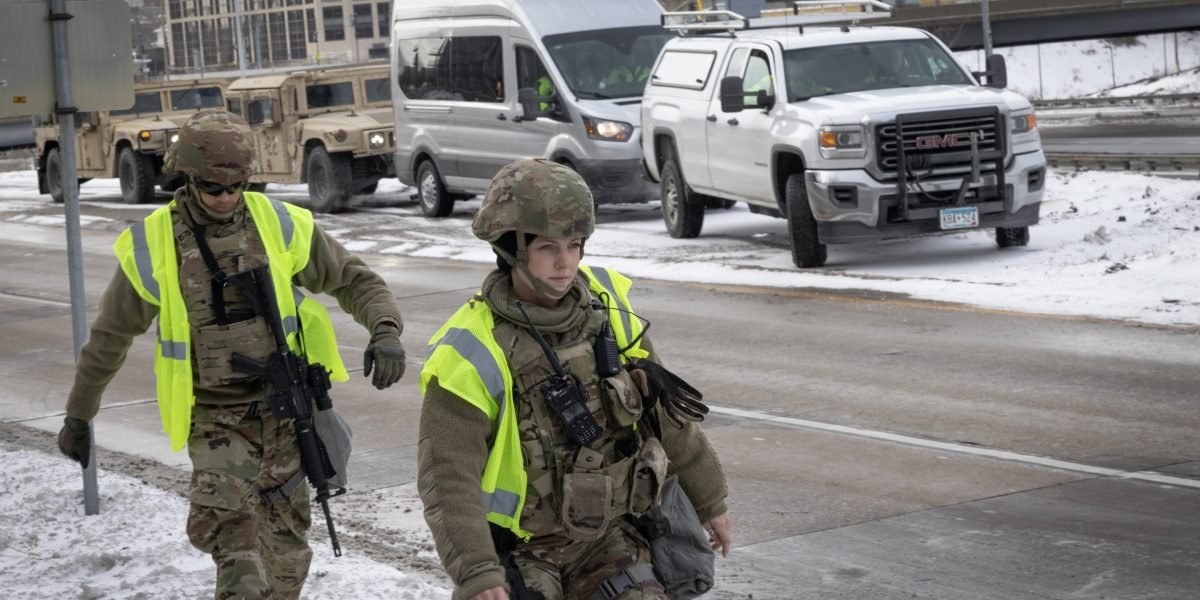

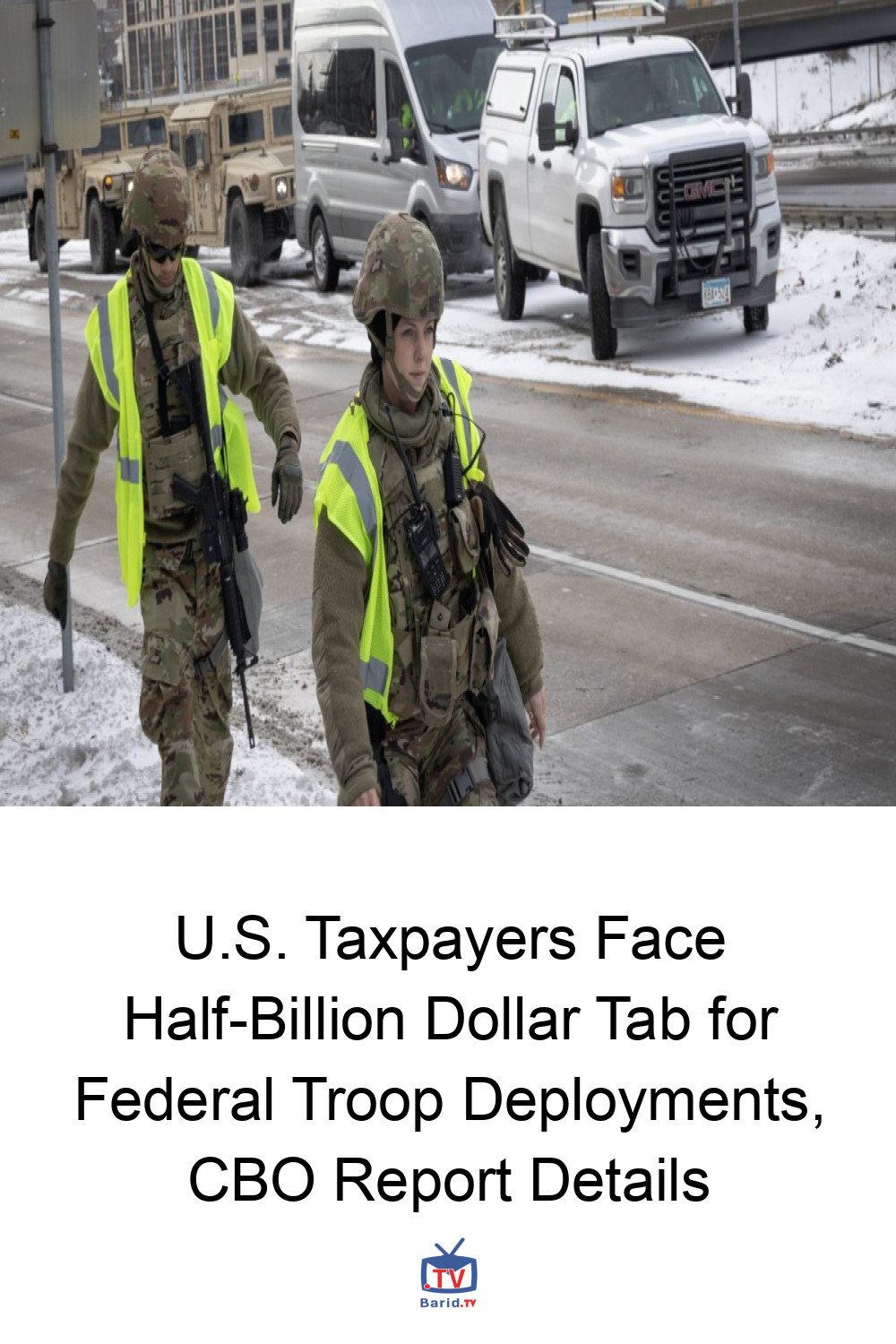
A landmark report from the Congressional Budget Office (CBO), unveiled on January 28, has cast a stark light on the substantial financial implications of deploying federal military assets for domestic law enforcement within the United States. The nonpartisan analysis, prompted by a request from Senate Budget Committee ranking member Jeff Merkley (D-Ore.), reveals that American taxpayers collectively bore a cost nearing half a billion dollars – approximately $496 million – for the mobilization of National Guard and active-duty Marine Corps personnel to six major U.S. cities between June and December 2025.
The Staggering Price Tag of Domestic Deployments
This comprehensive accounting marks the first detailed look at the federal government’s significant pivot towards utilizing military resources for internal security. The nearly half-billion-dollar expenditure covers operations initiated in mid-2025, targeting major urban centers including Los Angeles, Washington, D.C., Memphis, Portland, and Chicago. Notably, while a deployment to New Orleans also occurred, its late-year initiation meant it was excluded from the CBO’s current reporting, suggesting the true cost of these federal interventions was, in fact, higher than calculated.
Beyond the Initial Bill: Ongoing Financial Commitments
The financial burden is far from a one-time event. The CBO’s analysis underscores that if the current administration maintains troop levels seen at the close of 2025, the federal budget faces a recurring cost of $93 million per month. Furthermore, deploying even a smaller contingent of 1,000 National Guard personnel to a U.S. city in 2026 is projected to cost between $18 million and $21 million monthly, with variations largely attributable to local cost-of-living differences across regions.
Operational Scope and Unforeseen Complexities
Beyond the direct costs, the report also illuminates the logistical intricacies inherent in these large-scale movements of personnel. For instance, 200 National Guard personnel remained mobilized in Texas even after their operational duties in Chicago had concluded, contributing to the overall expenditure and highlighting potential inefficiencies or extended support requirements.
A Future Shrouded in Fiscal Uncertainty
While the CBO has provided a clear baseline for current monthly spending, the agency emphasizes the formidable challenge in predicting the final bill for 2026, describing future costs as “highly uncertain.” This unpredictability stems from two primary factors. Firstly, the administration’s policies regarding the scale and specific locations of deployments are subject to change, introducing a significant variable. Secondly, the federal government is navigating considerable legal headwinds; the report explicitly notes that legal challenges have already successfully halted deployments to certain cities, thereby altering the operational landscape and the associated financial obligations.
As of January 2026, the baseline projections suggest that without a shift in policy or a definitive court order, the federal government is poised to continue spending nearly $100 million each month to sustain its current domestic military footprint. Should the administration opt to expand these operations, the CBO’s formula provides a stark expectation: every additional battalion-size element of 1,000 troops will incrementally add another $18 million to the monthly ledger, signaling a potentially escalating financial commitment for American taxpayers.
For more details, visit our website.
Source: Link