

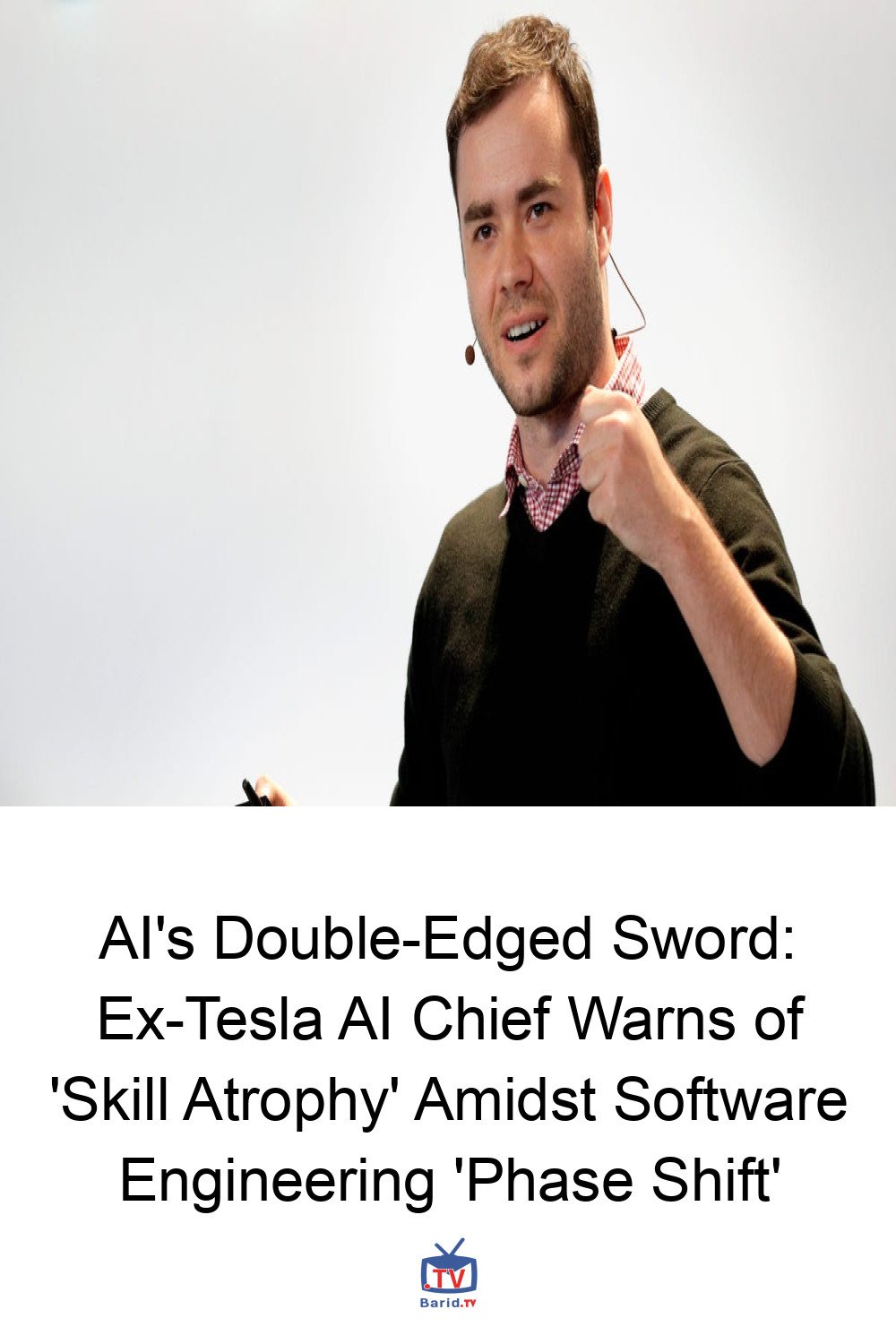
The AI Revolution in Code: A Former Tesla AI Head’s Stark Warning
The landscape of software engineering is undergoing a profound transformation, a “phase shift” as described by a former leader in artificial intelligence at Tesla. This shift, largely propelled by advanced AI coding assistants like Claude Code, is not merely enhancing productivity but also raising critical questions about the future of human programming skills, with some experts warning of a gradual “atrophy” of manual coding abilities.
The Dawn of AI-Assisted Development
For decades, software development has been a domain primarily governed by human ingenuity, meticulous logic, and countless hours of manual coding. However, the advent of sophisticated AI models capable of generating, debugging, and optimizing code is fundamentally altering this paradigm. Tools such as Claude Code are proving to be powerful co-pilots, accelerating development cycles and enabling engineers to tackle more complex problems with unprecedented speed.
The ex-Tesla AI head, whose insights underscore this industry-wide evolution, points to a future where AI isn’t just a tool but an integral partner in the creation of software. This partnership promises to unlock new levels of efficiency and innovation, allowing developers to focus on higher-level architectural design and problem-solving rather than the minutiae of syntax and boilerplate code.
The Unforeseen Consequence: Skill Atrophy?
While the benefits of AI in coding are undeniable, a significant concern emerges: what happens to the foundational skills of human engineers when AI handles an increasing proportion of the coding workload? The former Tesla executive’s observation that “manual skills slowly ‘atrophy'” highlights a potential long-term challenge for the profession.
As developers rely more heavily on AI to write and refine code, there’s a risk that their deep understanding of algorithms, data structures, and low-level programming concepts might diminish. This could lead to a generation of engineers who are highly proficient at prompting AI but lack the fundamental expertise to troubleshoot complex issues, innovate beyond AI’s current capabilities, or even understand the intricate workings of the code AI produces.
Navigating the Future of Software Engineering
The challenge for the software industry, therefore, is to harness the immense power of AI without sacrificing the critical human element. Education and training must adapt to this new reality, focusing on skills that complement AI, such as critical thinking, ethical considerations in AI-generated code, advanced problem-solving, and the ability to effectively guide and evaluate AI outputs.
The “phase shift” is here, and it demands a proactive approach. Engineers must evolve from being sole code creators to becoming expert AI collaborators, curators, and architects. The goal should not be to replace human skill but to augment it, ensuring that while AI handles the repetitive, humans continue to drive innovation and maintain a deep understanding of the digital world they are building.
For more details, visit our website.
Source: Link