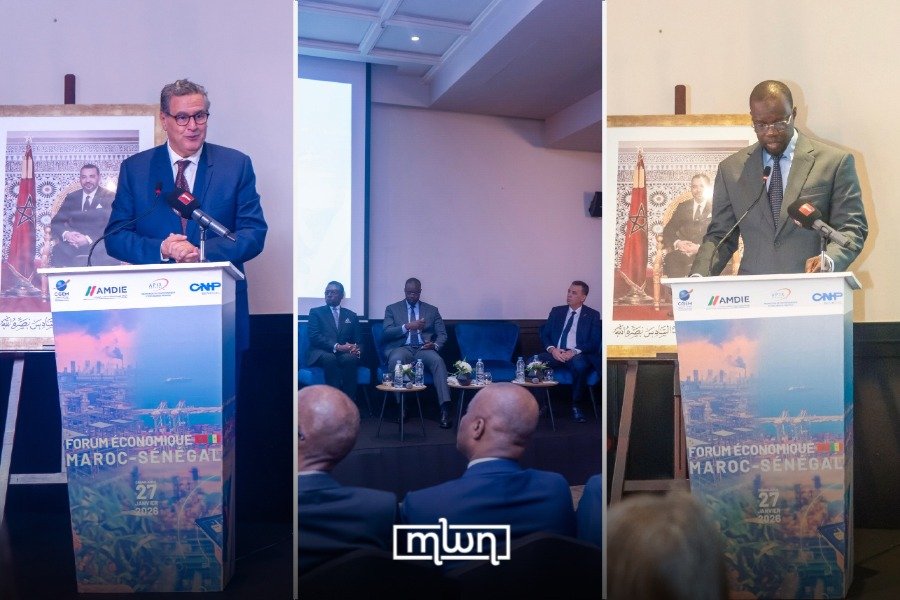

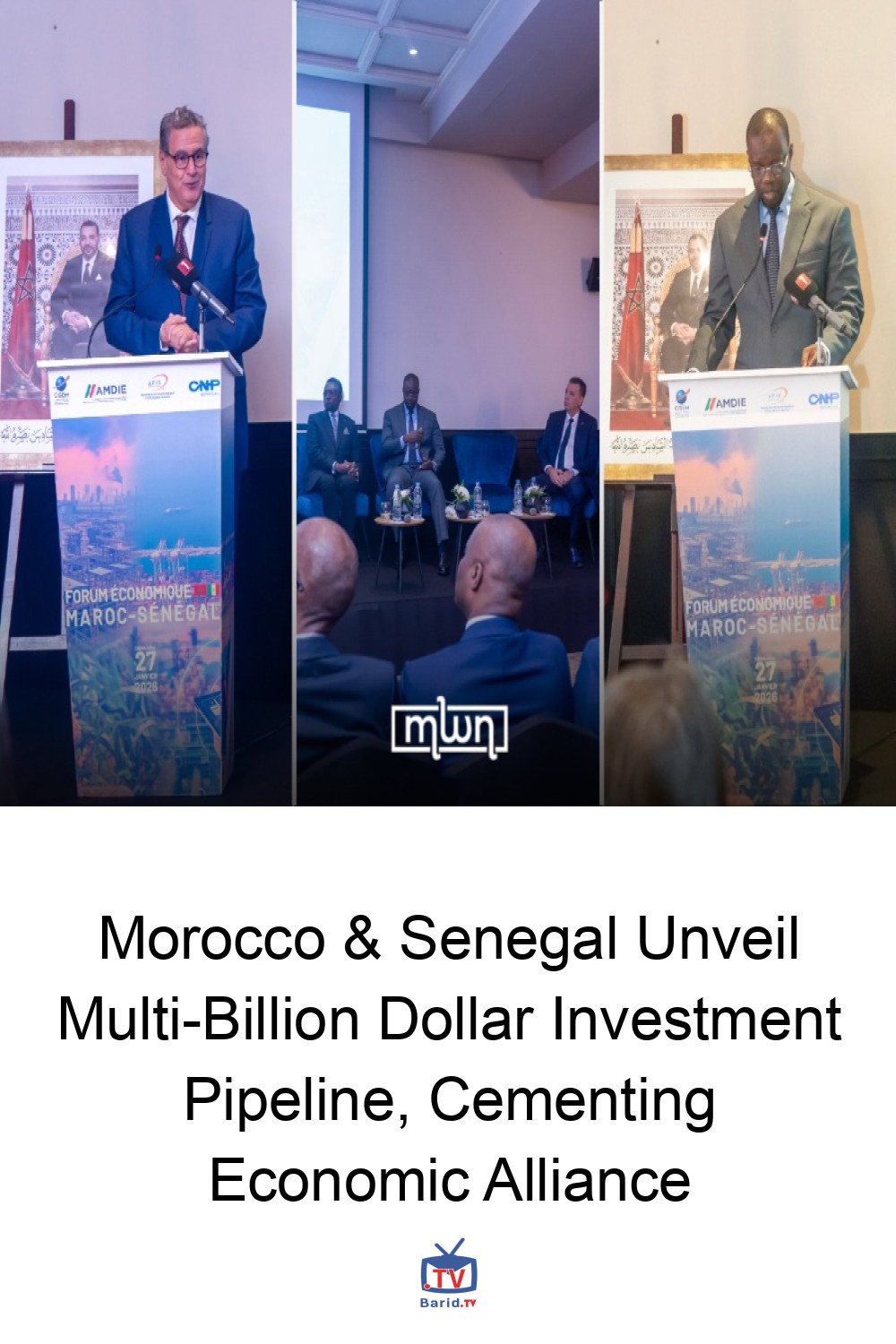
Casablanca, Morocco – A new era of economic collaboration between Morocco and Senegal was firmly cemented today at the Morocco-Senegal Economic Forum in Casablanca. High-level officials and business titans from both nations convened to outline an ambitious pipeline of private and public-private partnership (PPP) projects, collectively valued at an impressive $9.4 billion. This significant gathering underscores the deep-rooted and resilient ties between the two West African powerhouses, even amidst the backdrop of recent regional sporting rivalries.
A New Chapter in Bilateral Prosperity
Organized by the General Confederation of Moroccan Enterprises (CGEM), the forum served as a crucial platform for dialogue, bringing together Morocco’s Head of Government, Aziz Akhannouch, and Senegal’s Prime Minister, Ousmane Sonko, alongside senior ministers, investment agencies, and private sector representatives. Their presence provided a clear political mandate for enhanced economic cooperation.
CGEM President Chakib Alj emphasized the critical role of political support in fostering business growth. “For us, as business leaders, this is a clear message: political support is there, and it is essential to stimulate new economic partnerships and encourage investment and co-investment,” Alj stated. He highlighted the burgeoning economic relationship, with Moroccan exports to Senegal surpassing MAD 4 billion in 2024 and imports from Senegal nearing MAD 600 million ($66 million). Moroccan enterprises have established a strong presence across Senegal’s key sectors, including banking, insurance, cement, pharmaceuticals, agro-industry, fertilisers, and real estate.
Senegal’s Vision 2050: A Magnet for Investment
The forum’s timing aligns perfectly with Senegal’s proactive efforts to attract foreign investment, crucial for realizing its ambitious Vision 2050 development strategy. This follows the recent signing of 17 cooperation agreements between Akhannouch and Sonko in Rabat, signaling a robust framework for future collaboration.
Documents presented by Senegal’s investment promotion agency, APIX, detailed projects identified for the 2025–2029 period. These include approximately $4.3 billion (MAD 40 billion) in fully private investments and roughly $5.1 billion (MAD 47.4 billion) representing the private share of public–private partnership projects. The diverse pipeline spans critical sectors such as ports and logistics, energy, fertilisers, healthcare, agro-industry, housing, pharmaceuticals, and digital infrastructure.
Pierre Goudiaby Atepa, President of the Senegalese Investors’ Club, lauded the advanced stage of cooperation between Dakar and Rabat, describing the recent agreements as the fruit of an “almost joint council of ministers.” He positioned Morocco as a development model for Senegal, inviting Moroccan companies to leverage tax incentives, planned special economic zones, and opportunities in banking, agriculture, gas, and logistics. Atepa underscored Senegal’s strategic role as a gateway to the broader African continent, welcoming partnerships involving Moroccan and international investors.
Morocco’s Enduring African Commitment
Morocco’s Ambassador to Senegal, Hassan Naciri, affirmed that the forum was a natural progression of bilateral joint commission meetings, reflecting the profound political and human connection between the two nations. He spoke of the “human, spiritual, and emotional closeness between Moroccans and Senegalese,” reinforced by recent high-level exchanges.
Naciri emphasized that this escalating economic cooperation is integral to Morocco’s long-term engagement with Africa, a vision championed by His Majesty the King over two decades ago. “We are continuing this work as intended by His Majesty the King more than 26 years ago,” he asserted, highlighting a consistent and strategic commitment to continental partnership.
Powering the Future: Energy and Regional Integration
Energy cooperation also featured prominently in discussions. CGEM President Chakib Alj referenced the monumental Nigeria-Morocco Atlantic gas pipeline project, which is set to traverse several West African nations, including Senegal. With Senegal recently commencing oil and gas production, officials in Casablanca indicated that energy projects hold immense potential to fuel industrial development and bolster regional integration.
Ultimately, the forum was designed not merely to announce new agreements but to empower businesses to identify concrete projects and accelerate existing initiatives. Participants concluded the high-profile gathering with a commitment to sustained dialogue and collaborative action, ensuring that the momentum generated in Casablanca translates into tangible economic growth and shared prosperity for both Morocco and Senegal.
For more details, visit our website.
Source: Link